
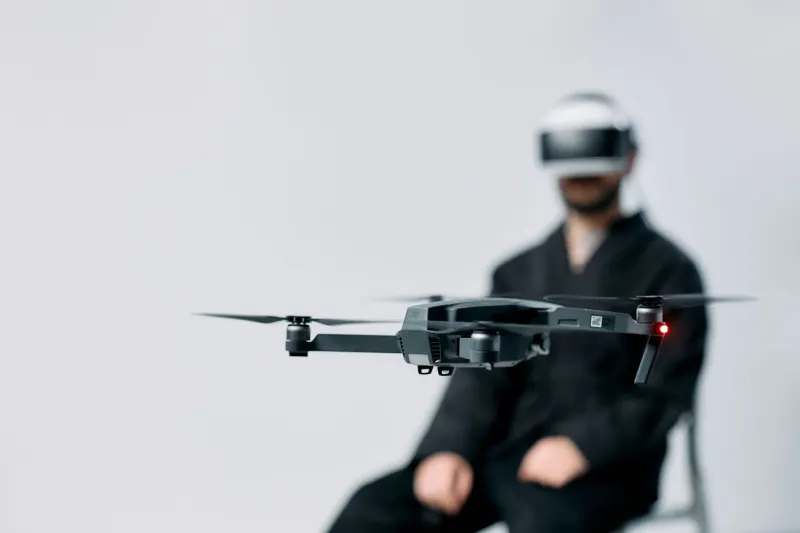
Amazon has finally scheduled the commercial debut of a device that many industry watchers long suspected would quietly disappear. The Amazon Ring Drone Cam is officially slated to hit the market on January 27, 2027, carrying a price tag of roughly $250. First previewed at various technology showcases, most notably during CES 2023, the final production model functions essentially as a self-flying robotic vacuum cleaner equipped with a camera, minus any actual cleaning capabilities.
Rather than offering traditional pilot controls, the device operates autonomously along preset paths throughout a residence. Sensors are integrated to help the apparatus navigate around household furniture, though early demonstrations have highlighted some reliability hurdles. During a preview feature with CBS News, Ring founder Jamie Siminoff showcased the hardware, during which the drone reportedly malfunctioned and collided with walls while operating on manual flight controls. Consequently, the company confirmed that manual flight controls will not be available at launch.
Key takeaways
- The Ring Drone Cam launches on January 27, 2027, priced at approximately $250.
- The device operates autonomously on preset paths and lacks manual controls.
- Battery life lasts for a brief eight-minute flight, requiring an eight-minute charge time per one minute of flight.
- Demonstrations and video footage highlighted a loud, shrill noise generated by the smaller propellers.
Flight mechanics and acoustic impact
The decision to omit manual controls stems partly from the inherent difficulty of piloting flying hardware indoors. While typical consumer drones utilize tactile controllers or phone interfaces, navigating interior spaces requires careful handling of height and orientation. Industry observers note that Amazon could alternatively have implemented software restrictions like geofencing to prevent outdoor usage and FAA regulatory entanglements, but opted instead for a purely automated patrolling system.
Acoustics present another notable hurdle for prospective buyers. Smaller propellers inherently generate a shrill, piercing noise reminiscent of other tiny unmanned aerial systems like the DJI Neo. Video documentation from media demonstrations captured pets panting anxiously on couches as the device split the air, raising concerns among animal welfare advocates who generally advise keeping drones far away from sensitive household pets.
Battery constraints and privacy context
Practical utility may also be limited by power restrictions. According to reports from PCMag cited in coverage, the hardware features a mere eight-minute battery life. The system requires eight minutes of charging time for every single minute spent in flight, meaning homeowners with sprawling properties could face gaps of over an hour between active patrol cycles.
Siminoff defended the concept by explaining that the system aims to provide comprehensive indoor security without requiring fixed cameras in every individual room. However, critics point out that Amazon's Ring ecosystem carries a complicated history regarding consumer data privacy. Although Ring recently introduced an encryption program designed to limit access to security footage by third parties and law enforcement, expanding that surveillance apparatus to the interior of a private residence introduces fresh questions for privacy-conscious consumers.



Comments