
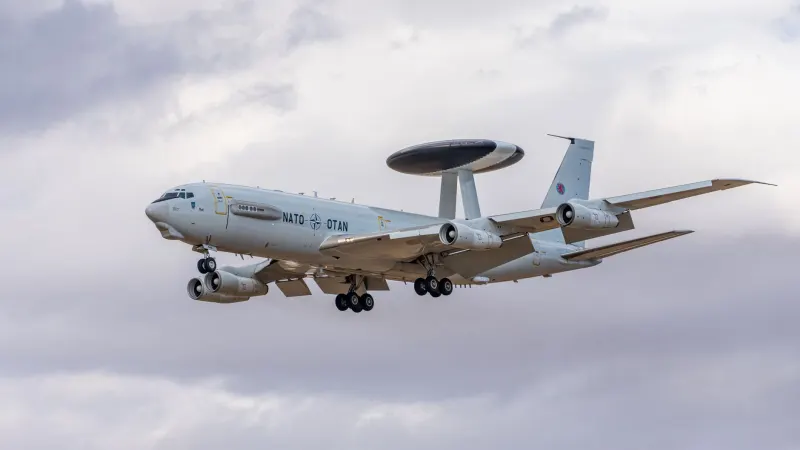
For the first time in 25 years, the Federal Aviation Administration has called a ground stop for all air traffic across the United States. A critical telecommunications issue has severely hampered Air Traffic Control Centers nationwide, disrupting their ability to communicate reliably with planes currently in the air. Around 4:30 PM Eastern Time, the FAA issued an extraordinary alert to pilots stating that all airports were ground stopped due to extraordinary circumstances and safety reasons.
Department of Homeland Security official Markwayne Mullin addressed reporters to clarify that the grounding does not currently represent a threat to the nation, attributing the incident to a telecommunications outage. While officials noted that pilots and air traffic controllers can still communicate at certain restricted levels, the primary communication systems remain overwhelmed. Authorities have emphasized that investigations are ongoing, and while there is no definitive indication of a malicious cyberattack, officials are maintaining a standard investigative posture and ruling nothing out.
Key takeaways
- The FAA issued a nationwide ground stop for all US flights for the first time in 25 years due to a telecommunications issue.
- Department of Homeland Security official Markwayne Mullin stated the outage is not a threat to the US, though authorities are not ruling out a cyberattack during the investigation.
- Air traffic control centers are currently managing ongoing landings on a case-by-case basis as communication systems remain overwhelmed.
- Airlines such as Delta have updated their platforms to advise passengers to check dedicated mobile apps for live flight statuses.
Impact on Air Travel and Regional Operations
Flight tracking data from platforms like Flightradar24 illustrated a sudden shift in US airspace, transforming a standard travel day into a chaotic scramble as airborne flights were rerouted back to their nearest available airports. Air traffic control systems across the country are currently managing incoming aircraft and active landings on a case-by-case basis. Major air carriers have begun responding to the disruption, with Delta Air Lines posting a dedicated banner on its website recommending that passengers utilize the official Delta App to monitor individual flight statuses.
When questioned about potential connections to recent digital infrastructure failures, such as a massive Microsoft Outlook outage reported the previous day, Mullin stated there was no visible reason to link the two events. Similarly, officials noted that any potential relation to the recent expansion of the FAA's AI-backed SMART system rollout remains purely speculative, as that technological deployment began months prior in September. Aviation experts and observing pilots have suggested that the root cause may stem from internal communication channels failing between en-route centers as aircraft are handed off from one regional controller to another.
Investigation and Next Steps
As federal agencies scramble to untangle the technological failure, aviation authorities warn that restoring full operational normalcy may take a day or more. While transportation and security officials continue to assess the scope of the affected infrastructure, the immediate priority remains securing the skies and safely clearing airborne aircraft. Commercial airlines and aviation authorities advise all impacted travelers to monitor official airline applications and airport notices closely while federal investigators work to identify the precise point of failure within the national airspace communication network.





Comments