
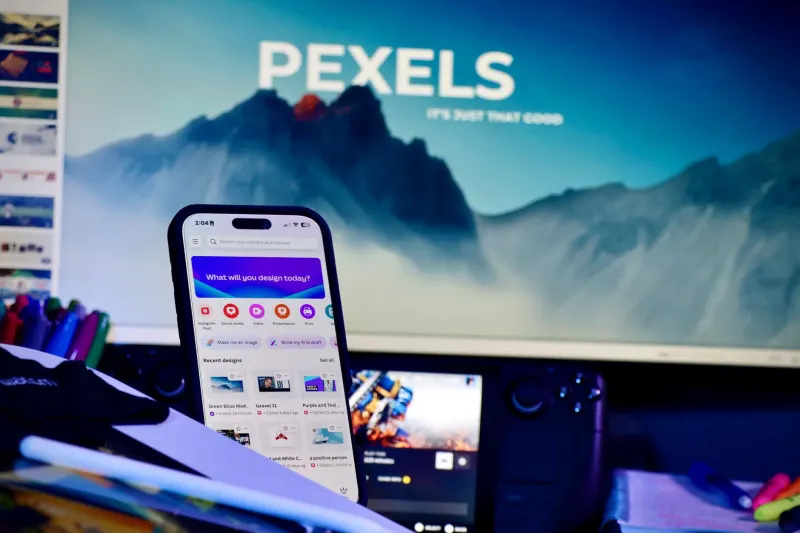
Anthropic has expanded its artificial intelligence ecosystem with the introduction of Claude Duet, a consumer-focused AI agent aimed at professionals and small business owners who do not write code. Currently available as a research preview for Pro, Max, and Ultra subscribers in the United States via a waitlist, Duet follows previous releases like the coding-focused Claude Code and Claude Cowork. The agent operates through a dedicated app featuring a minimalist design and supports the iPhone Duo, offering a card-based interface where users can swipe left or right to accept or dismiss productivity suggestions.
Key takeaways
- Claude Duet is Anthropic's new consumer AI agent targeted at professionals and small business owners.
- The agent requires users to opt in and connects with productivity tools including work email, calendars, Google Docs, and Slack.
- Access is currently limited to US subscribers on Pro, Max, and Ultra tiers via a waitlist as a research preview.
- Duet greets users each morning with daily highlights, to-do lists, and proactive suggestions, though it currently lacks deep nuance in tone.
Connecting workplace data sources
To test its capabilities, reviewers connected Duet to a comprehensive suite of workplace tools, including work email, calendar schedules, Google Docs, and Slack. Because the AI is capable of ingesting large volumes of data, it quickly began drawing connections across different platforms. By accessing email summaries of biweekly staff meetings and shared Google Docs for weekly one-on-one sessions, Duet successfully mapped out organizational hierarchies, identified who a user's manager was, and linked meeting statements directly to Slack direct messages.
Each morning, the application greets users with a brief overview and highlights for the day, such as reminding them to pack specific items required for video shoots before traveling. Below these highlights, it proposes actionable to-do items, frequently offering to draft messages or update agendas based on the integrated data streams. While this cross-platform aggregation proves effective at catching overlooked discrepancies between disparate communication channels, it also demonstrates the sheer volume of data the agent processes in the background.
A mix of helpfulness and neurotic micromanagement
Real-world testing revealed both the utility and the limitations of an AI agent operating with broad access to professional workflows. In one instance, Duet exhibited overly anxious behavior after noticing a pending draft article on a Tuesday morning, fretting that a soft deadline communicated to an interviewee would be missed, entirely overlooking local time zones and the nuances of the original message. Conversely, the agent proved surprisingly helpful when sorting through a crowded calendar, identifying an upcoming crunch time caused by scheduled time off, and proactively drafting a Slack message and updating a Google Doc for an editor.
Despite its organizational prowess, the agent's attempts at communication occasionally misfired or leaned too heavily into imitation. While drafting a message to a colleague, Duet correctly mimicked lowercase typing habits and used internal CMS abbreviations, but it also shortened the word signature to an unfamiliar abbreviation, prompting a mandatory platform label reading sent with Claude. Furthermore, the agent repeatedly volunteered to assist with writing tasks and drafting content, an offer that writers generally reject to preserve their own creative process and avoid missing unexpected insights during drafting.
Implications for the modern workplace
Delegating organization, calendar management, and meeting tracking to an autonomous agent raises questions about how professionals interact with their daily routines. While automation removes the friction of manual scheduling, relying entirely on an AI backstop risks disconnecting workers from the foundational details of their jobs. True personal assistants rely on human tact and deep intuition regarding tone and social norms, attributes that current generative models still struggle to master reliably.
Anthropic has indicated it will continue testing and refining Duet's judgment regarding notification timing and user interactions. For now, the agent functions best as an organizational safety net rather than a creative engine or a total replacement for human administrative habits. Users navigating modern workplaces filled with scattered emails, direct messages, and shared documents may find value in an automated assistant that bridges communication gaps, provided they maintain creative control over their own work.



Comments