
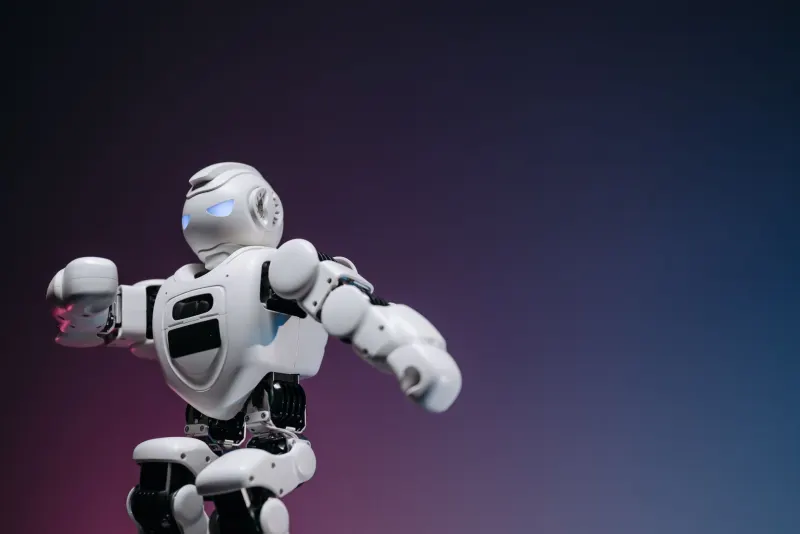
Genesis AI has secured a massive $500 million Series A funding round to accelerate the deployment of its dexterous, glove-trained humanoid robots. The massive capital injection was led by Khosla Ventures, Premji Invest, and Eclipse, bolstering the startup's vertical integration strategy. Co-founded in 2024 by CEO Zhou Xian and president Théophile Gervet after meeting as graduate students at Carnegie Mellon University, Genesis AI previously announced a $105 million seed round in July 2025. The company's core mission is bridging the difficult gap between laboratory demonstrations and reliable industrial automation.
Key takeaways
- Genesis AI raised $500 million in a Series A round led by Khosla Ventures, Premji Invest, and Eclipse.
- The company was co-founded in 2024 by CEO Zhou Xian and president Théophile Gervet.
- More than 100 workers globally wear sensor-enabled gloves and headset cameras to generate force and action training data.
- Genesis has built 30 to 40 units of its flagship humanoid robot, Eno, and chosen a U.S. mass-manufacturing contractor for next year.
The Sensor-Enabled Training Approach
To achieve human-like dexterity, Genesis AI separates itself from competitors like Figure and Agility through a distinct data-gathering mechanism. The startup focuses heavily on force data, which CEO Zhou Xian calls the essential unlock for effective robotic manipulation. Human workers around the world wear sensor-enabled gloves and headset cameras to record physical actions. More than 100 operators currently contribute to this specialized training dataset.
The company's hardware mirrors this human-centric design philosophy. Genesis robots wear the exact same sensor-equipped gloves, and their mechanical hands are carefully proportioned to match human dimensions. This physical fidelity underpins the robots' advanced capabilities in sorting objects and executing delicate wire manipulation tasks. Alongside real-world data collection, Genesis relies heavily on advanced simulation. Advisers like Minchen Li helped contribute an influential physics algorithm allowing the startup to generate millions of high-fidelity models replicating the robot's physical experiences.
Hardware Constraints and the Flagship Eno Robot
During a demonstration at the company's Silicon Valley facility, a physical AI model operated off-the-shelf robotic arms to pack boxes, fold them, tape them shut, and apply adhesive labels. While the setup successfully completed complex tasks, it also exposed edge cases like fumbled boxes and tricky adhesive peels, providing valuable hiccup data for model refinement. The startup's flagship humanoid robot, Eno, is designed to be more capable than standard robotic arms, featuring an aesthetic influenced by industrial design principles reminiscent of an iMac on wheels rather than a traditional metallic skeleton.
Genesis has constructed between 30 and 40 Eno units so far and is currently piloting the machines with a select group of undisclosed customers. A mass-manufacturing contractor has been chosen to begin production in the United States next year, with the final design of the mass-produced hardware already locked in. According to Xian, the primary bottleneck holding back generalized robotic intelligence is hardware capability—ranging from mechanical design constraints to industrial supply chains. For instance, the startup's current dexterous hands can only function for a few weeks of regular operation before requiring replacement.
Infrastructure Over Architecture
Despite ongoing debates surrounding specific model architectures like vision-language-action models versus world action models, Xian maintains that transformer-based software fundamentals are largely settled. He estimates that model architecture accounts for roughly ten percent of the final result, emphasizing that execution, training infrastructure, data pipelines, and data quality are what ultimately matter. The company believes no further fundamental scientific leaps are strictly necessary, framing the ongoing robotic automation challenge purely as an engineering and execution task.





Comments