
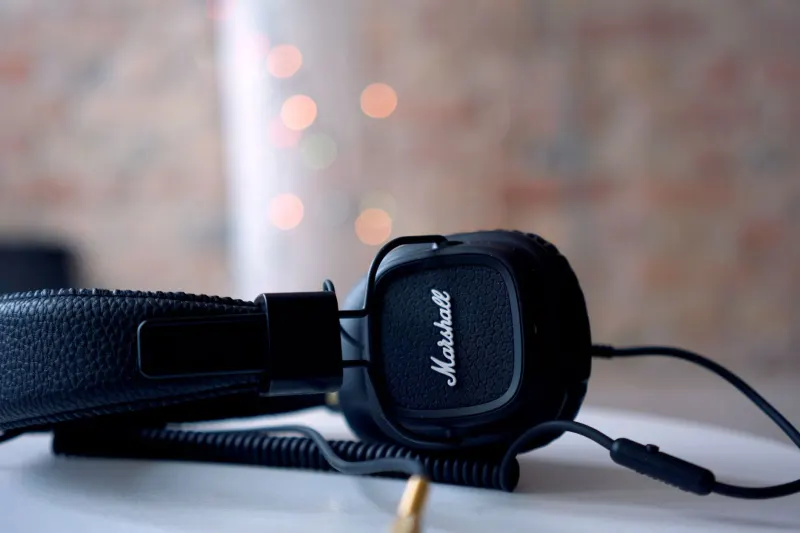
Visitors stepping into the 178-seat SoHo Playhouse in New York City are handed a black drawstring bag containing a pair of wired headphones connected to a small Auracast receiver. Once the performance begins, audience members are instructed to put on the headphones and wear them for nearly the entire duration of the show. This innovative setup is the foundation of Love Me, a one-man show created by stand-up comedian and former Saturday Night Live writer Drew Michael alongside director Prashanth Venkataramanujam.
The production explores themes of love, human connection, and Michael's personal journey with hearing loss and self-discovery across five distinct chapters. Sound designer Daniel Kluger leverages Auracast—a Bluetooth-based standard capable of broadcasting high-quality audio streams to numerous nearby devices simultaneously—to create an experimental soundscape that merges theater speakers with individual headphone feeds. Tinnitus ringing and hearing test tones are woven into the background music as subtle foreshadowing elements, while varying levels of sonic clarity let the audience experience the world through Michael's perspective.
Key takeaways
- Audience members receive wired headphones connected to an Auracast receiver upon entering the 178-seat SoHo Playhouse.
- Sound designer Daniel Kluger uses Auracast alongside theater speakers to simulate Michael's hearing loss and inner monologue.
- The production features dedicated broadcasts for hearing aids, cochlear implants, and available iPads for captions.
- At a climactic moment, the audience is instructed to remove the headphones to mirror Michael's breakthrough.
Immersive Sound Design and Inner Monologues
While the theater's main speakers intentionally muffle certain external sounds to mirror Michael's auditory challenges, the audio delivered directly through the Auracast headphones remains crisp and pristine. The feed features Michael's inner monologue, which combines prerecorded tracks with a live feed from his stage microphone as he interacts with himself. During a scene set at a comedy club, three audio sources compete simultaneously: room reactions and hecklers playing through the theater speakers, prerecorded internal thoughts playing in the headphones, and a muffled live microphone feed from the stage.
This deliberate auditory complexity forces the audience to navigate the heavy cognitive labor and concentration required to parse unclear sounds. The technical implementation extends beyond artistic expression into vital accessibility. Presented in partnership with Deaf West Theatre, the production includes dedicated streams compatible with hearing aids and cochlear implants, as well as iPads providing captions. Michael himself utilizes Auracast-enabled Phonak Eon Sphere hearing aids during performances to function simultaneously as environmental amplification and in-ear monitors.
The Climax and Technological Harmony
The narrative culminates in a powerful scene built around Michael's realization of the invisible cognitive labor he has endured. At this precise moment, the audience is told to take off the headphones worn for the majority of the performance, lifting the literal weight from their heads to signify a breakthrough and acceptance. The final act moves into an exploration of Deaf identity, challenging the perspective of deafness as a tragedy or burden.
While reviewing the production, critic John Higgins tested the setup using personal Nothing Pro 1 headphones, successfully connecting to the public broadcast channel in seconds, though he utilized the provided Auri receiver and Austrian Audio headset to experience the exact sound design intended by the creators. Ultimately, Love Me demonstrates how broadcast audio technology can bridge artistic storytelling and personal accessibility.






Comments