
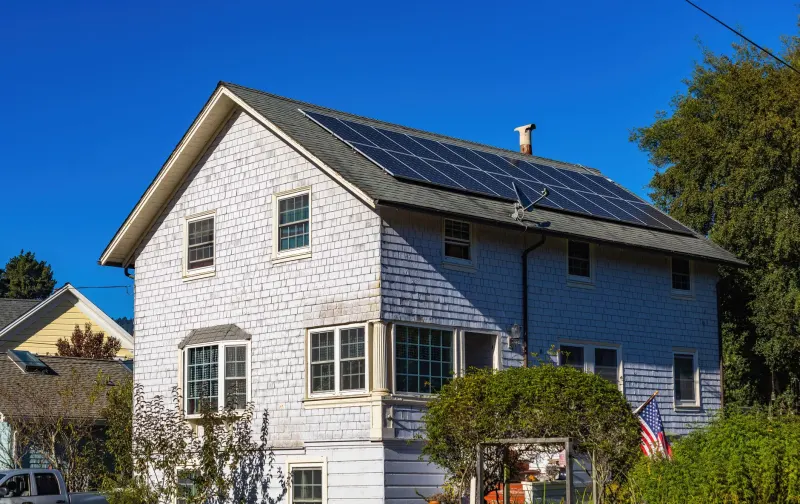
While adding solar panels to a home promises lower monthly electricity bills, clean renewable energy, and potential increases in property resale value, the investment comes with substantial drawbacks. Many homeowners fail to consider regional regulations, geographic positioning, and baseline household energy usage before committing. Without careful planning, the financial and logistical hurdles can quickly outweigh the environmental and economic benefits.
Key takeaways
- The average price to install a residential solar system falls between $20,000 and $27,000 before rebates.
- The federal 30 percent tax credit was terminated by the Trump administration prior to 2026.
- Single-battery backup systems cost between $10,000 and $16,000, while multi-battery setups range from $22,000 to $40,000.
- Solar leases and UCC-1 liens can complicate home sales if prospective buyers refuse to assume contracts.
Significant Upfront Costs and Federal Policy Changes
The average price to install a solar power system in a typical home ranges from $20,000 to $27,000, establishing a national benchmark of $3.36 per watt before incentives or rebates are applied. Prior to 2026, homeowners relied on a federal 30 percent tax credit to reduce these expenses, but the Trump administration terminated that incentive. Consequently, the upfront expense demands careful evaluation of local electricity rates and household usage. The 10 most expensive states for electricity include Hawaii, Maine, Massachusetts, California, Alaska, New York, Rhode Island, New Hampshire, New Jersey, and Connecticut. Residents outside these states may see minimal impact on their monthly bills, particularly smaller households utilizing energy-efficient appliances.
Furthermore, net metering policies vary significantly by region. While advantageous programs offer a one-to-one power exchange credited at the same retail rate, other states utilize buyback programs or reduced-rate net billing structures that credit homeowners only a portion of what they pay for energy.
Geographic Limitations and Battery Backup Expenses
Geographic location and roof design heavily dictate solar panel efficiency. Consistent sunlight and moderate-to-cool temperatures maximize performance, whereas overcast weather and excessive heat degrade panel lifespan. Installations typically require south-facing roofs clear of trees and buildings. Older roofs require replacement prior to installation, adding anywhere from $4,000 to more than $35,000 to the total project cost. For homeowners displeased with the aesthetics of standard panels, solar shingles offer an alternative at $21 to $25 per square foot installed, pushing the price for a 2,500-square-foot home to between $52,500 and $62,500.
Adding battery backup for blackouts further escalates costs. A single-battery system powering essential appliances like lights, refrigerators, and Wi-Fi ranges from $10,000 to $16,000. Whole-home, multi-battery backup systems that support HVAC units and all appliances escalate costs to between $22,000 and $40,000, excluding routine maintenance.
Complications During Home Resales
Financed solar systems or power purchase agreements can create major obstacles when selling a home. Prospective buyers must agree to assume the remainder of the contract, and if they refuse, the seller must pay off the balance. Additionally, buyers must independently qualify for the solar lease, a process that can take up to two months and jeopardize the entire home sale if approval is delayed.
Solar leasing companies frequently file a UCC-1 lien against the equipment with local land registries, which appears during property title searches. Mortgage lenders often refuse to close transactions while a UCC-1 remains active, as banks do not want a solar company positioned ahead of them if a house must be seized and sold to recoup funds.






Comments