
Journalist Paris Marx investigates the expanding footprint of generative AI and computing infrastructure in his new book, "Hyperscale." The release coincides with a rising wave of political and community resistance against massive data center construction projects across various regions. According to Marx, the massive buildout required to sustain modern computing has made these facilities a tangible target for public frustration with the tech industry.
The book details how data centers have transformed from quiet backend facilities into flashpoints for environmental and economic anxiety. In places like Ireland, data centers have come to consume more than 20 percent of the nation's electricity, driving up power prices and prompting grid operators to place a moratorium on new connections around Dublin back in 2022. Similar pressures emerged near Santiago, Chile, where facilities operated by companies like Google and Microsoft raised local concerns over water access. In The Dalles, Oregon, where Google established early data centers, friction arose over water usage disclosures and requests for expansion.
Key takeaways
- Journalist Paris Marx examines data centers and generative AI in his new book, Hyperscale.
- Data centers in Ireland consume over 20 percent of the country's electricity.
- Google's data centers in The Dalles, Oregon, accounted for 29 percent of the city's water usage.
- Opposition to data centers spans the political spectrum, uniting figures like Bernie Sanders and Ron DeSantis.
Inside the hyperscale facilities and environmental toll
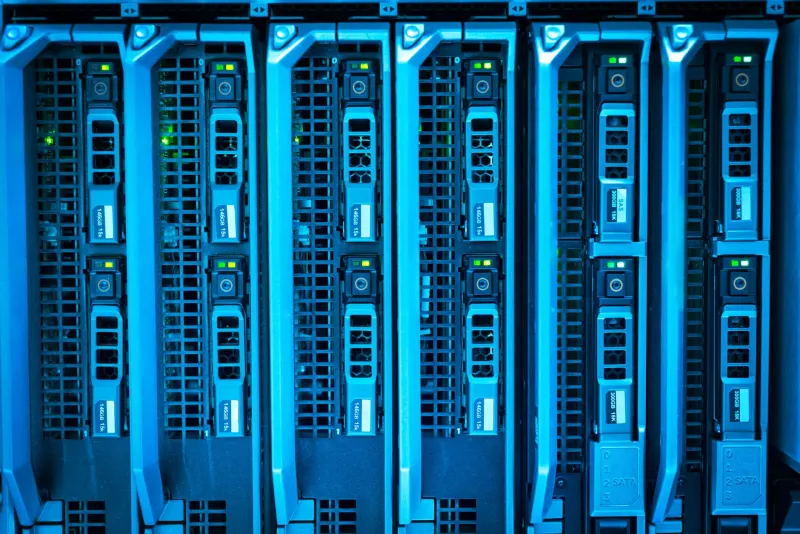
Gaining entry to these heavily guarded locations requires rigorous security measures, including submitting passports in advance and navigating keycard-locked doors. Inside the server rooms, the environment is utilitarian, warm, and dominated by the piercing noise of cooling fans. Marx argues that the sheer scale of this construction is fundamentally unsustainable and out of line with a livable planet, driven by the hubris of tech billionaires seeking to expand their influence.
The environmental costs are compounded by social costs, including chatbot dependence and misinformation. Marx notes that the expected economic and service benefits of generative AI have largely failed to materialize for the general public, while the infrastructure demands continue to grow unabated.
A unifying political issue
Unlike abstract software or services accessed via a phone, a physical data center directly impacts a community's quality of life. Residents face potential strains on power bills, local water supplies, and increased noise pollution from heavy air conditioning units operating on rooftops. Marx notes that this localized friction explains why data center opposition has found common cause among politicians from across the political spectrum, drawing criticism from figures as varied as Bernie Sanders and Ron DeSantis.
This pushback extends beyond data centers to other physical manifestations of the tech industry, such as Flock automated cameras, Meta smart glasses, and Waymo self-driving cars. Communities find it easier to directly challenge these physical presences than to fight software platforms.
Industry response and future outlook
While major tech firms such as Microsoft, Amazon, and OpenAI have recently pledged to drop non-disclosure agreements in negotiations with local governments, Marx suggests this step will have limited impact on the core conflict. Tech companies are also beginning to propose funding a larger share of the necessary electricity infrastructure to ease grid pressures. However, the broader friction persists as communities push back against the physical and environmental manifestations of an expanding tech landscape.






Comments