
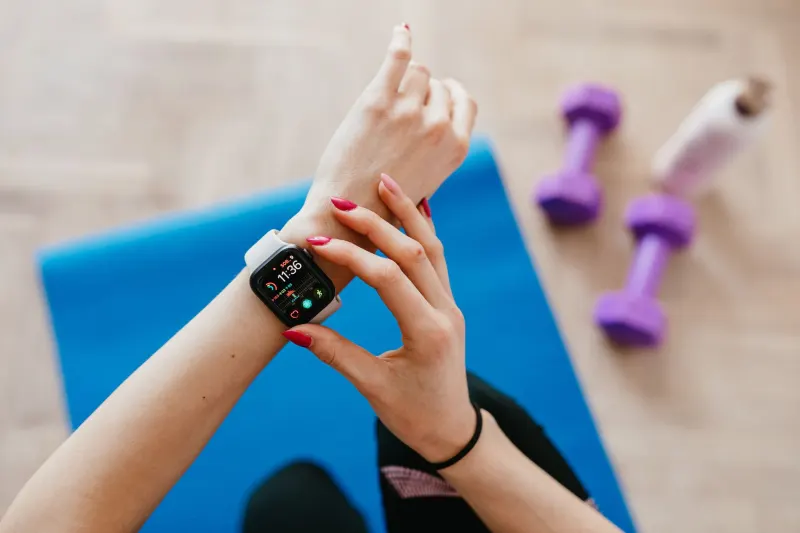
When purchasing a fitness tracker meant for constant daily wear, evaluating its long-term viability requires looking at several critical factors. Wearables face constant physical challenges, from accidental knocks and scrapes during heavy deadlift sessions to everyday exposure to sweat and moisture. Beyond mere physical durability, a device's longevity is fundamentally tied to its internal battery health and the ongoing software support provided by the manufacturer. Without timely security updates and app compatibility, even a physically pristine tracker quickly becomes obsolete.
Key takeaways
- Fitbit devices like the Edge feature an IP68 rating for water resistance, though liquid protection seals degrade over time.
- Lithium-ion batteries in wearables typically handle around 300 charge cycles before practical capacity drops.
- Google offers security updates for at least two years after a Fitbit product is removed from sale.
- Legacy devices face potential compatibility issues as the original Fitbit app transitions to Google Health.
Evaluating physical durability and environmental wear
Most daily impacts will only cause cosmetic damage unless the screen or physical buttons are directly destroyed, meaning the primary hardware concern is water resistance. Devices such as the Edge come equipped with an IP68 rating, which allows the wearable to be submerged and keep running. However, liquid protection seals are bound to degrade over time, particularly with repeated exposure to moisture. A user who wears their Fitbit strictly for walking might never encounter trouble, whereas someone who swims daily risks a sudden breakdown a few years down the road. Sweat and repeated moisture exposure can ultimately compromise protective seals despite official water resistance ratings.
Battery degradation and charging limitations
Battery health represents another strict ceiling for wearable longevity because all lithium-ion batteries rely on a finite number of charge cycles. Wearable batteries typically handle approximately 300 charge cycles from zero to one hundred percent. Charging a device roughly once per week could theoretically yield over five years of runtime. However, practical capacity rarely reaches the absolute limit of those cycle counts. Various chemical factors usually reduce overall battery capacity to the point where users no longer consider the Fitbit usable, as most people prefer to avoid charging a wearable multiple times per day. Although models like the Edge feature a replaceable battery, it remains the exception, leaving users with no choice but to dispose of most Fitbit devices once this threshold is crossed.
Software support cycles and app evolution
Software obsolescence often dictates the end of a device's useful life just as much as hardware failure. Google explicitly states that it provides security updates for at least two years after a Fitbit product is no longer actively on sale. Current models benefit from updates stretching through 2028 and likely beyond, depending on hardware refresh cycles, while older models that launched in 2022 like the Inspire 3, Versa 4, and Sense 2 face earlier end-of-support timelines. Furthermore, security updates are distinct from active feature support. Manufacturers frequently prioritize newer hardware, and older products eventually struggle to keep pace with evolving software features. For instance, advanced health monitoring features such as irregular rhythm notifications work with only a narrow range of Fitbits despite older unsupported models possessing compatible heart rate sensors. As the transition from the original Fitbit app to Google Health continues, legacy compatibility remains uncertain. Owners may eventually encounter broken or missing basic functions, forcing an upgrade regardless of physical damage, battery health, or active security vulnerabilities.





Comments