
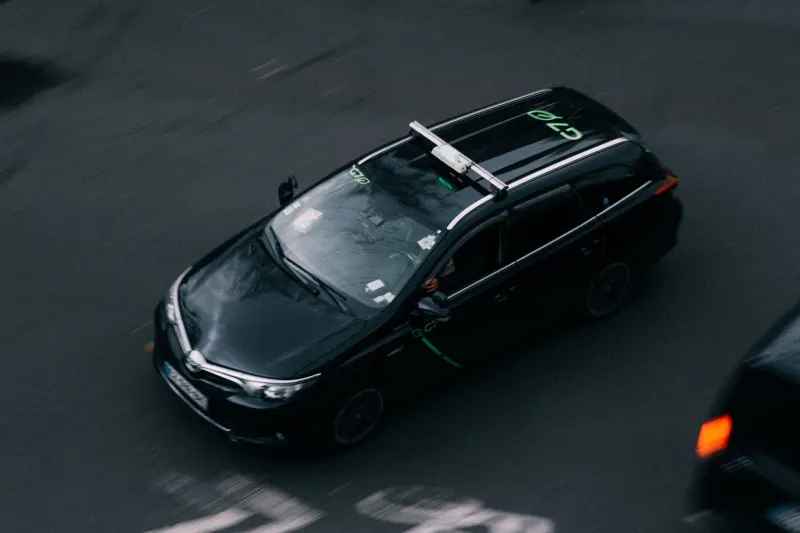
Las Vegas is quickly becoming a primary real-world laboratory for comparing human-driven and autonomous ride-hailing services. Recent industry developments have placed autonomous vehicles and traditional human drivers in direct competition, offering a glimpse into how consumers navigate transit choices when given automated alternatives.
Uber recently integrated Zoox robotaxis into its ride-hailing platform in Las Vegas, joining Hyundai’s self-driving subsidiary Motional as an autonomous partner in the city. While customers cannot yet manually select a dedicated robotaxi for every trip, Uber matches riders with available autonomous vehicles when applicable. Uber CEO Dara Khosrowshahi noted during the company's third-quarter earnings call that a dedicated autonomous option will roll out in the app as reliability and availability improve, making Las Vegas the first U.S. city where riders can access two fully driverless partners directly through the platform.
Key takeaways
- Las Vegas is becoming a live testing ground for human-driven and autonomous ride-hailing choices.
- Uber integrated Zoox into its app in Las Vegas alongside its existing partner Motional.
- Uber plans to introduce a dedicated autonomous option in its app as reliability improves.
- Tesla currently holds 1,507 registered robotaxis in Texas, leading Waymo's 1,345 registered vehicles in the state.
Shifting metrics in the autonomous vehicle landscape
The broader autonomous vehicle sector continues to experience a complex mix of progress and operational hurdles. Waymo recently pulled its robotaxis off freeways, illustrating ongoing challenges for autonomous fleets, while companies like Tesla expand their footprints. In Texas, Tesla has surpassed Waymo in registered robotaxis with 1,507 vehicles compared to Waymo's 1,345. However, industry analysts note that registered vehicle counts may be less indicative of market leadership than commercial driverless miles and cost-efficiency metrics such as driverless miles per vehicle, where Waymo has maintained an advantage.
At the same time, Tesla is scaling its manufacturing ambitions by committing approximately $3.3 billion to expand its Berlin gigafactory to build Cybercabs. The company recently invited select customers to preorder the autonomous golden Cybercab for personal use at a base price of $29,990, paired with a $299 monthly operational fee, restricted delivery regions, and location-limited operations.
Corporate shifts and funding across transportation tech
Beyond autonomous fleets, executive changes and funding rounds are reshaping the broader mobility space. General Motors has reportedly enlisted executive search firm Heidrick & Struggles to identify potential successors for CEO Mary Barra, taking a two-track search approach that considers traditional automotive leaders alongside non-traditional executives. Meanwhile, venture activity remains active across automotive software and electric aviation. Dutch aerospace firm Elysian Aircraft secured €12 million in funding, and dealership AI operating system startup Numa closed a $45 million Series C round led by Blue Cloud Ventures.
Additional sector movements include Mahindra Last Mile Mobility eyeing an initial public offering in roughly 18 months, European electric motorcycle maker Stark Future raising at least €150 million in equity, and dealership software seller Vincue securing $93 million in a round led by Wavecrest Growth Partners. As automated transit deployments scale—including Zipline and Uber launching drone deliveries in a Houston suburb—the intersection of human labor, autonomous fleets, and corporate strategy will heavily influence the trajectory of modern transportation.






Comments