
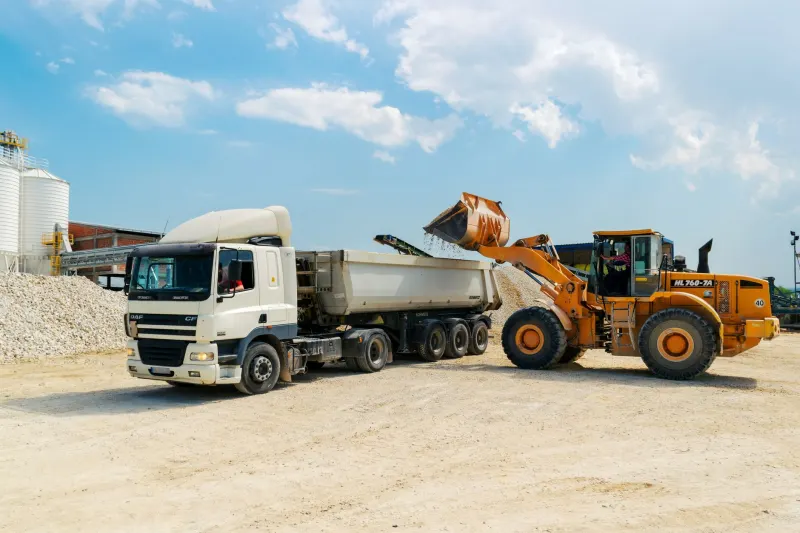
A massive 12,000-pound construction machine has learned to execute complex acrobatic movements and autonomous stunts using artificial intelligence rather than human operators. Researchers affiliated with ETH Zurich, Blue River Technology, Gravis Robotics, and Intel successfully trained a John Deere 332G skid-steer loader to lift itself onto two wheels, maintain strict balance, navigate uneven terrain, and execute controlled spins entirely without human assistance. The project explores the boundaries of simulation-to-reality transfer, demonstrating how machine learning can push heavy industrial equipment far beyond its conventional operating capabilities.
Key takeaways
- A 12,000-pound John Deere 332G skid-steer loader was trained to perform autonomous stunts using reinforcement learning.
- Researchers from ETH Zurich, Blue River Technology, Gravis Robotics, and Intel collaborated on the engineering project.
- The control system was initially trained inside a computer simulation before being transferred to the physical construction machine.
- The five-ton loader can balance on two wheels, spin on uneven terrain, and manipulate its front bucket while maintaining stability.
Overcoming Heavy Machinery Automation Hurdles
The John Deere 332G skid-steer loader is an industrial machine designed primarily for moving materials and conducting standard construction work. Rather than relying on conventional programming methods, the research team developed an artificial intelligence system that learned appropriate movements through continuous training and feedback loops. The project depended heavily on reinforcement learning, a specialized machine learning approach where an artificial agent refines its decisions based on a system of rewards and penalties.
Experimenting with physical heavy machinery presents severe safety hazards, particularly when testing maneuvers that require lifting an entire 12,000-pound body off the ground. To mitigate these dangers, the team first trained the control system inside a computer simulation before transferring the learned instructions to the actual hardware. This simulation-to-reality strategy helped address the profound difficulties associated with automating heavy machinery, specifically the complications introduced by complicated hydraulic mechanisms. Hydraulic systems inherently involve nonlinear responses, fluid movements, flexible components, and operational delays that make precise automated control exceptionally difficult.
Executing Acrobatic Maneuvers in the Real World
Once the trained control system was successfully deployed to the physical hardware, the five-ton loader demonstrated the ability to raise itself onto two wheels without any operator on board. The machine successfully maintained that precarious position while traveling across rough ground and following predetermined movement patterns. Furthermore, the public demonstrations featured controlled rotations while balancing on two wheels, alongside the ability to repeatedly move the front bucket before returning safely back onto all four paws.
Executing these advanced stunts requires finely coordinated control of the loader's wheels, its hydraulic equipment, and its shifting center of gravity during continuous changes in mechanical stability. The artificial intelligence system must dynamically adjust its actions while simultaneously accounting for the machine's changing physical condition and the surrounding terrain. Although the study highlights how reinforcement learning can drastically expand the capabilities of heavy equipment, researchers noted that the experiments focused on specialized demonstrations rather than establishing full autonomy for everyday industrial operations. Determining whether similar systems can deliver dependable, safe performance during ordinary industrial work will require extensive further testing under standard operating conditions.







Comments