
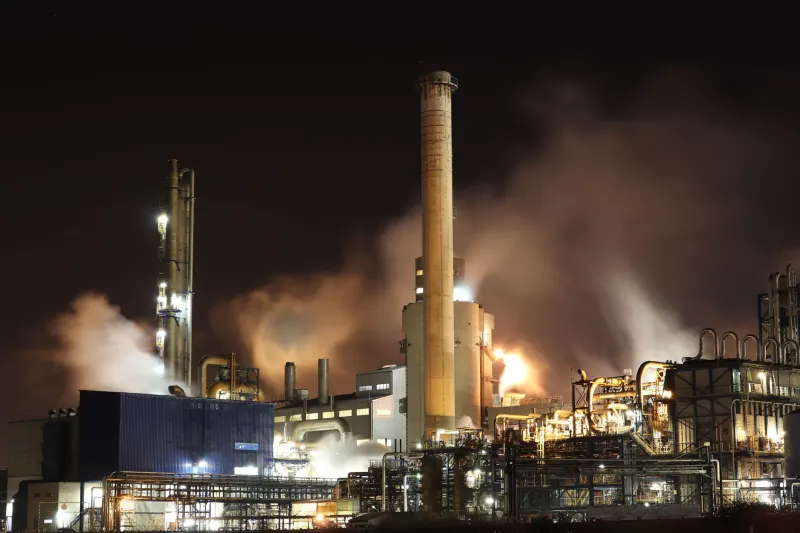
Williams, a major provider of gas power to several Meta data centers, met with Environmental Protection Agency leaders in the period leading up to the agency's recommendation to waive acid rain regulations for data-center power plants. Documents obtained by WIRED show that the oil and gas infrastructure company held private discussions with the agency as the administration loosens a number of environmental requirements for data centers and the natural gas plants being built to power them. Joseph Goffman, the former assistant administrator at the EPA's Office of Air and Radiation, notes that the administration is attempting to relax or suspend a range of regulatory requirements for these data centers.
In July, the EPA announced new federal guidance for states regarding participation in the Acid Rain Program following inquiries from companies and states. The decades-old program was designed to reduce harmful emissions of chemicals that cause acid rain, requiring power plants to submit permit applications two years before coming online and regularly monitor emissions. The EPA recommended that islanded power plants, which are increasingly adopted by data centers across the country, be exempt from the program because they exclusively power data centers rather than selling electricity to the grid.
Key takeaways
- Williams met with EPA leaders prior to the agency's recommendation to waive acid rain rules for data-center power plants.
- The EPA's July guidance recommended exempting islanded power plants that exclusively power data centers from the Acid Rain Program.
- Williams sent a February letter to the Utah Department of Environmental Quality arguing that current regulatory uncertainty created obstacles for data center development.
- Williams has at least six data-center power plant projects across the country, with Meta serving as the client for at least four projects in Ohio and one in Utah.
Private Meetings and Regulatory Push
Documents obtained from the EPA show that Williams was one of three private companies that asked regulators for guidance on the program. In a February letter sent to the Utah Department of Environmental Quality, Williams director of permitting Steve Hall wrote that current regulatory uncertainty around power plants built solely to power data centers has created obstacles for data center development in the United States. Hall argued that the company believed its power plants were not subject to Acid Rain Permit program requirements because the program was never intended to apply to sources that do not sell power to the public grid. He added that federal guidance would accelerate deployment of critical infrastructure and support national goals for digital infrastructure and energy reliability in the global AI race.
Calendar invites provided by the EPA show that Hall and other executives were invited to at least two meetings with EPA officials earlier this year, including a meeting with Aaron Szabo, then the chief of the agency's Air office. In an external meeting request form filed in April, Williams indicated that its request to discuss projects in Ohio and Utah was urgent. The EPA confirmed that Williams requested regulatory guidance for both projects and that the meetings broadly discussed air regulations. As of November, Williams had at least six data-center power plant projects across the country, including four in Ohio and one in Utah with Meta as the client.
Emissions Monitoring and Future Implications
Williams first publicly proposed the exemption to the Acid Rain Program in September 2025 during testimony to the House of Representatives by Mark Gebbia, then the company's vice president of environmental, permitting, and regulatory affairs. Gebbia suggested ways the EPA should change or clarify Clean Air Act implementation, including exempting behind-the-meter data centers from Acid Rain Program requirements due to long permit timelines. While natural gas plants emit lower levels of nitrogen oxide and sulfur dioxide than traditional coal-fired power plants, the acid rain regulations also created crucial reporting requirements that are now in jeopardy for data-center power plants.
Exempting these power plants from complying with acid rain regulations may jeopardize how much information regulators eventually receive about emissions, including carbon dioxide. Goffman and Carrie Jenks, who directs the Environmental and Energy Law Program at Harvard Law School, agree that the EPA's guidance seems to stick to the letter of the law since the program was explicitly intended to apply only to power plants selling power to the grid. However, Jenks points out that when the program was created in 1990, no one envisioned wealthy tech companies building hundreds of megawatts of private fossil-fuel power not connected to the grid. Estimates show there is more than 110 gigawatts of planned behind-the-meter gas projects in the US, with some facilities on track to be among the largest natural gas plants in the world.







Comments