
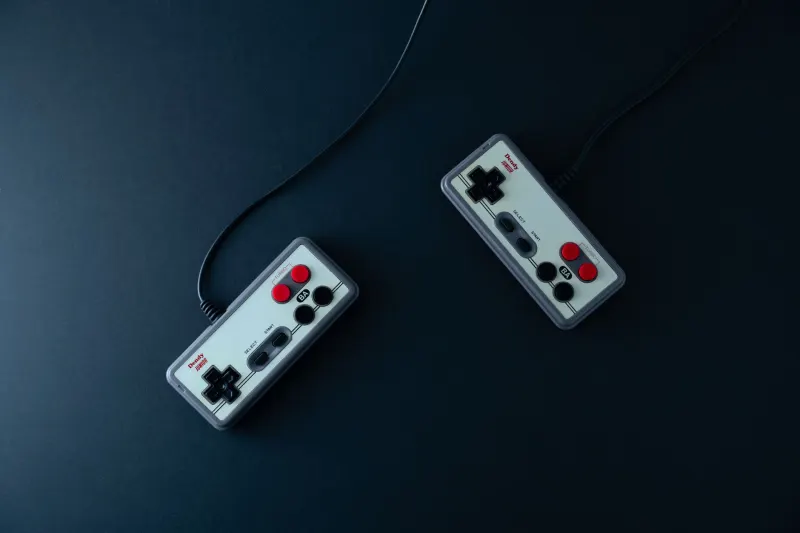
In an unexpected fusion of modern artificial intelligence and 16-bit retro hardware, tech journalist and enthusiast Benj Edwards has managed to get a tiny version of ChatGPT running on a 35-year-old Super Nintendo Entertainment System. While the trend of running classic software like Doom on unconventional household appliances has long been a staple of the hardware modding community, channeling modern AI models onto pre-Y2K gear has emerged as a new technical benchmark. The project bridges decades of computing history, utilizing custom-built ROMs and vintage silicon to power a text-generation experience complete with classic Nintendo-style audio cues.
Running a complex language model on a decades-old video game console required significant technical gymnastics. The internal Ricoh 5A22 CPU on the SNES runs at a modest 2.68 MHz, rendering it far too weak to handle an artificial intelligence model independently. To bypass this hardware limitation, Edwards offloaded the heavy mathematical processing onto the 21.47 MHz of RISC processing power provided by a Super FX 2 coprocessor housed within a specialized cartridge. To assemble what he describes as a tiny fake mind inside a console, Edwards relied completely on AI agents to write and code the necessary ROM under his direct guidance.
Key takeaways
- Benj Edwards successfully ran a tiny, distilled version of ChatGPT on a Super Nintendo Entertainment System.
- The system utilizes the internal Ricoh 5A22 CPU combined with a Super FX 2 coprocessor to handle processing.
- The mod is available in a pure 4MB model and a larger 19MB version featuring a Wikipedia-backed fact book.
- Users can test the project via a browser emulator or download the ROM onto a compatible flash cart like the FXPak Pro.
Build options and performance limitations
The ChatGPT for SNES project is available in two distinct build choices for retro enthusiasts and curious developers. The first option is a pure 4MB model that draws every single answer exclusively from its built-in 8,000-word vocabulary. The second and larger option spans 19MB and incorporates a fact book, utilizing an on-cartridge MSU-1 data file to reference the opening sentences of roughly 150,000 Simple English Wikipedia articles.
Demonstrations of the system hooked up to a JVC CRT display reveal a quirky user experience. Players can use an official SNES controller to type out questions using an on-screen keyboard, accompanied by custom text-typing sounds and background music. However, expectations for output quality must remain low. Due to the tiny scale of the 2.2 million parameter model, Edwards notes that it frequently hallucinates, makes mistakes, and often delivers inaccurate answers with complete confidence.
How to try the retro AI experiment
For those looking to experience running artificial intelligence on a 16-bit console without tracking down vintage hardware, the entire creation can be run directly inside a web browser via an online emulator. Alternatively, enthusiasts who own original equipment can download the ROM file and run it locally on compatible flash cartridges, such as the FXPak Pro. While the project is explicitly not a useful daily driver assistant for planning holidays or finding dinner recipes, it stands as a remarkable testament to creative engineering and retro-computing ingenuity.







Comments