
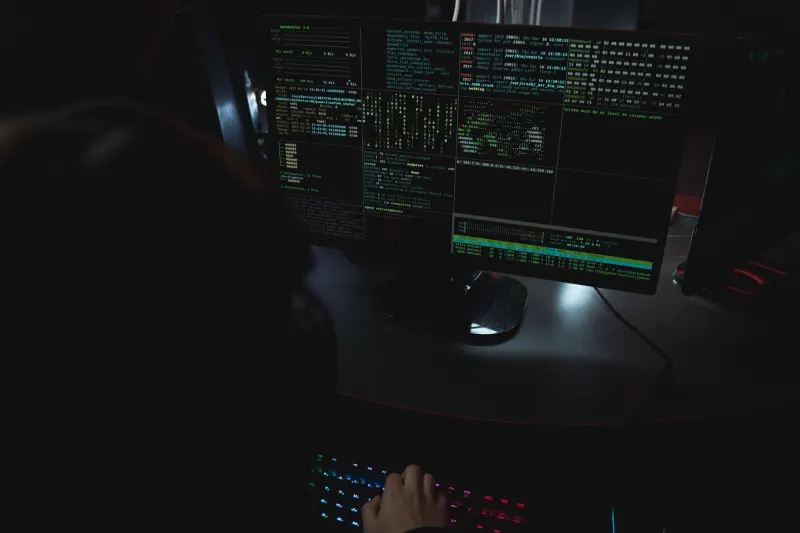
Anduril co-founder Palmer Luckey issued a stark warning regarding the state of modern cybersecurity, asserting that artificial intelligence tools are enabling attackers to build exploits significantly faster than legacy systems can be defended. Speaking with Andrew Ross Sorkin at the New York Times DealBook Summit, the Oculus founder argued that the primary danger lies in a speed mismatch between fast-moving malicious actors and outdated enterprise technology stacks. While Luckey predicted that artificial intelligence will ultimately benefit defenders in the long run, he emphasized that organizations must drastically accelerate their adoption of new security measures to survive the current transition period.
The timing of Luckey's remarks coincided with a wave of major technological disruptions across the United States. Critical systems belonging to Microsoft, the Federal Aviation Administration, JPMorgan Chase, Zelle, and the National Security Agency experienced significant operational outages. Government officials, including Director of National Intelligence Jay Clayton and Secretary of State and National Security Adviser Marco Rubio, quickly clarified that the widespread failures were not the result of coordinated cyberattacks by nation-states. Instead, authorities attributed the incidents to botched software updates, cascading server errors, and rushed patches applied hastily to aging infrastructure.
Key takeaways
- Palmer Luckey warned that AI tools allow attackers to develop exploits faster than legacy systems can be defended.
- Recent high-profile US infrastructure outages were attributed to botched updates and rushed patches rather than cyberattacks.
- Critical PHP vulnerabilities dubbed PHP2Shell were discovered with the help of frontier AI models from OpenAI and Google.
- Cloudflare and Amazon observed massive spikes in exploitation attempts within hours of the public vulnerability disclosures.
The role of AI in discovering critical vulnerabilities
The intricate connection between automated exploits and emergency patching became strikingly apparent through a pair of critical flaws known as PHP2Shell. Tracked officially as CVE-2026-109618 and CVE-2026-109619 with a severity rating of 9.2 out of 10, these runtime vulnerabilities in PHP were uncovered with assistance from frontier AI models developed by OpenAI and Google. Because PHP powers an estimated 70 percent of websites across the internet, prominent digital platforms such as Wikipedia and the Internet Archive briefly went dark in October to deploy emergency patches.
Security firms recorded immediate hostile interest following the disclosures. Amazon observed exploitation attempts four days before public disclosure, while Cloudflare CEO Matthew Prince reported thousands of attempts in the ten hours preceding the patch, climbing to hundreds of thousands within two hours. Furthermore, researchers documented Chinese attackers chaining the PHP2Shell flaws with Linux privilege escalation errors to achieve root access on twenty-five servers, some of which were tied directly to the United States government.
Legacy infrastructure under pressure
Faced with rapid and aggressive exploitation vectors, organizations rushed to apply fixes, inadvertently triggering severe system failures of their own making. Wall Street executives and National Security Agency representatives informed members of Congress that recent outages stemmed from frantic attempts to deploy fixes for AI-identified vulnerabilities. One congressional official noted that patches were pushed through all at once, exceeding the structural design limits of older corporate and government networks. Homeland Security Secretary Markwayne Mullin publicly warned that layering modern technology onto antiquated systems risks provoking additional disruptions.
Although commercial entities like Microsoft and the Federal Aviation Administration attributed their specific network failures to internal software bugs and router replacements rather than direct AI intrusions, the overarching crisis illustrates the immense strain placed on legacy stacks. Anduril operates as a commercial beneficiary of this tense environment, selling defense systems built around its Lattice software and securing substantial government contracts. However, industry observers note that finding bugs faster only helps if institutions can ship fixes without breaking their own networks, proving that the modern bottleneck is rooted in legacy hardware and thin testing rather than detection alone.






Comments