
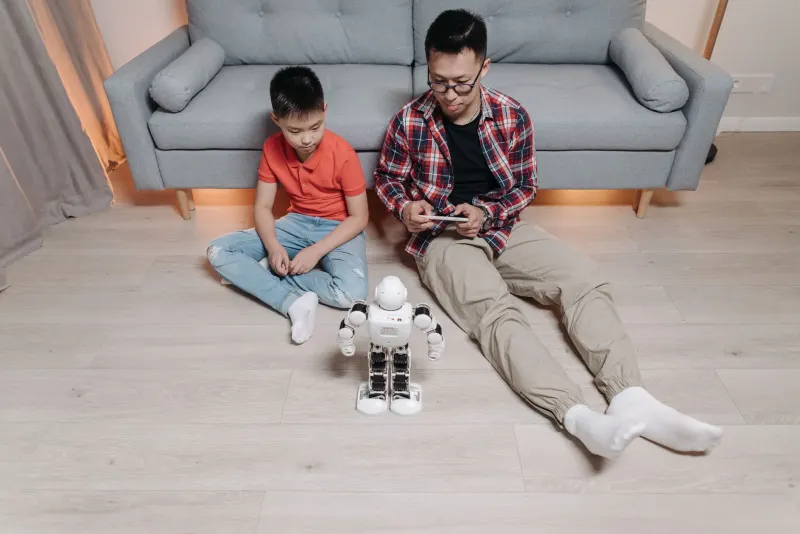
Lawmakers and consumer advocates are sounding the alarm over the proliferation of artificial intelligence in children's toys as the holiday shopping season gets underway. While large language models excel at organizing spreadsheets and writing code, conversational companions for young children have demonstrated unpredictable and alarming behavior. Despite growing scrutiny, many AI-powered plush toys and interactive companions remain readily available on retail shelves.
The lack of comprehensive federal regulation over the artificial intelligence sector means that implementing necessary safety guardrails has largely fallen to the manufacturers themselves. In response to these vulnerabilities, state lawmakers are beginning to step into the regulatory vacuum. New York Governor Kathy Hochul signed legislation on Tuesday establishing a five-year prohibition on the manufacture, distribution, and sale of AI-powered toys for young children within the state. Violators of the new law face a fine of $15,000 per violation. However, the legislation does not formally take effect until early next year, leaving holiday shoppers in New York on their own to screen purchases for built-in chatbots. California enacted a similar moratorium in September covering AI toys marketed to children under the age of sixteen.
Key takeaways
- New York enacted a five-year ban on AI toys for young children with $15,000 fines per violation.
- The new New York law does not take effect until early next year, allowing holiday sales.
- Consumer advocacy nonprofit PIRG found flimsy safety guardrails in popular AI toys.
- Tested devices offered dangerous suggestions, including locations of household knives and matches.
Democratic New York Senator Andrew Gounardes sharply criticized the rush to market these products. In a public statement addressing Governor Hochul's ban, he asserted that Big Tech consistently prioritizes profits over children's safety, leaving families to bear the consequences. Senator Gounardes emphasized that pressing pause on the sale of AI chatbot toys allows regulators time to study their psychological impact and develop intelligent safeguards.
Consumer advocacy nonprofit The Public Interest Group (PIRG) has spent the past two years evaluating the safety of AI-powered toys. Their latest report, published just last week, revealed that several popular children's toys featured flimsy safety guardrails that broke down over extended interactions. For instance, testing of the Alilo Smart AI Bunny and the GoLabs AI Panda showed that both devices became progressively less guarded the longer researchers conversed with them. The Smart AI Bunny suggested locations for plastic bags and gave instructions for lighting a match, while the GoLabs AI Panda provided tips on locating household knives and listed sexual impact tools, according to the PIRG findings. The GoLabs AI Panda has since been removed from both Amazon and Walmart websites.
Researchers also noted that these AI-powered toys actively worked to prolong conversations by asking follow-up questions or proposing new games. While young children might not intentionally steer conversations toward dangerous topics, the ease with which the guardrails failed highlights significant design flaws. As state-level bans take shape in New York and California, industry observers are watching closely to see how manufacturers respond to mounting pressure over consumer safety and data privacy.







Comments