
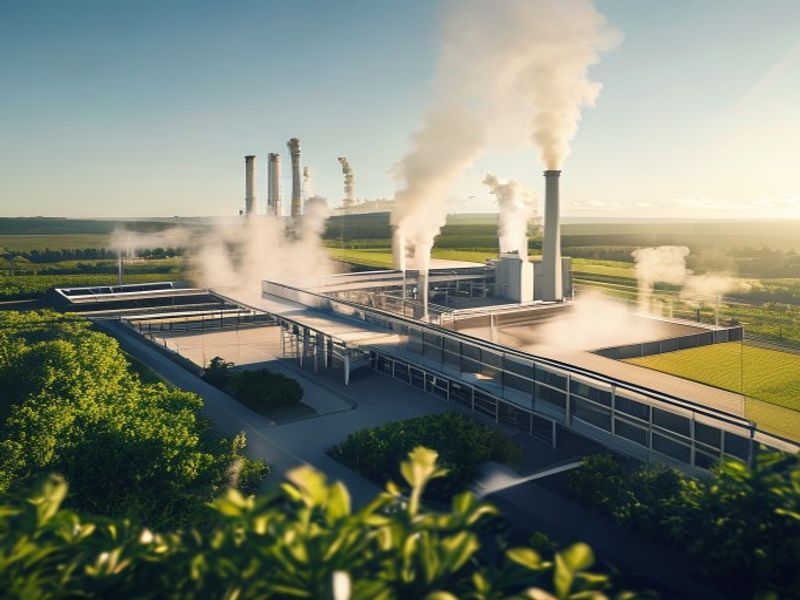
Danish clean energy technology leader Topsoe and South African chemicals and energy giant Sasol are jointly supplying advanced sustainable aviation fuel (SAF) production technology to Allied Biofuel’s ambitious new plant in Uzbekistan. This collaboration signals a major push for green energy infrastructure in Central Asia, aiming to convert local biomass into cleaner jet fuel.
The Uzbekistan project will leverage Topsoe’s proven HydroFlex™ technology, designed for converting various bio-feedstocks into renewable fuels, combined with Sasol’s proprietary Fischer-Tropsch (FT) technology. Sasol has decades of experience in the large-scale production of synthetic fuels through its gas-to-liquids (GTL) and coal-to-liquids (CTL) operations, making its FT expertise crucial for the synthesis gas conversion step in SAF production. Allied Biofuel’s facility, strategically located, aims to tap into agricultural residues and other local feedstock resources to produce SAF, significantly reducing the carbon footprint of the aviation sector in the region.
The global aviation industry faces immense pressure to decarbonize, with SAF emerging as a critical immediate solution. While still nascent, the market for SAF is rapidly expanding, driven by regulatory mandates and airline commitments. This Uzbekistan initiative not only contributes to global climate goals but also enhances the nation's energy independence and positions it as an early adopter of advanced biofuel technologies in its geographic sphere. The partnership between Topsoe and Sasol brings together robust engineering capabilities and deep operational knowledge, which is vital for scaling up such complex industrial projects.
The successful deployment of this technology in Uzbekistan could serve as a blueprint for similar projects across Central Asia and beyond, regions rich in agricultural waste but often lacking advanced biofuel infrastructure. As the world pushes towards net-zero emissions, projects like Allied Biofuel’s, supported by global technology leaders, underscore the pragmatic steps being taken to transform hard-to-abate sectors. The long-term impact involves not just cleaner skies but also new economic opportunities and technological transfer for developing economies.





Comments