
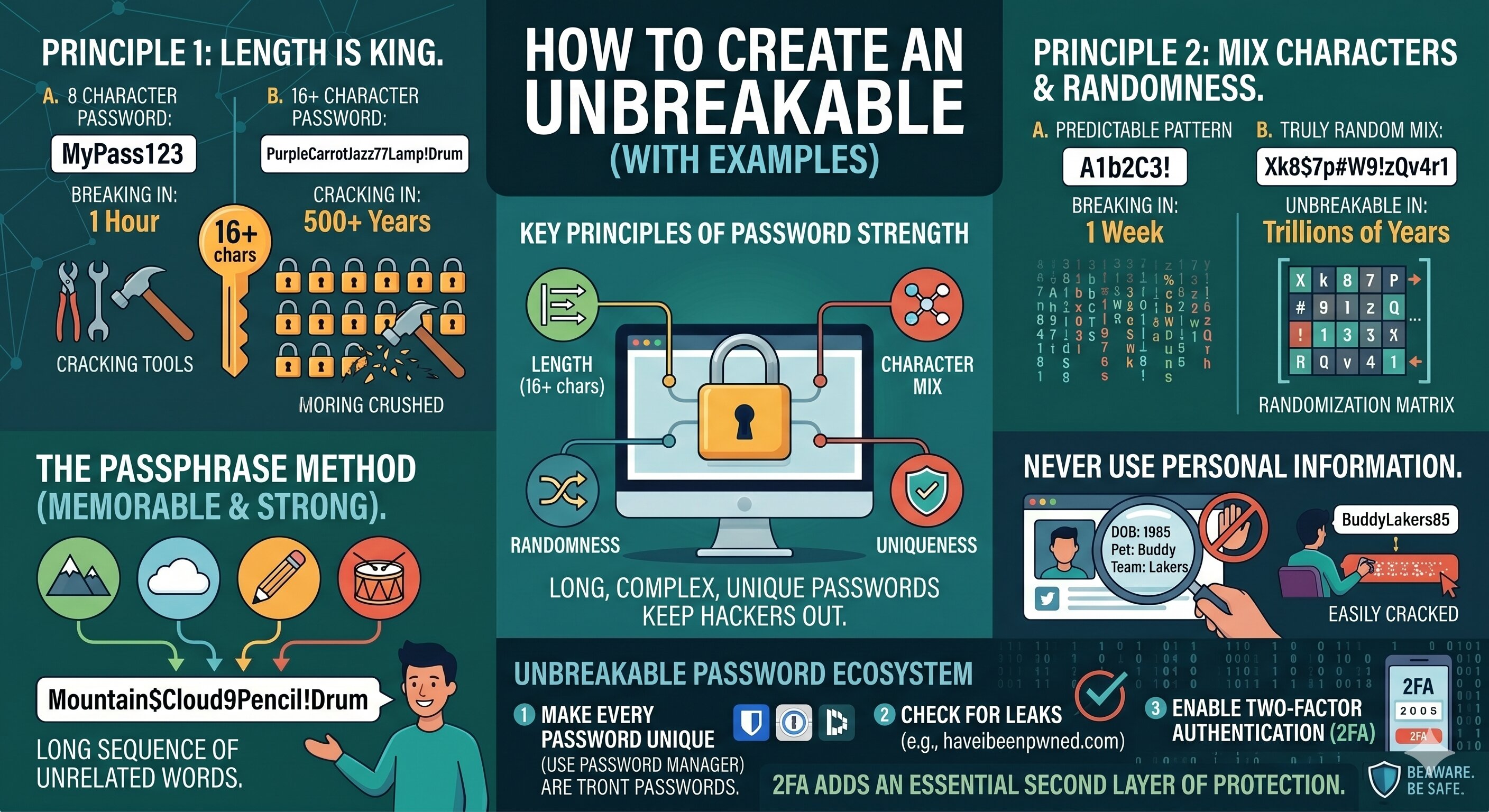
How to Create an Unbreakable Password (With Examples)
Creating a strong password
doesn't have to be complicated — but it does require following some key
principles. Here's a straightforward guide to passwords that will actually keep
hackers out.
Length Is King
The single most important factor
in password strength is length. Each additional character exponentially
increases the time needed to crack a password. Aim for at least 16 characters —
longer is always better.
Use a Mix of Characters
Combine uppercase and lowercase
letters, numbers, and special characters. But avoid predictable patterns like
'A1b2C3!' — randomness matters more than variety.
The Passphrase Method
One of the best approaches is
using a passphrase — a sequence of random, unrelated words.
Example:
'Mountain$Cloud9Pencil!Drum'
This is long, complex, and much
easier to remember than a string of random characters — but just as strong or
stronger.
Never Use Personal Information
Avoid names, birthdays, pet
names, favorite sports teams, or any information that could be found on social
media. Hackers often research their targets before attempting to guess
passwords.
Make Every Password Unique
Use a different password for
every account. Yes, that sounds overwhelming — but that's where password
managers come in. Tools like Bitwarden, 1Password, or Dashlane generate and
store unique passwords for you, so you only need to remember one master password.
Check If Your Password Has Been Leaked
Visit websites like
haveibeenpwned.com to check if your email or passwords have appeared in known
data breaches. If they have, change them immediately.
Strong Passwords Are Just the Start
Even the best password benefits
from a second layer of protection. Enable two-factor authentication (2FA) on
every account that supports it — which we'll cover in the next blog.





Comments