
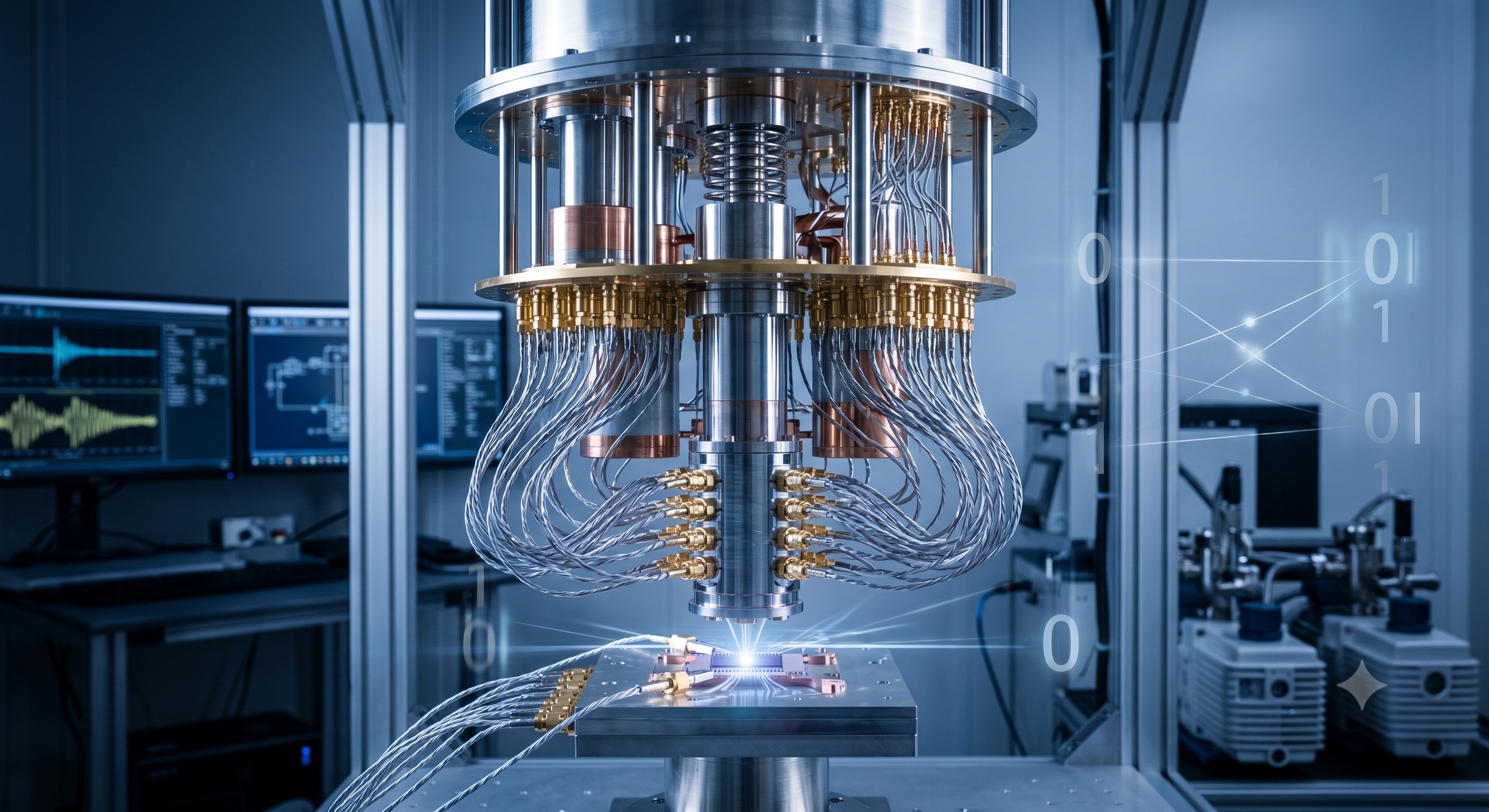
Quantum Computing Explained: The Technology That Could Change Everything
Quantum computing is one of the
most discussed and least understood technologies of our time. It's
simultaneously overhyped in popular coverage and genuinely extraordinary in its
potential. Here's a clear explanation of what it is and why it matters.
Classical vs Quantum Computing
Classical computers — including
the one you're using now — process information as bits: binary values of 0 or
1. Every calculation is ultimately a combination of these binary states.
Quantum computers use quantum
bits — qubits — which exploit quantum mechanical phenomena to exist in a
superposition of 0 and 1 simultaneously. This isn't just faster processing of
the same calculations — it's a fundamentally different way of computing.
Superposition and Entanglement
Superposition allows a qubit to
represent 0 and 1 simultaneously, enabling quantum computers to explore many
possible solutions at once. Entanglement links qubits so that the state of one
instantaneously influences others — allowing complex correlations that
classical computers must simulate expensively.
These properties give quantum
computers exponential advantages for certain types of problems.
What Quantum Computers Are Good At
Quantum computers aren't faster
at everything — they're dramatically better at specific problem types:
optimization problems (finding the best solution among enormous numbers of
possibilities); simulation of molecular and chemical systems (critical for drug
discovery and materials science); cryptography (both breaking and creating
encryption); and certain machine learning algorithms.
Where We Are Today
Current quantum computers are
what experts call 'noisy intermediate-scale quantum' (NISQ) devices. They have
limited numbers of qubits and are prone to errors from environmental
interference. They can demonstrate quantum advantage on specific engineered problems
but aren't yet solving real-world problems that classical computers can't.
The Timeline to Practical Quantum
Practical, fault-tolerant
quantum computers — capable of running complex algorithms reliably — are
estimated to be a decade or more away. The engineering challenges are immense:
keeping qubits stable requires temperatures colder than outer space. But progress
is accelerating, with major investments from governments and companies
worldwide.
Why It Matters Now
The most urgent near-term
concern is cryptographic. Sufficiently powerful quantum computers could break
the encryption that protects most of today's internet traffic. Governments and
organizations are already transitioning to quantum-resistant encryption
standards — and they need to do so before quantum computers capable of breaking
current encryption arrive.




Comments