
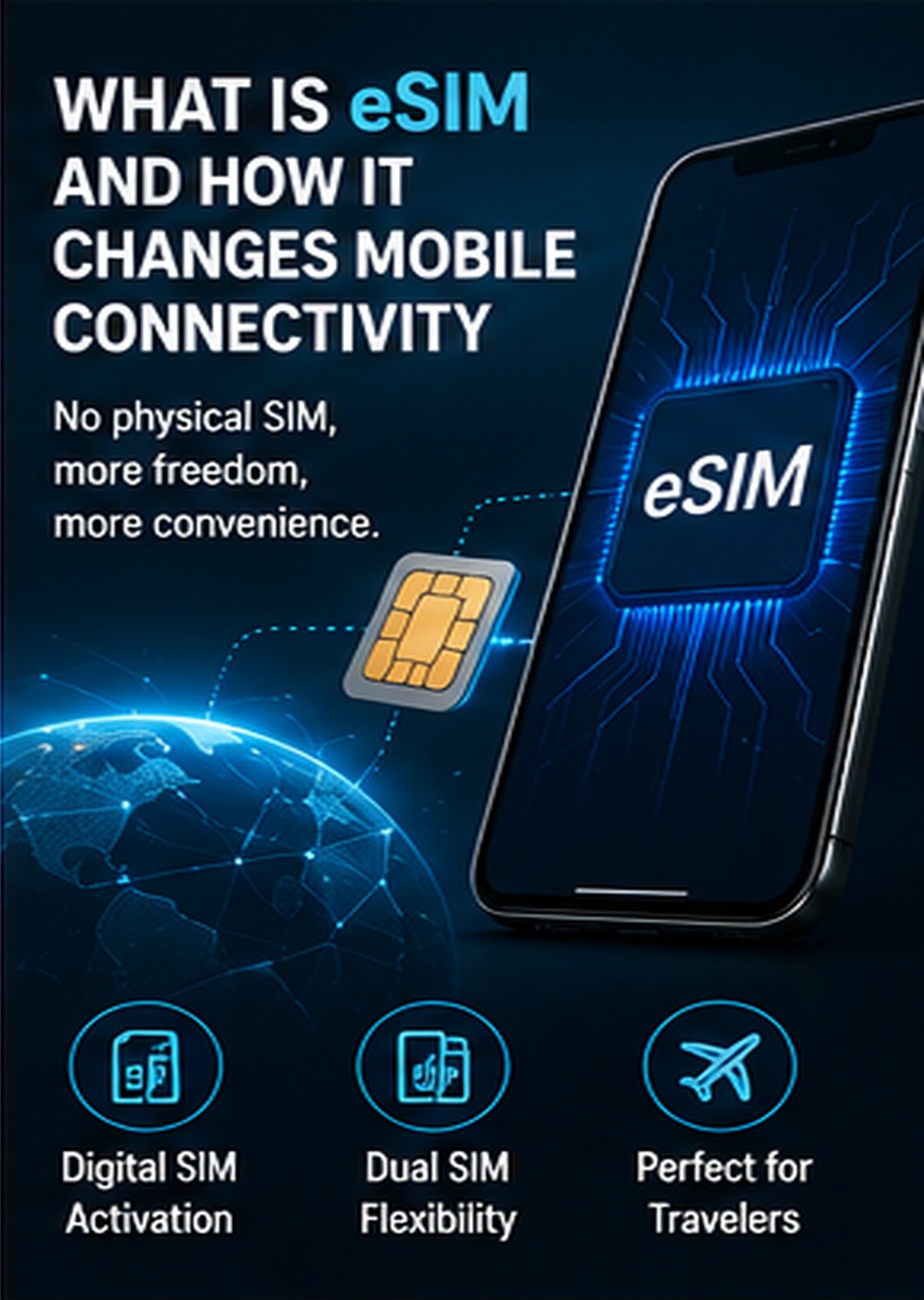
eSIM stands for embedded SIM. Unlike a traditional physical SIM card, an eSIM is built directly into the smartphone. Users can activate a mobile network plan digitally without inserting a physical SIM. Many modern smartphones now support eSIM, making connectivity easier and more flexible.
One of the biggest benefits of eSIM is convenience. Users can switch networks, activate plans, or add secondary numbers without visiting a store for a physical SIM card. It is especially useful for frequent travelers because they can activate local or international plans digitally.
eSIM also saves space inside the phone. This helps manufacturers design slimmer devices or use the extra space for other components. It can also improve durability because there is less need for a SIM tray, which may help with water and dust resistance.
However, eSIM support depends on both the smartphone and the mobile network provider. Not all phones or telecom operators support eSIM. Users should check compatibility before buying or activating an eSIM plan.
For people who use two numbers, eSIM can be useful along with a physical SIM. Many phones allow one physical SIM and one eSIM together.
As mobile technology grows, eSIM may become more common and may eventually replace traditional SIM cards in many devices.





Comments