
Researchers Uncover
Flaw in 5G Protocol Exposing Billions of Devices
Category:
Vulnerabilities & Exploits
Academic
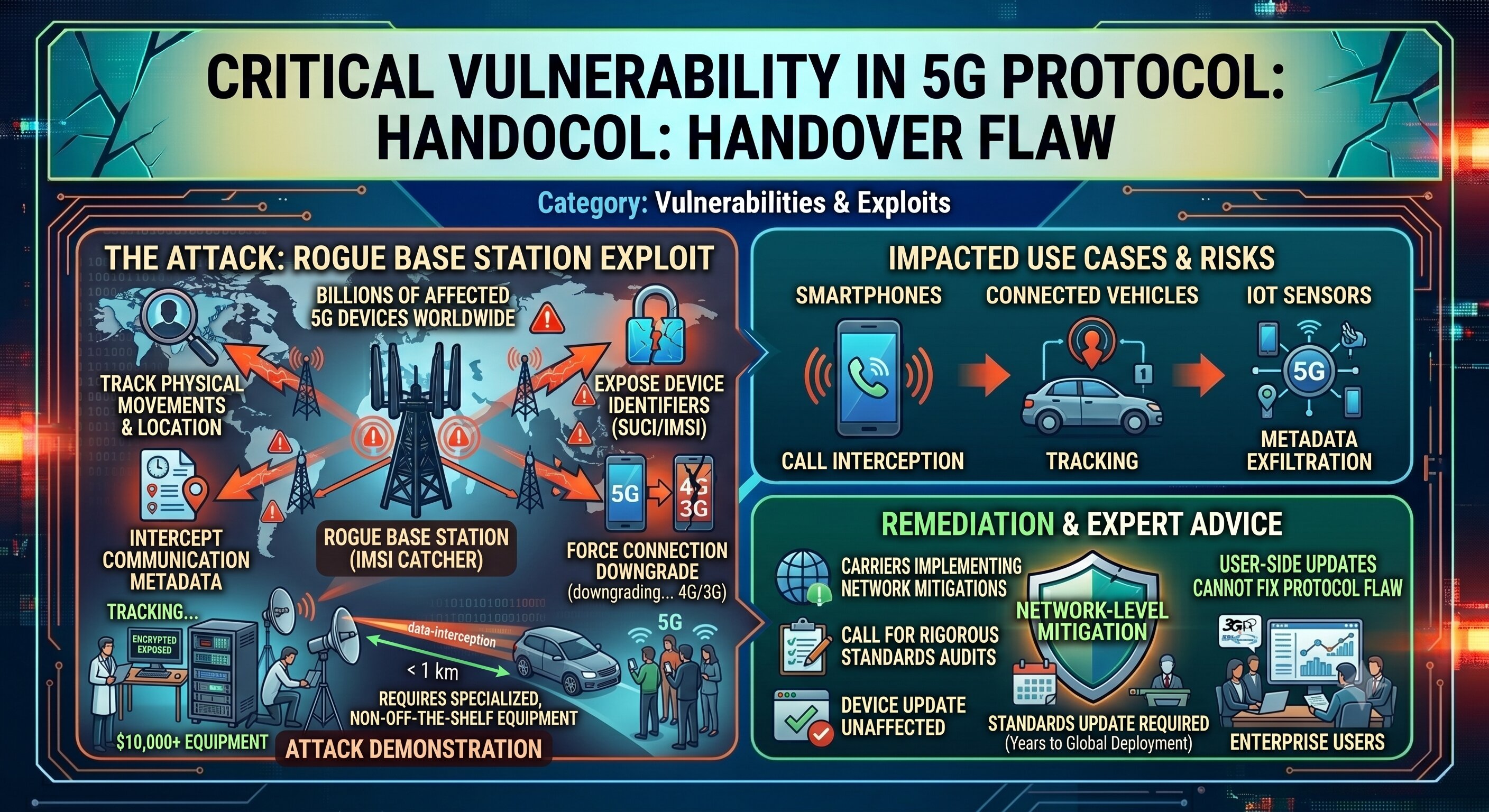
researchers have published findings detailing a serious flaw in a core
component of the 5G telecommunications protocol that could expose billions of
connected devices to interception and tracking attacks. The vulnerability,
found in the protocol's handover mechanism — the process by which a device
transitions between cell towers — could allow attackers with the right
equipment to intercept device identifiers and potentially downgrade connections
to less secure 4G or 3G networks.
The
researchers demonstrated that an attacker using a rogue base station, commonly
known as an IMSI catcher or Stingray device, could exploit the flaw to track
the physical movements of 5G users, intercept metadata about their
communications, and in some scenarios, force connections onto older and less
secure network generations that are vulnerable to established attack
techniques.
"5G was
marketed as a quantum leap in security over previous generations," said
Professor Li Wei of the research team. "Our findings show that while
significant improvements were made, fundamental weaknesses in the protocol
design remain, inherited from earlier standards."
The findings
have been shared with major telecommunications standards bodies and network
equipment manufacturers. Several carriers have already begun implementing
mitigations at the network infrastructure level. However, addressing the flaw
at the protocol level will require a standards update and may take significant
time to implement across global networks.
The research
community is calling for more rigorous security audits of telecommunications
standards before they are finalized and deployed at scale.





Comments