
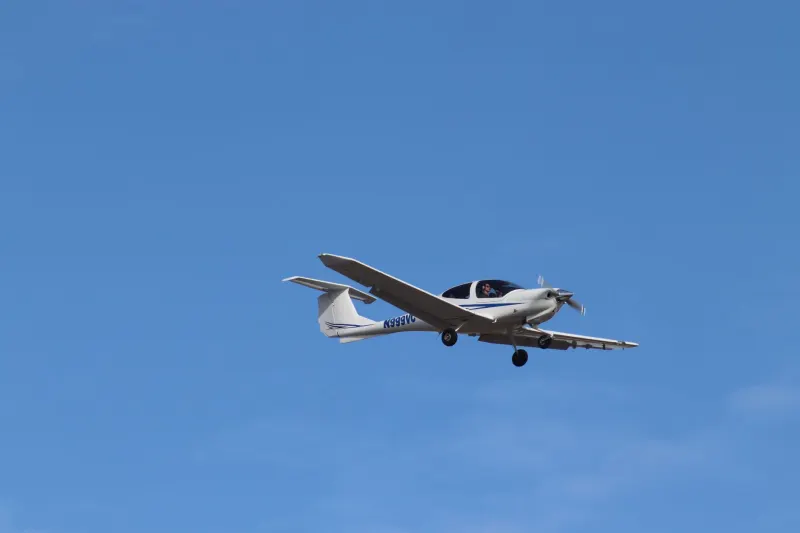
NASA has officially expanded its historic fleet of experimental aircraft by adding the X-70 Fractal to the prestigious X-plane family. Revealed on Wednesday during the UP.Summit held at the Kennedy Space Center in Florida, the new crewed research platform aims to support multiple testing programs successively without requiring engineers to construct a brand-new vehicle for each individual project. According to space agency statements, the experimental vehicle is projected to make its debut flight within the next two years, ushering in a versatile chapter for American aeronautics research.
Laurie Grindle, director of the Aeronautics Division within NASA's Research and Technology Mission Directorate, emphasized the strategic importance of the addition in a public statement. For decades, NASA Aeronautics has relied on its experimental X-planes to develop pioneering technologies that advance modern aviation. The X-70 Fractal intends to accelerate that pace by serving as a highly adaptable flying laboratory for upcoming engineering challenges.
Key takeaways
- NASA announced the X-70 Fractal during the UP.Summit at the Kennedy Space Center in Florida.
- The experimental aircraft features a modular design capable of carrying up to 2,000 pounds of internal and external payloads.
- The crewed vehicle has a takeoff weight of 10,000 pounds and targets a cruising speed of Mach 0.75.
- NASA anticipates conducting the first flight of the X-70 Fractal within the next two years.
Modular Design and Flight Specifications
Unlike traditional experimental aircraft that are custom-built to target a single research goal, the X-70 Fractal prioritizes flexibility and interchangeability. The crewed vehicle features a modular architecture that allows engineers to swap internal and external experimental payloads quickly between distinct research campaigns. Furthermore, it incorporates rapidly reconfigurable flight-control technology, enabling teams to test a variety of aerodynamic concepts using the exact same physical airframe.
Technical specifications outline a robust platform with a total takeoff weight of 10,000 pounds, equivalent to 4,536 kilograms. The aircraft is engineered to accommodate up to 2,000 pounds, or 907 kilograms, of payload distributed across multiple locations. In terms of flight performance, the X-70 is designed to reach cruising speeds of Mach 0.75 while operating at maximum altitudes of up to 45,000 feet, which translates to roughly 13,700 meters.
Continuing a Legacy of Experimental Aviation
The introduction of the X-70 Fractal builds upon an aviation testing legacy that stretches back to the 1940s. As one of the longest-running experimental research initiatives in the United States, the X-plane program historically functions to evaluate technologies, flight concepts, and aerodynamic configurations that carry too much risk for conventional commercial development.
Famed predecessors in this lineage include the Bell X-1, which famously broke the sound barrier in 1947, and the record-setting X-15 hypersonic research aircraft. More recently, NASA has been executing test flights for the X-59 quiet supersonic jet, a specialized aircraft designed to mitigate loud sonic booms into quieter thumps. NASA Administrator Jared Isaacman noted that the unique capabilities of the X-70 Fractal will keep research teams flying, learning, and transitioning swiftly from one advanced flight-control experiment to the next.







Comments