
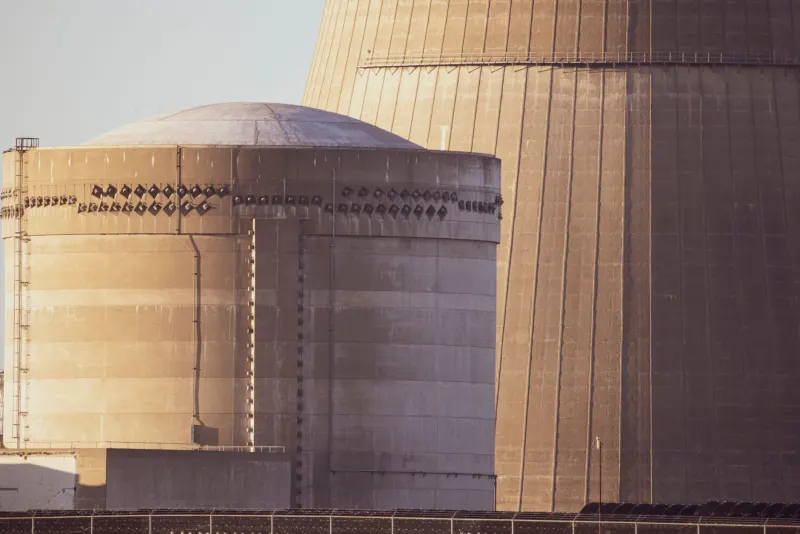
Physicists have successfully demonstrated helicon current drive at the DIII-D National Fusion Facility, breathing new life into a theoretical concept that was shelved back in the 1980s. First proposed decades ago, helicon current drive utilizes high-frequency radio waves to manipulate the hot plasma inside a fusion reactor, generating an internal electric current capable of stabilizing the overall reaction. While the underlying theory has existed for a long time, the equipment available during the 1980s simply lacked the capability to deliver on these theoretical predictions. Major advancements in reactor equipment have now allowed researchers to test and successfully demonstrate the technique for the first time.
General Atomics physicists Bob Pinsker, Jeff Lestz, and Bart Van Compernolle served as co-lead authors of the research paper describing these experimental outcomes, which was recently published in Physical Review Letters. The fundamental challenge facing standard tokamak reactors involves their intrinsic pulse-length limitations. Typically, a donut-shaped tokamak uses magnetic fields to confine plasma, relying on a transformer-like arrangement where a solenoid creates a secondary magnetic field. At a certain point, the solenoid requires a reset, forcing the plasma to shut down and creating operational interruptions. DIII-D currently achieves a pulse length limited to roughly 10 seconds, while larger experimental reactors can sustain pulses for 500 or 1,000 seconds.
Key takeaways
- Physicists successfully demonstrated helicon current drive at the DIII-D National Fusion Facility.
- The technique uses high-frequency radio waves to drive plasma and stabilize fusion reactions.
- First proposed in the 1980s, the idea was shelved because equipment at the time could not support it.
- Researchers used a specialized comb-line antenna and improved diagnostic tools to validate their results.
Overcoming Past Technological Barriers
Commercial viability for nuclear fusion generally requires a steady state, meaning reactors must run continuously rather than in intermittent pulses. To achieve this, researchers explore non-inductive methods to drive tokamak currents using electromagnetic waves. Helicon current drive introduces radiofrequency energy into the torus to excite specific plasma waves that resonate with electrons, pushing them along to generate a current. Bob Pinsker noted that this does not represent an entirely different approach to fusion, but rather an enhancement technology applied to the existing tokamak framework.
During the 1980s, three primary obstacles prevented the success of this method. First, the tokamak plasmas of that era were insufficiently reactor-like to absorb the helicon waves properly. Second, the available wave-launching technology lacked sufficient efficiency. Finally, diagnostic techniques were not advanced enough to verify non-inductive currents within the plasma. Pinsker, whose doctoral thesis centered on this exact proposal, pointed out that researchers back then were hoping for a miracle because no actual reactor environment existed to test the concept.
Modern Equipment and Future Outlook
Preparation to revive the concept began as early as 2014, culminating in a new round of experiments launched in the summer of 2024 at DIII-D. The facility utilized a specialized comb-line antenna capable of launching helicon waves toward plasmas hot enough to absorb them. Concurrently, improvements in measurement techniques enabled the research team to observe the unfolding experiments with high precision. The team reported clear identification of plasma heating resulting from helicon wave absorption, while taking rigorous steps in statistical evaluation to prevent any accidental cherry-picking of fluke data.
Despite these promising results, significant hurdles remain before commercial implementation. DIII-D functions as an experimental facility and cannot fully replicate the extreme reactor-like conditions where helicon current drive offers the greatest potential. Jeff Lestz emphasized that the current findings raise numerous follow-up questions and point to several avenues for further work. Pinsker added that the most straightforward path to significant improvements involves substantially increasing the power coupled to helicon waves within the plasma, meaning further development will require time.





Comments