
Russia's ambitious initiative to establish a satellite internet network capable of competing directly with Elon Musk's Starlink is encountering severe deployment challenges in orbit. The country's Rassvet-3 spacecraft have struggled significantly to reach their intended orbital positions, casting serious doubt on the project's overall viability and its ability to deliver reliable connectivity. In response to these orbital setbacks, Moscow is reportedly pursuing an apparent replacement through an improved satellite design designated as Rassvet-4, although crucial technical details remain undisclosed.
Key takeaways
- Russia's Rassvet-3 spacecraft have struggled to reach their intended orbital positions.
- Bureau 1440 is developing Russia's Starlink competitor network.
- The proposed Rassvet-4 network involves 374 satellites across 17 orbital planes.
- Two Rassvet-3 spacecraft have reentered Earth's atmosphere following launches in 2026.
Bureau 1440, the company tasked with developing Russia's Starlink competitor, previously indicated that engineers were actively working on an improved version of the hardware. This proposed successor appears to incorporate technical changes following two separate launches that successfully delivered 32 Rassvet-3 satellites into orbit during March and July 2026. However, both deployment efforts faced severe difficulties, with several satellites failing to reach their target altitude of 800 kilometers. Two spacecraft have reportedly reentered Earth's atmosphere entirely, leaving 30 satellites remaining in orbit. By November 3, roughly 26 of those surviving units had managed to stabilize at an altitude of approximately 508 kilometers.
Amid these ongoing deployment struggles, recent international documentation filed with the International Telecommunication Union provides a glimpse into future plans. Russia has submitted paperwork concerning a proposed Rassvet-4 network involving 374 satellites operating at approximately 800 kilometers above Earth. The planned constellation is designed to occupy 17 orbital planes, with each plane containing 22 spacecraft intended to provide broad satellite communications coverage. Although Russian authorities have not officially announced the development of Rassvet-4, the regulatory filing strongly suggests preparations for another generation within the nation's planned satellite communications infrastructure. This application could concern an upgraded spacecraft rather than an entirely separate network, acting as a direct pivot to salvage the troubled deployment.
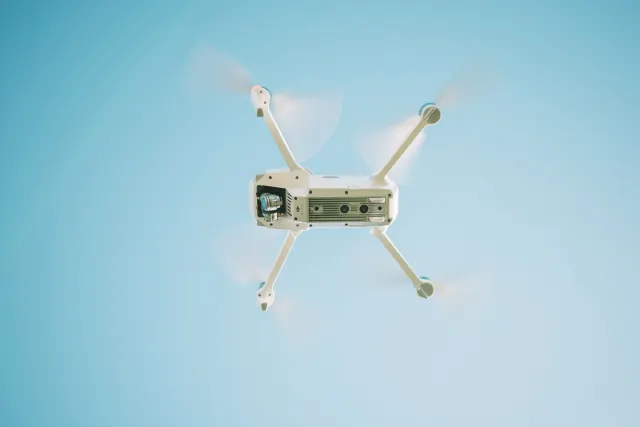
The ITU documentation reveals limited technical data concerning Rassvet-4's communications equipment, operating frequencies, and antenna beam configurations. According to the filing details, each spacecraft will incorporate 12 antenna beams, split into seven transmission beams and five reception beams designed for routine communications operations. Russian authorities could potentially introduce these upgraded spacecraft during the next scheduled launch cycle without providing advance public announcements. Meanwhile, secondary developments have drawn scrutiny, as objects resembling satellite communications terminals have reportedly appeared on Russian military drones like the Molniya-2 unmanned aerial vehicle. While these observations raise speculation regarding military applications or testing for the developing network, the exact identity of the hardware remains independently unconfirmed.



Comments