
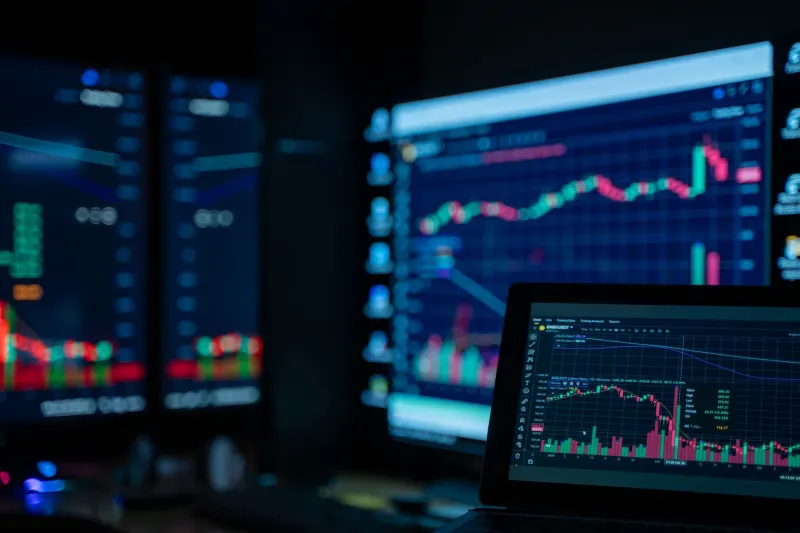
Investors hoping to secure a piece of the upcoming Anthropic initial public offering are facing a long line, with early orders for the artificial intelligence company's stock already exceeding the available supply by several multiples. According to a recent Bloomberg report citing anonymous sources, the overwhelming early demand comes as a welcome relief to the company's financial underwriters and bankers. This surge in interest demonstrates that public appetite for AI market debuts remains robust, even as the sector navigates a series of recent market and political headwinds.
The path to the stock market has not been entirely smooth for the broader artificial intelligence industry. AI stocks experienced a sharp downturn following the recent midterm elections, which saw significant victories for critics of the technology within the Democratic Party alongside voter rejections of proposed data center developments. Meanwhile, hardware giant Nvidia has faced intense scrutiny and national security questions following revelations involving CEO Jensen Huang, prompting an internal investigation by the company board. Competing firm OpenAI has chosen to delay any potential public offering this year, with CEO Sam Altman pointing to unresolved safety concerns and the advantages of remaining private.
Key takeaways
- Orders for Anthropic shares have exceeded the current offering supply several times over.
- The IPO will feature 825 million Class A shares priced between $70 and $78 each.
- Major tech giants including Google, Microsoft, and Nvidia have committed to investing $26 billion.
- Anthropic's expected valuation ranges between $1.26 and $1.41 trillion, though bankers eye targets of $1.5 trillion or more.
Financial structure and major backers
Anthropic's planned stock market debut is shaping up to be one of the largest in Wall Street history. The company intends to offer 825 million shares of Class A common stock, with an initial price range set between $70 and $78 per share. Underwriters Goldman Sachs and Morgan Stanley are positioned to receive an option during the first thirty days following the listing to purchase up to an additional 123,750,000 shares, which would push the total available share count to just under 950 million.
A network of Silicon Valley heavyweights is backing the move, with Google, Microsoft, and Nvidia reportedly agreeing to invest a combined $26 billion as the IPO proceeds. This interconnected dealmaking highlights the deep mutual dependence among tech firms that buy, sell, and lease computational infrastructure from one another. While some market analysts worry that such circular investments could form a precarious bubble, current pre-IPO enthusiasm remains high as the company advances its promotional roadshow.
Valuation expectations and future outlook
Wall Street speculation previously suggested a post-IPO valuation of around $2 trillion for Anthropic, though current pricing structures indicate a more modest target between $1.26 and $1.41 trillion. However, financial institutions such as the Financial Times have reported that bankers are evaluating higher targets near $1.5 trillion or potentially more following the official listing. Whether these figures will surpass the record-shattering $1.77 trillion valuation achieved by SpaceX during its June debut remains to be seen.
Founded roughly six years ago by former OpenAI employees, Anthropic has consistently marketed itself as a safety-conscious leader in a fast-paced and expensive field. In a letter accompanying the official IPO announcement, the company founders emphasized the immense potential of artificial intelligence to accelerate scientific research, drive economic growth, and address major medical challenges. As the company prepares for its livestreamed promotional event featuring CEO Dario Amodei and JPMorgan Chase CEO Jamie Dimon, market watchers will be closely monitoring whether Anthropic proceeds as planned or alters its timeline in response to changing economic conditions.


Comments