
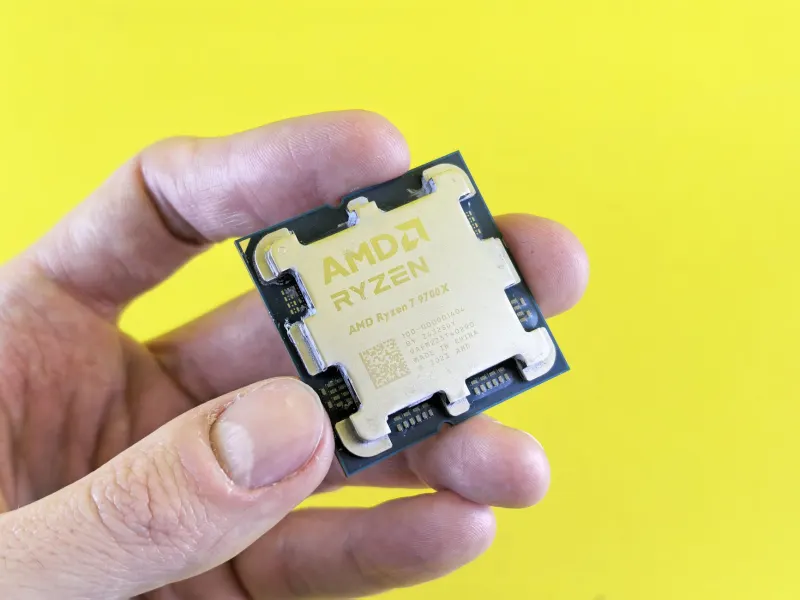
Desktop processors are advancing at a rapid pace, but AMD's upcoming Zen 6 architecture indicates that even larger performance leaps are on the horizon for PC enthusiasts and gamers alike. While consumers cannot directly compare server-level hardware with desktop chips on a one-to-one basis, looking closely at AMD's latest Zen 6 EPYC enterprise-grade processors offers a clear glimpse into the future of consumer computing. Both product lines share the same underlying microarchitecture, bringing significant hardware upgrades from manufacturing nodes down to core layouts.
At the heart of these next-generation components is TSMC’s N2P processing node. These advanced 2nm chips promise to deliver notably higher efficiency compared to the preceding 4nm Zen 5 platform. Beyond power savings, architectural modifications have dramatically increased density within the silicon. Each Zen 6 chiplet can pack up to 12 performance cores, whereas the older Zen 5 generation was limited to a maximum of eight cores per chiplet. Although each individual core retains 4MB of L3 cache, the higher core count allows a single core complex to peak at 48MB of L3 cache, marking a substantial jump from the 32MB limit found on older chips. Furthermore, these processors reach a peak frequency of 5.3GHz, outperforming the 5GHz maximum of the previous generation.
Key takeaways
- Zen 6 chips utilize TSMC’s N2P 2nm processing node for improved efficiency over Zen 5.
- Individual chiplets now support up to 12 performance cores compared to the previous eight.
- Maximum L3 cache per complex reaches 48MB alongside a higher 5.3GHz peak frequency.
- Increased core counts and component costs may result in pricier processors for consumers.
Industry watchers note that the structural modifications in Zen 6 could reduce latency by scaling up core counts per core complex die. For the average desktop builder, this points toward potential core count increases across the broader Ryzen lineup. If future Ryzen 7 chips scale up to 12 cores, gamers could see tangible performance improvements. However, building more complex, advanced chips naturally introduces higher manufacturing costs. Last year, AMD focused heavily on clock speed upgrades with products like the Zen 5-based Ryzen 7 9850X3D and the enthusiast-focused Ryzen 9 9950X3D2 Dual Edition. Early indications suggest that variants like the Venice-X 9006X SP7 point toward stacked cache support continuing into the Zen 6 era.
Rival manufacturer Intel is also preparing to introduce competitive desktop hardware next year, including high-end desktop chips within its upcoming Nova Lake series. Intel is reportedly developing its own equivalent to AMD's 3D V-Cache technology, though performance comparisons against chips built on Intel's 18A-P process node remain unknown. At the same time, broader market dynamics present challenges. AMD CEO Lisa Su recently stated that the company operates as a data center-first enterprise. Ironically, AMD acknowledged that retail PC component sell-through slowed down during recent earnings calls, citing elevated memory and component costs driven heavily by high-bandwidth memory demands in data centers. Consequently, the next generation of processors from AMD may stand as both their most powerful and most expensive consumer offerings to date.





Comments