
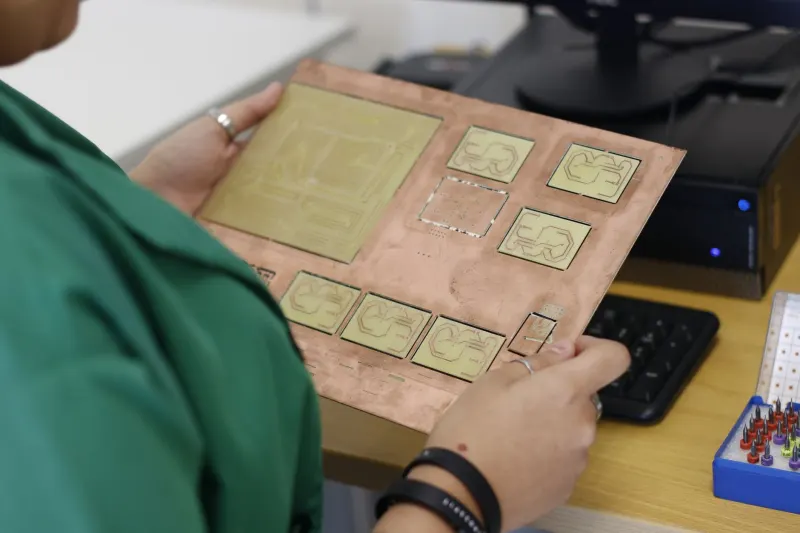
Personal computer manufacturers are facing severe supply chain constraints as soaring demand for artificial intelligence infrastructure diverts manufacturing capacity away from consumer hardware. Major vendors including HP and Dell are currently struggling to secure sufficient printed circuit boards for their 2027 product lineups, with lead times stretching drastically outward. Although global PC shipments have dropped significantly, the industry continues to battle severe allocation problems driven by the rapid expansion of AI data centers.
Key takeaways
- PC makers like HP and Dell are struggling to secure printed circuit boards for their 2027 lineups.
- Suppliers report that lead times for certain orders are stretching up to 30 months.
- AI server boards require three to five times as many layers as conventional designs.
- Global PC shipments fell 20.1% year-on-year to 62.7 million units in the third quarter.
Why AI servers are devouring circuit board capacity
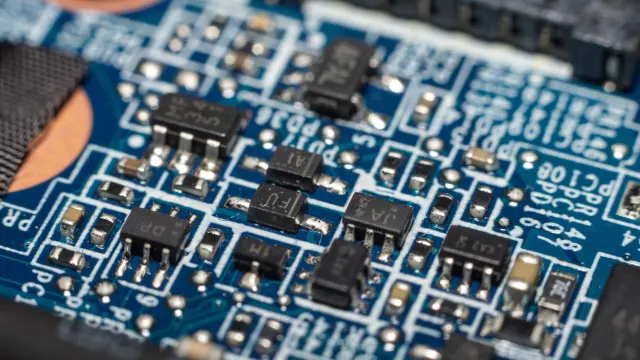
The underlying crisis stems from a massive structural divergence between consumer electronics and enterprise AI hardware. Würth Elektronik estimates that printed circuit boards designed for AI servers feature three to five times as many layers as conventional motherboard designs. Furthermore, these advanced components rely heavily on low-loss laminates and specialty glass fabrics, consuming significantly more raw material and factory time than standard electronics.
Suppliers are actively reallocating production lines to maximize profitability. Market researcher in4ma reported in July that several PCB manufacturers have informed regular customers they will halt standard board production entirely to prioritize high-margin AI server contracts. Hyperscale cloud providers are also bypassing traditional channels by investing directly into the supply chain. Most notably, Amazon acquired a stake of roughly NT$1.59 billion, equivalent to $48.2 million USD, in Taiwan's Gold Circuit Electronics in September.
The paradox of falling shipments and rising shortages
This component crunch arrives during a period of weak consumer demand for traditional computers. According to IDC, global PC shipments dropped 20.1% year on year during the third quarter, declining to 62.7 million units. During this period, HP shipments fell 30.9% while Dell shipments declined by 25%. Industry analysts note that part of this drop reflects distributors clearing out inventory accumulated earlier in the year ahead of anticipated price increases.
Despite these lower shipment volumes, major brands report ongoing difficulties in acquiring basic supplies. An unnamed executive at an American PC maker told Nikkei Asia that companies are still fighting for sufficient PCB allocations despite projecting lower shipment totals. Upstream bottlenecks compound the issue, as Nittobo controls roughly 90% of the T-glass utilized in advanced substrates, and its capacity expansions will take years to fully materialize.
Broader industry impact and supply chain outlook
The supply crunch is affecting various tiers of the hardware ecosystem differently. Canon has stated that AI-driven PCB shortages have doubled its expected medical sales hit to about ¥90 billion. Meanwhile, Unimicron chairman S.C. Chien warned the TPCA Show in Taipei that lead times for some key production equipment had reached 30 months, with over 80% of equipment seeing longer waits and more than a fifth seeing waits double their usual length.
Large OEMs with long-term contracts are expected to weather the disruption best thanks to already negotiated supply commitments. However, smaller motherboard and graphics card brands buying without that leverage are most likely to experience doubled lead times or tripled laminate bills. This could result in higher retail sticker prices or thinner product specifications as the market navigates the ongoing hardware squeeze through 2027.




Comments