
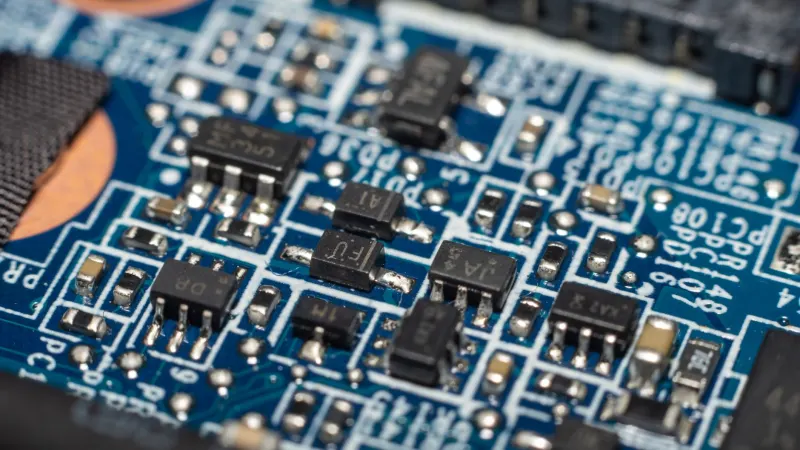
Nvidia has consistently maintained that its flagship GeForce RTX 5090 graphics card has not been officially discontinued, yet the underlying silicon driving the device is increasingly being channeled into lucrative workstation hardware. At the center of this hardware shift is the RTX PRO 5500, a professional graphics card that utilizes the exact same GB202 chip configuration as the consumer-facing $1,999 RTX 5090. While Nvidia denies halting production of its top-tier gaming card, soaring enterprise demand and massive price disparities have effectively starved the consumer market of available inventory.
Key takeaways
- The RTX PRO 5500 and the RTX 5090 share the exact same GB202 configuration featuring 170 streaming multiprocessors and 21,760 CUDA cores.
- The workstation card features 84GB of ECC GDDR7 memory and a narrower bus, yielding a bandwidth of 1,398GB/s compared to the 5090's 1,792GB/s.
- Massive Chinese bulk orders for the RTX PRO 5500 have valued the GPU configuration at up to nine times its gaming launch price.
- Anonymous reports from board partners and hardware overclocker der8auer indicate that ordering components for the RTX 5090 has become severely restricted.
Comparing silicon and specifications
On paper, the RTX 5090 and the RTX PRO 5500 share identical foundational compute power. Both cards use the GB202 die with 170 of its 192 streaming multiprocessors enabled, delivering 21,760 CUDA cores, 680 Tensor cores, and 96 megabytes of L2 cache. Despite sharing this primary silicon, the surrounding board designs diverge significantly to suit different market segments.
The RTX PRO 5500 packs 84GB of ECC GDDR7 memory using twenty-eight 3GB modules split across both sides of the board, dwarfing the 32GB capacity of the RTX 5090. However, it routes that memory over a narrower interface, resulting in a bandwidth drop to 1,398GB/s from the 5090's 1,792GB/s. Furthermore, the professional card is rated for a 600W power draw instead of 575W, can be split into two isolated 42GB instances, utilizes professional drivers, and is tailored for rack-mounted workstations equipped with blower or liquid cooling.
Economic drivers and supply chain shifts
The financial incentive for Nvidia to prioritize the enterprise workstation tier is substantial. While the RTX 5090 launched at an MSRP of $1,999, bulk orders from major buyers such as ByteDance, Alibaba, and Tencent placed the RTX PRO 5500 at roughly $11,400 per unit, with U.S. reseller listings showing a list price of $17,999. This creates an environment where the exact same core GPU configuration commands several times its consumer retail value in the professional and artificial intelligence sectors.
Reports from hardware leakers and industry analysts suggest that component allocation has steadily moved away from consumer cards. In October 2026, leaker MEGAsizeGPU claimed that future GB202 supplies would be designated as RTX Pro exclusives, while reports from TweakTown highlighted a factory notice indicating production halts for various RTX 5090 models. Although Nvidia Senior Vice President Jeff Fisher stated in Taipei that the RTX 5090 had definitely not been discontinued, reports from overclocker der8auer noted that an unnamed board partner could no longer order the GB202 silicon and 32GB memory kits required to assemble the consumer flagship.
Implications for consumers and the market
With enterprise demand significantly outstripping manufacturing capacity—Reuters sources estimated total Chinese orders for the export-compliant card surpassed six million while Nvidia could only produce three million in 2027—the commercial logic heavily favors the professional sector. Third-party actors in the gray market have even attempted to bridge the gap by stripping retail RTX 5090 cards and moving them onto custom boards for AI servers.
Ultimately, Nvidia does not need to formally rebadge or cancel the RTX 5090 to shift its business focus. By letting consumer stock dwindle while fulfilling high-volume workstation orders, 'not discontinued' and 'not available' effectively mean the same thing for gamers attempting to purchase the hardware at standard retail prices.







Comments