
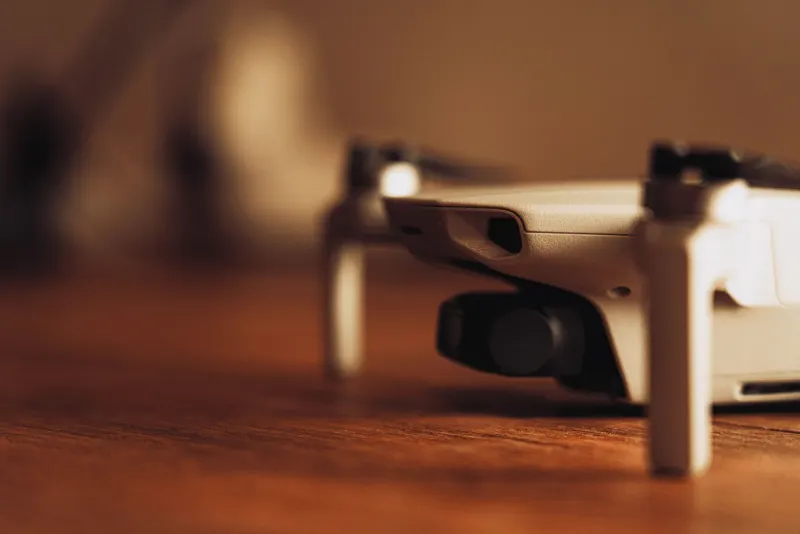
Ring has announced a new lineup of autonomous security devices under the Ring Robotics brand, introducing a $250 indoor flying drone camera and a $1,000 commercial rover for businesses. The Ring Drone Cam is designed to investigate home security alerts by lifting out of its charging dock and autonomously flying to the troubled area. Featuring a lightweight 165-gram build, the device relies on cloud-based processing powered by a custom AI Pilot agent to navigate and stream video to users' phones. Meanwhile, the enterprise-focused Ring Rover Cam repurposes hardware from Amazon's former Astro robot to patrol warehouses and factories.
Key takeaways
- The Ring Drone Cam costs $250 and launches on January 27, while the $1,000 Rover Cam arrives December 16.
- The indoor drone weighs 165 grams, operates for five to eight minutes per charge, and runs entirely on cloud intelligence.
- Both security robots utilize Ring's custom AI Pilot agent to map environments, avoid obstacles, and respond to sensor alerts.
- The commercial Rover Cam covers up to 5,000 square feet and features a telescoping 4K camera with a built-in siren.
Inside the Technology and Design of the Ring Drone Cam
CEO and founder Jamie Siminoff originally conceived the flying sentry idea in 2016 before Amazon acquired Ring. The company previously unveiled an indoor security drone called the Ring Always Home Cam in 2020. According to Siminoff, the development team kept encountering edge cases that necessitated additional sensors, increasing power and battery demands. By shifting computing intelligence from the vehicle into the cloud, the engineering team kept the drone lightweight and agile. The drone sends video directly to Ring servers, where the AI Pilot agent directs its flight path.
Users cannot manually pilot the device, but they can establish custom flight routes and patrol schedules, or let the drone automatically respond to motion, door, and window sensors. The drone uses existing Alexa Home Map data from Echo devices to navigate indoor spaces and operates only via Wi-Fi, restricting its flights to the interior of the home. Because it weighs well under the 250-gram limit and operates strictly indoors, the device does not require Federal Aviation Administration registration and is assembled in Texas.
Security, Privacy Concerns, and the Commercial Rover Cam
Privacy advocates have raised questions regarding the surveillance implications of autonomous indoor drones. Thorin Klosowski from the Electronic Frontier Foundation notes that consumers should carefully consider how such devices impact the comfort of household visitors. To address potential covert monitoring concerns, the drone features intentionally loud propellers that alert individuals when it is active. Data privacy is managed via Ring's TAKE technology, which rotates encryption keys every few minutes while temporarily holding keys on servers to process cloud-based AI features.
Alongside the consumer drone, the Ring Rover Cam targets business spaces like warehouses and manufacturing facilities. Operating with the internal hardware components of Amazon's discontinued Astro robot, the Rover Cam features a telescoping 4K camera and a projected light circle on the ceiling to indicate its location. It covers up to 5,000 square feet on a single 30-minute patrol, responds to sensor alerts, includes two-way talk, and incorporates a built-in siren before returning to its charging dock.






Comments