
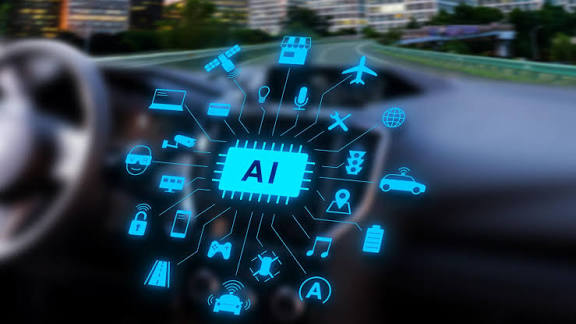
Advanced artificial intelligence models are playing a crucial role in the evolution of autonomous vehicles, transforming the future of transportation through enhanced safety, efficiency, and intelligent decision-making. As AI technologies continue to improve, self-driving systems are becoming more capable of understanding complex driving environments and responding to real-world situations with greater accuracy.
Autonomous vehicles rely on a combination of machine learning, computer vision, sensor fusion, and deep learning technologies to navigate roads and interact with surrounding environments. Modern AI models can process massive amounts of data collected from cameras, radar systems, LiDAR sensors, GPS devices, and onboard computing platforms in real time, allowing vehicles to make informed driving decisions within milliseconds.
One of the most significant advancements is in computer vision technology. AI-powered vision systems can accurately identify road signs, traffic signals, pedestrians, cyclists, vehicles, and obstacles under varying weather and lighting conditions. This enhanced perception capability helps autonomous vehicles maintain situational awareness and improve overall road safety.
Machine learning algorithms continuously learn from millions of miles of driving data. By analyzing diverse traffic scenarios and road conditions, AI models improve their ability to predict potential hazards and make safer navigation choices. This ongoing learning process helps autonomous systems adapt to new environments and unexpected situations more effectively.
Advanced AI models are also improving route optimization and navigation efficiency. Autonomous vehicles can analyze real-time traffic conditions, road closures, weather information, and infrastructure data to determine the most efficient routes. This capability reduces travel time, minimizes fuel consumption, and contributes to more sustainable transportation systems.
The integration of multimodal AI systems is further enhancing vehicle intelligence. These models can simultaneously process visual, audio, sensor, and mapping data to create a comprehensive understanding of the driving environment. This allows autonomous vehicles to make more accurate and context-aware decisions while operating in complex urban settings.
Safety remains the highest priority in autonomous vehicle development, and AI is significantly strengthening safety systems. Predictive analytics models can identify potential collision risks, monitor driver behavior in semi-autonomous systems, and initiate preventive actions before accidents occur. These capabilities help reduce human error, which remains one of the leading causes of road accidents worldwide.
Vehicle-to-everything (V2X) communication is another area benefiting from AI advancements. Intelligent systems can facilitate communication between vehicles, traffic signals, road infrastructure, and smart city networks. This interconnected ecosystem improves traffic flow, reduces congestion, and enhances overall transportation efficiency.
The logistics and transportation sectors are increasingly investing in autonomous vehicle technologies powered by AI. Self-driving delivery vehicles, autonomous trucks, and intelligent fleet management systems are helping organizations optimize operations, reduce costs, and improve delivery performance. These innovations are expected to reshape supply chains and commercial transportation in the coming years.
Edge AI computing is becoming essential for autonomous vehicles, enabling critical data processing directly within the vehicle. By reducing dependence on cloud connectivity, edge AI supports faster decision-making, lower latency, and more reliable vehicle operation, particularly in environments where network access may be limited.
Advancements in AI hardware are also contributing to autonomous vehicle growth. Specialized processors and AI accelerators provide the computational power necessary to run sophisticated machine learning models while maintaining energy efficiency. These technologies enable vehicles to process complex information quickly and safely.
Governments, technology companies, and automotive manufacturers continue investing heavily in autonomous driving research and development. Regulatory frameworks, safety standards, and testing programs are evolving alongside technological advancements to support the responsible deployment of self-driving vehicles.
Industry analysts predict that advanced AI models will continue driving innovation across the autonomous vehicle sector throughout the remainder of the decade. Improvements in perception systems, predictive analytics, reinforcement learning, and real-time decision-making are expected to accelerate the commercialization of autonomous transportation solutions.
As artificial intelligence becomes increasingly sophisticated, autonomous vehicles are moving closer to widespread adoption. By enhancing safety, efficiency, and operational intelligence, advanced AI models are helping shape the future of mobility and creating new opportunities for smarter, more connected transportation networks worldwide.





Comments