
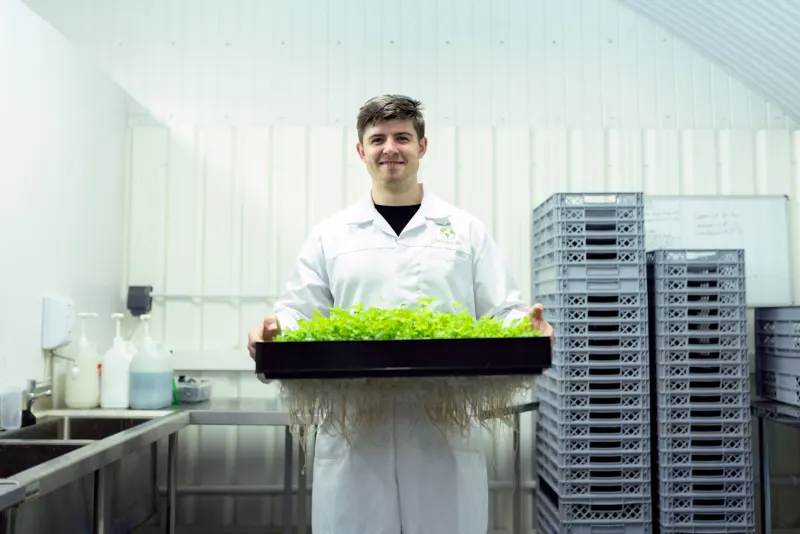
Cancer researchers have long referred to the chemotherapy drug paclitaxel, commonly known as Taxol, as a holy grail due to its high effectiveness and natural origin within the bark of the slow-growing Pacific yew tree, known botanically as Taxus brevifolia. Because these trees take approximately 70 to 100 years to reach maturity, Taxol has historically ranked among the world's most expensive active pharmaceutical ingredients. As of 2025, the drug costs over $9,000 USD per pound, or $20,000 USD per kilogram, which is actually a steep discount from its staggering $272,160 per pound price tag over a decade ago. Now, a team of biochemical engineers at the University of Copenhagen has isolated the genes responsible for Taxol production and introduced them into a notoriously ironic plant species: the tobacco plant Nicotiana benthamiana.
Key takeaways
- Taxol is traditionally sourced from the bark and needles of mature Pacific yew trees.
- University of Copenhagen researchers introduced over 20 yew tree genes into tobacco plants.
- The modified tobacco plants produced Taxol at a dry weight of 61.05 parts per million.
- Researchers must still develop stable, permanently modified plants for large-scale greenhouse production.
Mapping the biochemical pathway of Taxol
Zhen Fan, a postdoctoral researcher at the university's Department of Plant and Environmental Sciences, explained that the team introduced more than 20 of the yew tree genes into tobacco plants to demonstrate the entire biological process of Taxol production step by step. Sotirios Kampranis, who leads the department's plant-based biochemical engineering group, noted that this specific tobacco species offers major advantages for manufacturing the medication. The plant provides a cellular environment similar to the yew tree while offering significantly faster growth rates and easier genetic engineering capabilities. Taxol itself is widely used in medical treatments for breast cancer, ovarian cancer, and lung cancer.
Historically, harvesting enough bark from two whole yew trees was required to produce just a single treatment of Taxol. This severe bottleneck eventually forced current production methods to pivot toward harvesting yew needles for a more complicated synthetic biochemical process. By utilizing Nicotiana benthamiana, a species frequently used in laboratory settings due to its rapid growth, the Copenhagen research team successfully mapped out the missing set of enzymes and the complete sequence of biochemical steps that the yew tree performs to synthesize Taxol.
Overcoming future manufacturing challenges
Published in the journal Nature Chemical Biology, the new study details how the modified tobacco plants can now produce Taxol at a dry weight of 61.05 parts per million, which translates to 61.05 micrograms per gram. Kampranis pointed out that this yield is directly comparable to the levels found naturally in Taxus bark. Furthermore, the team has successfully tested numerous hypotheses to uncover the complete biological pathway, establishing a foundational blueprint and recipe that can potentially be utilized to produce Taxol in plants, yeast, or other alternative systems.
Despite this major breakthrough, a critical hurdle remains before large-scale agricultural harvesting of the medication can begin. The research team currently relies on faster, less permanent genetic tweaks to their N. benthamiana plants by inducing temporary expressions of the yew tree's genes through the injection of modified agrobacterium strains AGL1 and GV3101, which are common tools in genetic research. Achieving commercial viability will require entirely stable plants that permanently contain the yew genes without requiring reintroduction during every single growing cycle.








Comments