
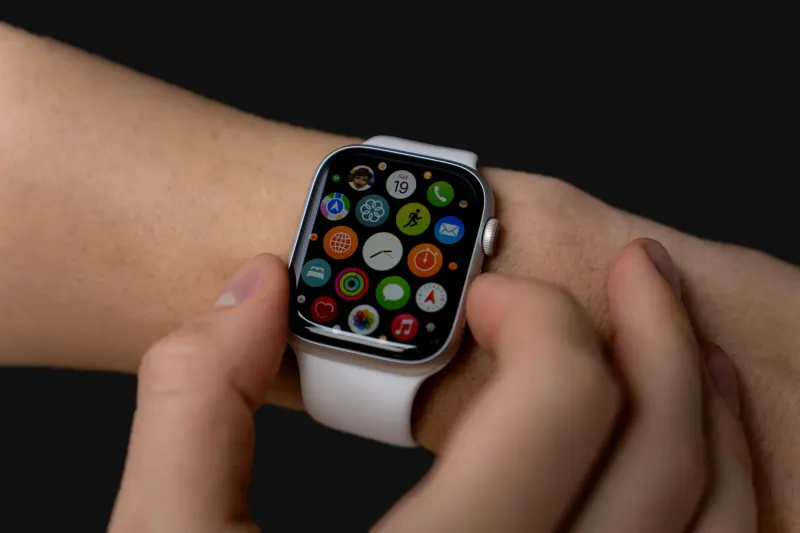
Huawei has officially announced the Huawei Watch Air, a new smartwatch that undercuts the thickness of all current market-leading models, including the Apple Watch, Galaxy Watch, and Pixel Watch. Measuring a remarkably slim 0.27 inches (6.9mm) thick—excluding its health sensors—and weighing a mere 0.95 ounces (27 grams), the device represents a major push toward ultra-lightweight wearable engineering. Alongside its physical profile, the smartwatch is engineered to work seamlessly with iOS, Android, and Huawei's proprietary HarmonyOS smartphones, making it a versatile option across different mobile ecosystems.
The hardware features a 1.92-inch square display equipped with rounded corners, a physical rotating crown, and a supplementary side button. The screen utilizes low-temperature polycrystalline oxide (LTPO) display technology to ensure power efficiency for always-on usage, while scaling from a very dim output in low-light environments up to a peak outdoor brightness of 3,500 nits. Beyond its display and form factor, the wearable integrates comprehensive health and fitness tracking capabilities. It monitors heart rate variability, daily activity, and stress levels, compiling the data into a unified daily readiness score. It also supports multiple workout tracking modes, sleep tracking, and sleep apnea detection.
Key takeaways
- The Huawei Watch Air measures 6.9mm thick and weighs 27 grams.
- It features a 1.92-inch LTPO display with a peak brightness of 3,500 nits.
- The device is compatible with iOS, Android, and HarmonyOS smartphones.
- It is currently available exclusively in China starting at ¥2,499, roughly $375.
Industry Implications and Market Context
The design and feature set of the Huawei Watch Air bear a striking resemblance to current industry trends and rumored hardware revisions. While tech companies frequently borrow design cues from one another, the Watch Air arrives amid ongoing rumors that Apple is weighing dramatic design changes for future Apple Watch generations, potentially introducing altered screen dimensions or alternative form factors. For years, hardware changes across successive generations of mainstream smartwatches have remained incremental, leaving physical appearances largely static. A device like the Huawei Watch Air demonstrates how a conservative physical redesign focused strictly on reducing thickness and weight can refresh a familiar hardware category.
A significantly thinner and lighter chassis could potentially bridge the gap for consumers who traditionally favor lightweight fitness bands over bulkier smartwatches, while giving existing users a tangible incentive to upgrade. However, widespread adoption and consumer testing of this specific form factor remain limited for now. The Huawei Watch Air is currently sold exclusively in domestic markets within China, with an entry-level price point starting at ¥2,499, which translates to approximately $375. Until major global competitors like Apple or Samsung adopt a similarly ultra-slim design philosophy, the broader global market will have to wait to see how a featherlight smartwatch performs in everyday commercial use.





Comments