
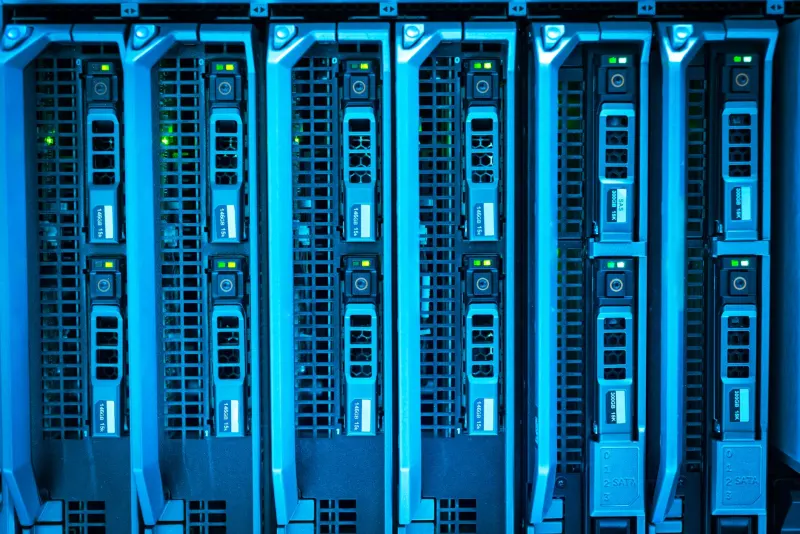
Major server manufacturers including Dell, HPE, Lenovo, and Supermicro have begun approaching enterprise customers months after contracts are signed to demand up to 45% more money before delivery. Insiders familiar with the developments point to surging memory costs as the primary catalyst for the unexpected price adjustments, leaving buyers facing difficult financial choices as they race to expand their data center footprints.
The procurement dynamic for enterprise infrastructure has shifted considerably over recent months. While purchasing AI servers previously involved agreeing on a price, signing a contract, and waiting for delivery, the final step has transformed into a point of aggressive renegotiation. Reports indicate that price increases between order signing and actual shipment have reached 25%, 30%, and on some orders, as high as 45%.
Key takeaways
- Dell, HPE, Lenovo, and Supermicro are asking for 25% to 45% more on AI server orders months after signing.
- GPU servers have risen by 20% to 30%, while memory-heavy CPU nodes have tripled or more in cost.
- JPMorgan research indicates memory prices have surged by over 400% since the start of 2024.
- XTX Markets sued Dell in Ireland's High Court over a disputed price hike of up to $70 million on a fixed-price order.
The Divide Between GPU and CPU Node Costs
The severity of the price adjustments varies sharply depending on the machine architecture. GPU servers have risen by at least 20% to 30%, whereas conventional CPU nodes have tripled or more in price. Because accelerators dominate the total bill of materials in a GPU server, dramatic DRAM increases are somewhat diluted across the system. In contrast, memory makes up a much larger share of a conventional CPU node, causing component price spikes to hit far harder.
JPMorgan research highlights that memory prices have climbed more than 400% since the start of 2024. Relief appears distant, as Nvidia informed large customers that servers built around its chips will cost over 15% more for systems shipping from early 2027. Furthermore, Micron has warned that supply will remain tight through 2027 and 2028, and SK Group chairman Chey Tae-won noted the shortage could persist until 2030.
Legal Battles and Enterprise Leverage
The aggressive repricing strategy has already spilled over into litigation. In June 2026, XTX Finland Oy sued Dell Products Unlimited Company in Ireland's High Court. According to court filings, XTX agreed in November 2025 to purchase 1,680 servers for a data center at a fixed price of approximately $549 million, including an extra $5 million paid specifically to avoid future price exposure. When delivery slipped by two months, Dell cited higher component costs and demanded an additional $62 million to $70 million, prompting XTX to place $70 million into escrow.
Dell defended its position by stating it was unwilling to lose tens of millions of dollars on the transaction and could not deliver under the original terms. Despite such disputes, most buyers continue to absorb the price increases. High-frequency and quantitative trading firms like Jane Street, Optiver, and Hudson River Trading find that the high value of immediate compute power outweighs the added costs, because idle data center capacity carries a steep financial penalty of its own. As memory shortages continue to squeeze the market, signed purchase orders increasingly resemble estimates rather than guaranteed prices.






Comments