
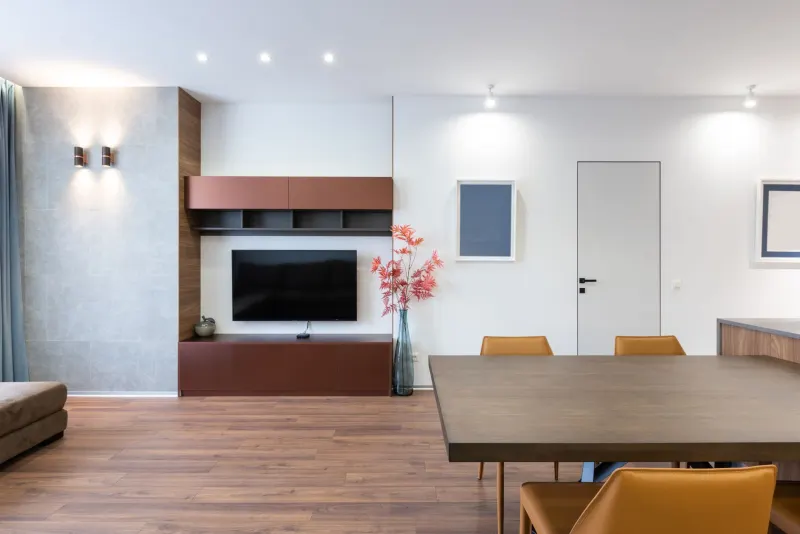
Purchasing a new television remains a significant household decision. It involves selecting a permanent piece of technology that occupies a central place in the home and often costs thousands of dollars. The hardware landscape is further complicated by models that share identical physical appearances and nondescript naming conventions, such as the Samsung S95H. Extensive stress-testing throughout 2026 reveals that consumers now encounter a wider array of diverse choices than ever before, as art televisions and emerging RGB displays challenge the long-standing dominance of traditional OLED screens.
Key takeaways
- Samsung's The Frame Pro (2026) is named best overall TV, featuring a Mini-LED display, 144 Hz refresh rate, and a wireless breakout box.
- The LG Micro RGB Evo takes the crown for best RGB TV, supporting 100 percent of color gamut specifications for BT.2020 and DCI-P3.
- Samsung's flagship S95H QD-OLED TV discards the external breakout box, placing ports directly on the back panel for direct console connections.
- Budget-focused options like the TCL QM7L Mini-LED and the Roku Pro Series OLED deliver strong performance at considerably lower price points.
Best Overall and Art Television Innovations
Samsung's The Frame Pro secures the top overall spot for 2026 by combining exceptional picture quality with a functional design that displays high-resolution artwork when turned off. Built around a Mini-LED display type and a 144 Hz refresh rate, it features real wood bezels that snap easily into place around the screen. The unit runs on Tizen OS and utilizes the Samsung Wireless One Connect Box, a breakout hardware accessory that houses five HDMI 2.1 ports, Wi-Fi, and Ethernet away from the main display to minimize dangling cables on the wall. For buyers prioritizing aesthetics on a stricter budget, the Amazon Ember Artline provides a cheaper QLED alternative. While it drops the refresh rate to 60 Hz and offers less impressive cinematic contrast, it features a matte finish, Fire OS, and customizable snap-on bezels.
RGB Versus OLED Display Technologies
Television technology has expanded to include RGB TVs, which shine red, blue, and green light through an LCD panel to generate brighter and more vibrant colors. The LG Micro RGB Evo leads this category with a 120 Hz refresh rate that scales up to 165 Hz with variable refresh rate (VRR) enabled, Web OS, and extensive manual picture calibration controls that maintain clarity during dark cinematic sequences. It supports 100 percent of the color gamut specifications for BT.2020, DCI-P3, and Adobe RGB. Conversely, OLED models like the Samsung S95H QD-OLED continue to excel by controlling the color of individual pixels and turning them completely off to achieve inky blacks and precise contrast levels. The S95H runs on Tizen OS with a 165 Hz refresh rate, abandoning the external breakout box used in previous iterations in favor of rear panel ports.
Value and Budget Display Options
Budget-friendly alternatives have also seen major performance upgrades in 2026. The TCL QM7L Mini-LED TV undercuts premium competitors while offering picture quality that rivals expensive OLED screens. Equipped with a 144 Hz refresh rate, Google TV, and loud internal Bang & Olufsen speakers, it delivers deep blacks and high brightness. Meanwhile, streaming giant Roku introduced its first hardware entry with the Roku Pro Series OLED. Operating on Roku OS with a 120 Hz refresh rate, it brings simplified menus, Smart Picture Max automatic calibration, and accessible pricing to consumers seeking reliable picture quality without high costs.






Comments