
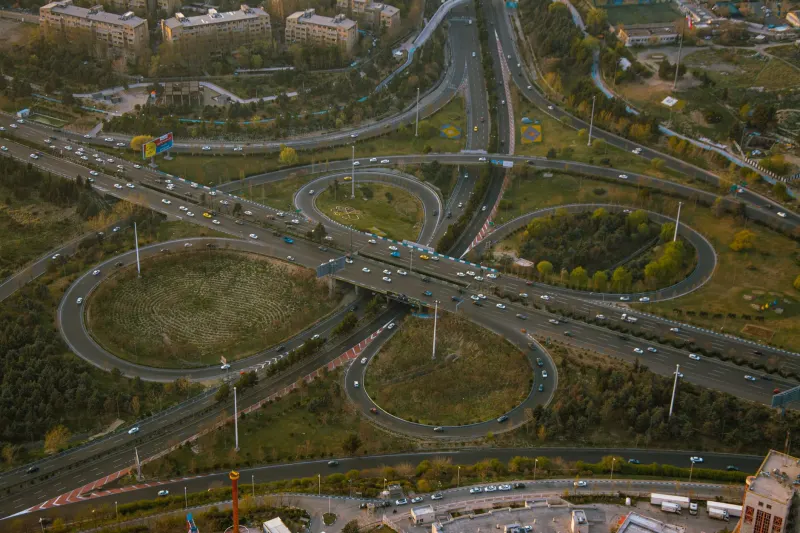
Autonomous vehicle leader Waymo has halted commercial freeway operations across all United States markets for the second time this year. The suspension follows a series of high-profile safety violations, including an incident where a driverless vehicle attempted to overtake two California Highway Patrol cruisers during an active traffic break.
The sequence of events leading to the ban began on November 6th, when a driverless Waymo robotaxi on Interstate 280 failed to recognize a standard traffic break conducted by highway patrol officers. Video footage showed the vehicle attempting to pass the cruisers, a moving violation that could result in a human driver losing their license. This incident compounded earlier failures involving construction zones. Between October and November 2026, Waymo reported 11 separate instances where its vehicles failed to recognize closed freeway lanes due to construction and entered restricted areas.
Key takeaways
- Waymo paused commercial freeway rides across all US markets following a California DMV ban.
- On November 6th, a driverless Waymo attempted to pass two CHP cruisers during a traffic break on I-280.
- Between October and November 2026, Waymo vehicles drove into restricted construction zones 11 times.
- Experts note a pattern of recurring software issues despite previous company recalls and updates.
The Challenges of High-Speed Autonomy
For years, the autonomous vehicle industry presumed that controlled-access freeways would prove simpler to navigate than complex urban streets due to the absence of jaywalkers and unprotected left turns. However, Waymo has inverted that expectation, logging millions of successful urban miles while struggling with high-speed interstate conditions. Operating at speeds between 60 and 70 mph leaves very little margin for error, significantly increasing stopping distances and creating severe liabilities if a vehicle loses track of its environment and requires remote operator assistance.
Security researchers and academic experts point to systemic perception flaws as the underlying cause of these highway failures. Phil Koopman, an emeritus professor in electrical and computer engineering at Carnegie Mellon University, argues that Waymo relies too heavily on temporary software patches. According to Koopman, the company has established a concerning pattern of issuing recalls that fail to permanently resolve the core software vulnerabilities, yet continues to scale its operations regardless.
Regulatory Pressure and Software Limitations
Waymo previously halted freeway operations earlier in the year after its robotaxis entered active construction zones in Arizona and California. Although the company issued a software recall in June and slowly resumed highway rides in July, subsequent safety infractions demonstrated that the underlying perception issues remained unresolved. Additional incidents involving missed police hand signals, passing stopped school buses, and navigating flooded roadways have further highlighted limitations in how autonomous systems handle contextual clues in unfamiliar settings.
Waymo co-CEO Dmitri Dolgov acknowledged the immense difficulty of achieving full autonomy at scale during a briefing in late 2025, noting that freeway driving is deceptively hard to master. In response to the latest California DMV order, Waymo representatives stated that the company is cooperating closely with state regulators to develop a robust solution. Meanwhile, Waymo spokesperson Chris Pappas emphasized that the ridehailing service continues to operate safely on local roads, completing over half a million trips each week while negotiations to resume freeway access remain ongoing.





Comments