
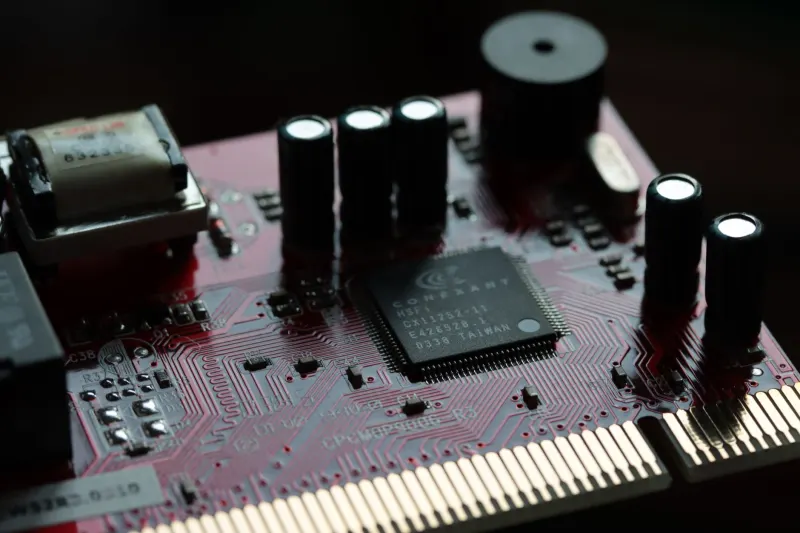
Austin-based brain-computer interface company Paradromics has announced a major partnership with chipmaker Nvidia to utilize its advanced computing hardware and software for processing complex neural data. The collaboration aims to dramatically shrink the massive external electronics currently required to decode brain signals into intelligible speech and actions. For patients like a Michigan woman named Mary, who uses a dime-sized brain implant to overcome severe speech difficulties caused by motor neuron disease, the partnership marks a crucial step toward true daily portability and freedom of movement.
Presently, decoding neural signals from Mary's implant requires a large cart full of electronics plugged into an electrical outlet, keeping her tightly tethered within a specific operational range. While Mary has lost much of the use of her speaking muscles, neurons in her brain still fire when she attempts to speak, and the Paradromics implant uses more than 400 embedded electrodes to capture those signals. A computer then uses artificial intelligence to make inferences about what she is trying to express, displaying the words on a screen and speaking them aloud through a synthesized voice. However, leveraging Nvidia's technology, Paradromics plans to transform that bulky equipment into a small box capable of sitting directly on a wheelchair within the span of a year. CEO and founder Matt Angle notes that eventually, the required electronics will shrink down enough to fit entirely inside a phone, representing the ultimate test case for edge computing, a distributed computing model that processes and stores data in physical devices close to where it is generated rather than sending it to a distant cloud or data center.
Key takeaways
- Paradromics uses a dime-sized brain implant with over 400 embedded electrodes to capture firing neurons when patients attempt to speak.
- The company will deploy Nvidia's low-powered Jetson computing module to shrink external decoding equipment down to a box that fits on a wheelchair.
- Nvidia's Holoscan AI sensor processing software will help integrate neural signals with other inputs while minimizing communication lag time.
- The partnership will also allow Paradromics to integrate foundation models locally, eliminating internet connectivity requirements and enhancing voice quality.
Overcoming the portability challenge in neural tech
Making brain-computer interfaces practical and portable for everyday patients remains a major engineering challenge for the field. While these setups have become far more streamlined since their early days confined to academic laboratories, they still demand substantial external electronics to function properly. Shrinking these systems and drastically reducing their power requirements will allow patients to be far more mobile with their devices, carrying them wherever they go. Paradromics intends to achieve this by deploying Nvidia's Jetson, a low-powered computing module that enables speech decoding to be executed in a compact device sitting close to the user.
Furthermore, the Austin-based company will adopt Holoscan, Nvidia's specialized AI sensor processing software, designed to minimize lag and seamlessly handle various data streams simultaneously. Because brain-computer interfaces must work alongside external sensors such as cameras and microphones, Holoscan will help process these diverse streams together so applications can respond accurately to both neural signals and the surrounding context. David Niewolny, Nvidia's director of business development for health care and medical, emphasized that real-time translation of complex neural signals is critical for maintaining natural-sounding communication, noting that even minor delays can make conversation feel unnatural. He added that neural signals change over time, requiring sophisticated artificial intelligence that can continuously adapt to individual users.
Integrating foundation models and local processing
Beyond hardware miniaturization, the partnership allows Paradromics to integrate Nvidia foundation models directly into its brain-computer interface architecture. According to Paradromics chief scientific officer Vikash Gilja, these local AI models can make synthesized voices significantly more expressive and human-like for patients. Running these models locally on Nvidia hardware also means that users will not have to maintain an active internet connection in order to use their medical communication devices effectively.
Niewolny highlighted the tremendous potential for artificial intelligence to expand human capabilities, confirming that Nvidia is also working with other prominent players in the brain-computer interface space, including Synchron. Despite these widespread healthcare collaborations, Niewolny explicitly noted that the chipmaker will not have access to private patient brain data through any of these ongoing partnerships. As Paradromics continues to refine its platform, the integration of Nvidia's edge computing tools moves the industry closer to truly portable, low-power neurotechnology solutions.





Comments