Lehigh Researchers Develop Concrete Thermal Battery to Cool Data Centers
Engineers at Lehigh University have built a 150 kWh concrete thermal battery capable of withstanding 500°C to capture and reuse data center waste heat.
Latest stories, in-depth analysis & breaking updates
Engineers at Lehigh University have built a 150 kWh concrete thermal battery capable of withstanding 500°C to capture and reuse data center waste heat.
Despite decades of investment in technical security controls, social engineering remains one of the most consistently effective attack vectors precisely because it targets human psychology rath...
Technical security controls have advanced dramatically over the past decade, making direct exploitation of software vulnerabilities increasingly difficult and expensive for attackers. In respon...
Introduction The relationship between data privacy and cybersecurity has never been more intertwined, or more consequential. As regulators around the world impose stricter requirements for h...
Introduction In cybersecurity, we invest enormous resources in technical defenses — firewalls, intrusion detection systems, encryption, multi-factor authentication. These are essential. But t...
Privacy-Enhancing Technologies (PETs) have crossed a critical adoption threshold in 2026, moving from academic research and specialized applications into mainstream enterprise use cases. Fe...
Generative AI has made convincing impersonation cheap and easy. Cloned voices, synthetic video, and AI-polished messaging now let attackers run social engineering campaigns that look and sound exac...
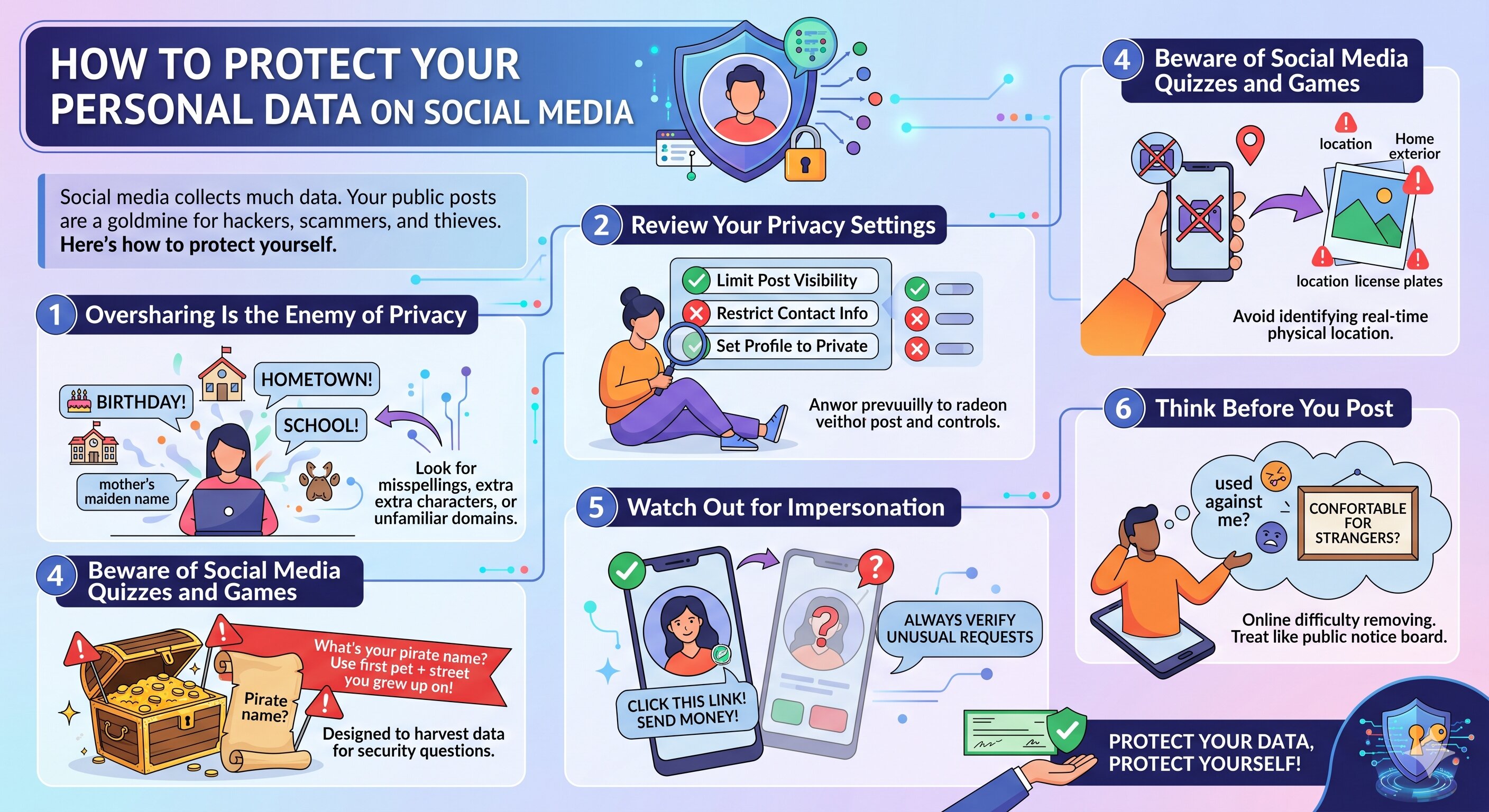
How to Protect Your Personal Data on Social Media Social media platforms are designed to collect as much information about you as possible. But beyond the platforms themselves, your public posts ...
Recent Wall Street price target upgrades for Credo Technology underscore massive market expansion driven by high-speed connectivity solutions.
New industry research reveals that 68% of IT professionals see human error as their most concerning attack vector, overshadowing automated threats.