
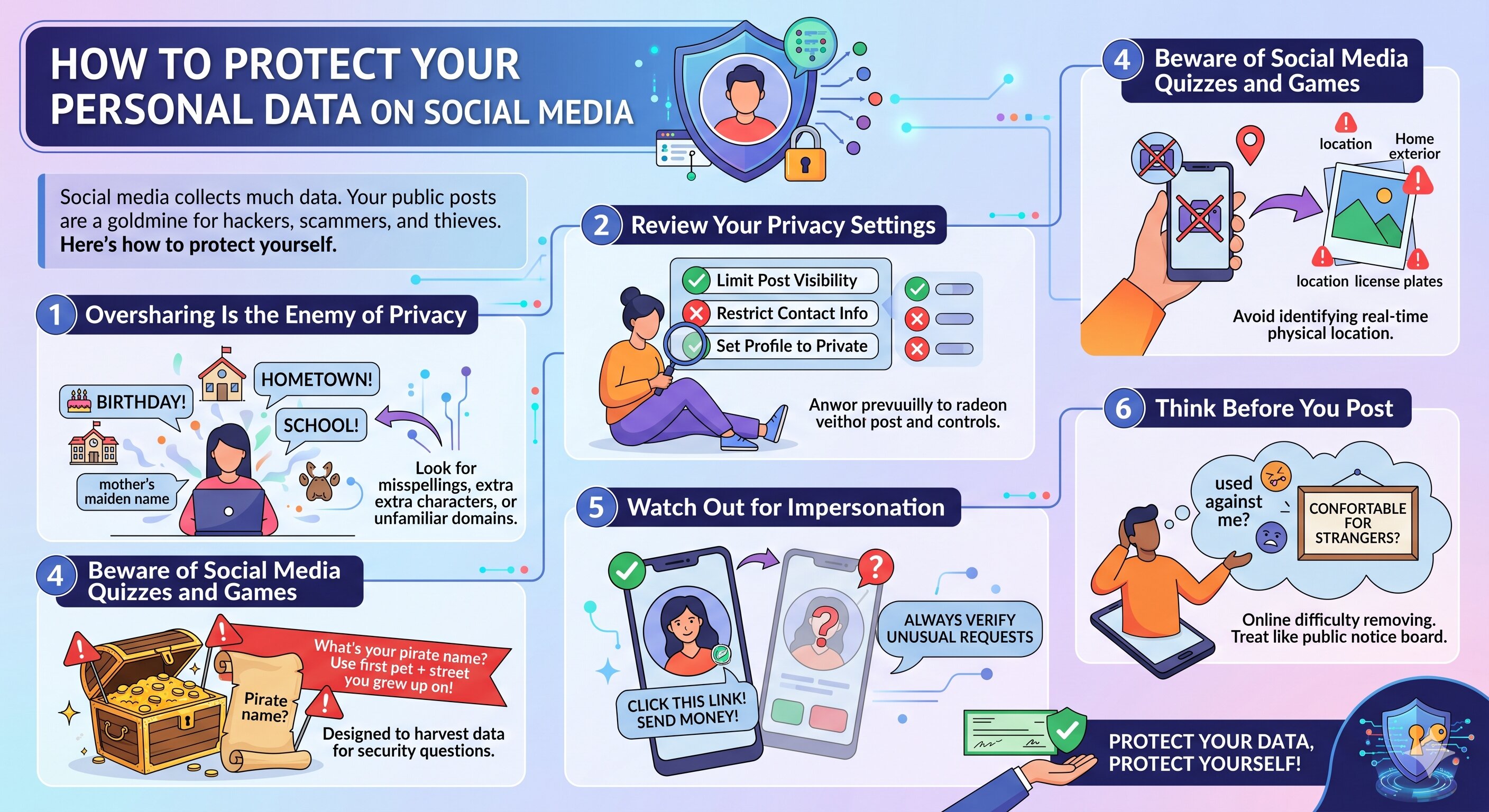
How to Protect Your Personal Data on Social Media
Social media platforms are
designed to collect as much information about you as possible. But beyond the
platforms themselves, your public posts can also be a goldmine for hackers,
scammers, and identity thieves. Here's how to protect yourself.
Oversharing Is the Enemy of Privacy
Every piece of information you
share publicly — your birthday, hometown, school, workplace, pet names,
mother's maiden name — is potential material for hackers. These are the answers
to common security questions, and they're often freely visible on social
profiles.
Review Your Privacy Settings
On every social platform, dig
into your privacy settings. Limit who can see your posts, your contact
information, and your friend/follower list. Set your profile to private if you
don't need a public presence.
Be Careful What You Share in Photos
Photos can reveal your location,
your home, your routine, and even sensitive documents if you're not careful.
Disable geotagging on your phone's camera. Avoid posting photos of your home
exterior, car license plates, or anything identifying your physical location in
real time.
Beware of Social Media Quizzes and Games
'What's your pirate name? Use
your first pet + the street you grew up on!' These viral games are often
designed to harvest the exact data used in security questions and password
recovery. Don't participate.
Watch Out for Impersonation
Scammers create fake profiles
impersonating your friends or public figures to trick you into clicking links
or sending money. Always verify unusual requests through a separate channel
before acting on them.
Think Before You Post
Before posting anything, ask:
could this information be used against me? Once something is online, it's
difficult to fully remove. Treat social media like a public notice board — only
share what you'd be comfortable with a stranger reading.





Comments