Connecticut Teachers Tackle AI Ethics and Classroom Realities
Connecticut educators are gathering to map out strategies for balancing AI opportunities against academic integrity concerns.
Latest stories, in-depth analysis & breaking updates
Connecticut educators are gathering to map out strategies for balancing AI opportunities against academic integrity concerns.
IntroductionArtificial intelligence has been celebrated as a transformative force for good — accelerating drug discovery, improving climate models, powering autonomous vehicles, and making countless p...
Artificial intelligence (AI) governance and ethics are becoming central priorities for organizations worldwide as AI technologies are increasingly integrated into business operations, public services,...
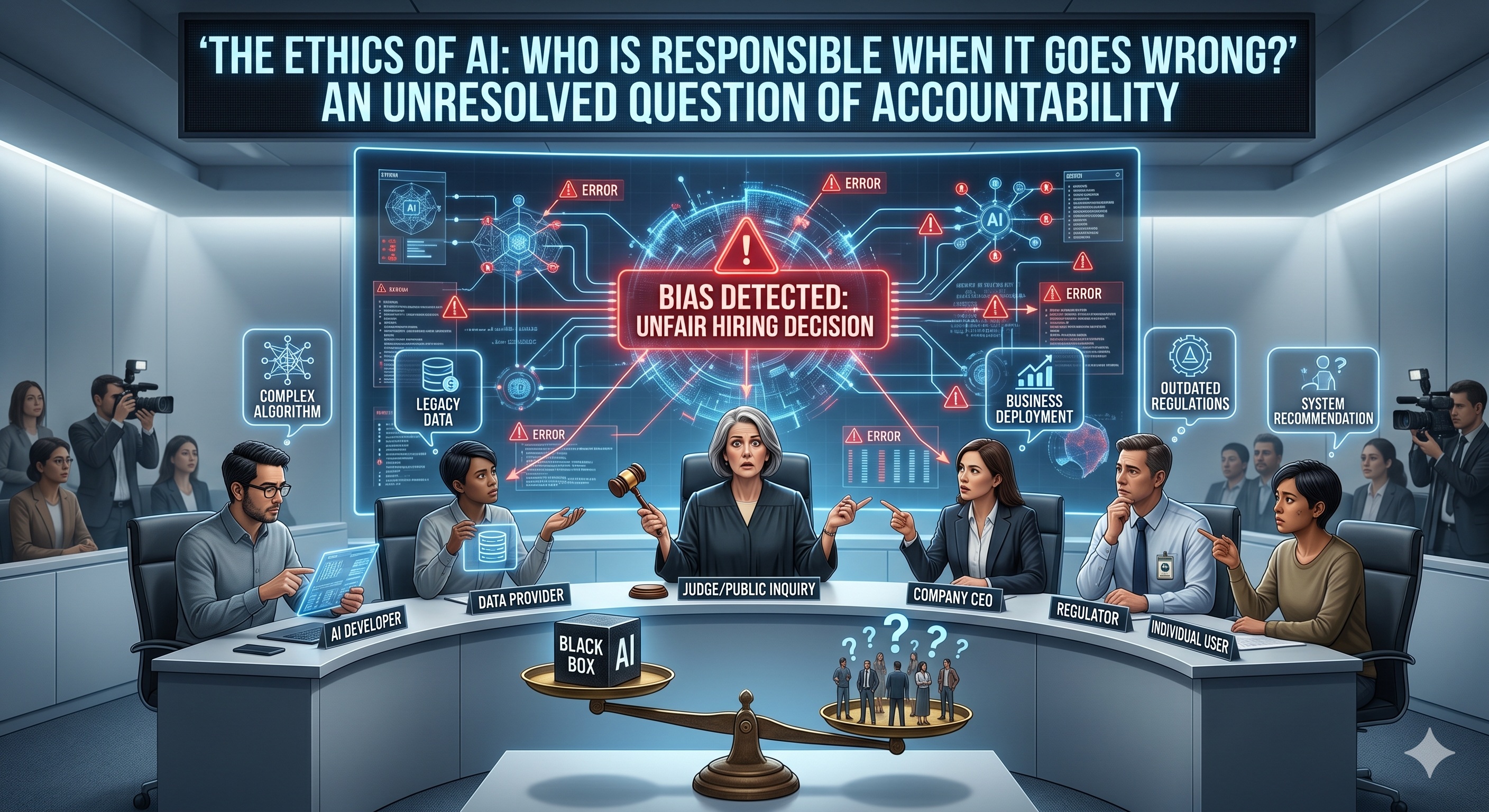
The Ethics of AI: Who Is Responsible When It Goes Wrong? Artificial intelligence is making more consequential decisions than ever — about who gets a loan, who gets bail, whose medical images get ...
Academic leaders and industry experts recently gathered at UC Riverside to examine the dual trajectory of artificial intelligence, weighing massive technological leaps against deep ethical hazards.
As machine learning models generate novel hypotheses and synthesize materials at unprecedented scales, philosophers and researchers grapple with what constitutes true scientific discovery.
The integration of AI systems in targeting infrastructure has intensified international scrutiny and raised urgent questions about accountability in modern combat zones.
Global policymakers and tech executives are scrambling to establish enforceable guardrails for advanced artificial intelligence deployment.
A stark new economic and social analysis suggests the rapid proliferation of artificial intelligence could erode workforce value and degrade cognitive independence.
Campus newspapers and student essays reveal a sharp shift in how the next generation views artificial intelligence, moving away from utopian promises toward pragmatic skepticism.