
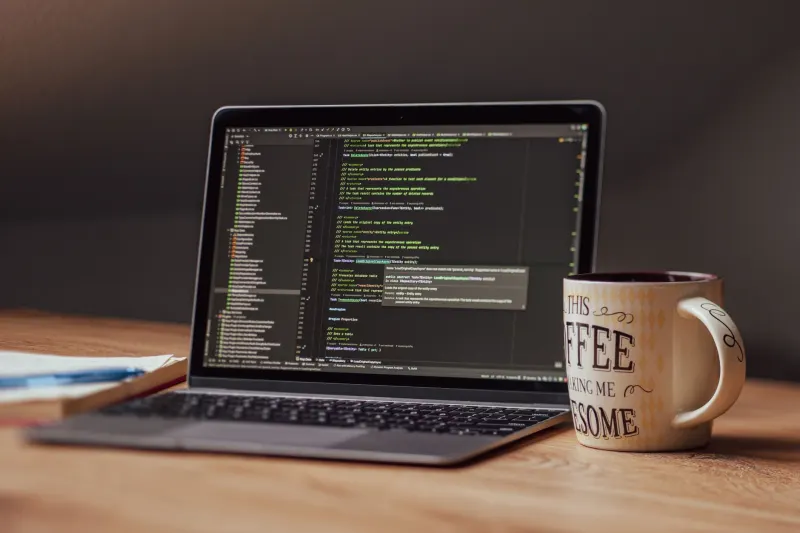
Apple recently announced a redesigned MacBook Pro featuring an OLED touchscreen, bringing a radical shift to its professional laptop lineup following a release shortly after the initial October 28 announcement. For buyers aiming for the most extreme specifications available, a fully loaded 16-inch model featuring the new PROLED XDR Display hits a staggering price tag of $14,549 on Apple's online store. Surprisingly, the newly introduced touchscreen accounts for a very minor fraction of that staggering cost. Instead, memory and storage upgrades consume roughly 62 percent of the total price, led by massive component costs that have risen dramatically throughout 2026.
Key takeaways
- A fully loaded 16-inch MacBook Pro reaches $14,549 due to extreme memory and storage options.
- A massive 16TB SSD accounts for $7,000 of the total machine price.
- Upgrading unified memory from 48GB to 128GB adds another $2,000 to the bill.
- Surging component expenses stem from extraordinary demand for memory and storage driven by AI data centers.
Breaking Down the Cost of Massive Storage and Memory
The top-tier configuration builds upon the 16-inch model's M5 Max chip, which includes an 18-core CPU and a 40-core GPU starting with 48GB of memory and a 2TB solid-state drive. Subtracting the screen, storage, and RAM upgrades brings the base machine to $5,399, which is already $2,000 more expensive than the $3,399 entry-level 16-inch model equipped with an M5 Pro. Apple charges an additional $1,000 to move from 2TB to 4TB, $3,000 to reach 8TB, and a hefty $7,000 for the newly introduced 16TB SSD. This pricing structure scales evenly at $500 more per terabyte without any bulk purchasing discounts. The 16-inch MacBook Pro marks the first time Apple has offered a 16TB storage tier, as previous M5 Max models released in March topped out at 8TB.
Memory configurations also carry strict hardware limitations. Only the 40-core M5 Max chip can be paired with 128GB of RAM, while the 32-core variant remains fixed at 36GB and the M5 Pro caps out at 64GB. Customers demanding maximum memory must purchase the most expensive processor option first. Meanwhile, nano-texture glass, which is etched directly into the cover glass to reduce glare, represents the cheapest upgrade available on the list at $150. The 14-inch model caps out slightly lower at $14,249, with the most affordable path to 16TB of storage starting as a 14-inch M5 Max with 36GB of memory for $11,499.
The AI-Driven Surge Behind Component Pricing
Explosive pricing for memory and storage stems directly from the rapid expansion of AI data centers, which created an extraordinary surge in component demand. In March 2026, a maxed-out 16-inch MacBook Pro with an M5 Max, 40-core GPU, 128GB of memory, 8TB of storage, and nano-texture glass cost $7,349. Following price hikes across Mac and iPad lineups in late June due to supply pressures, that identical hardware configuration jumped to $10,149 without a single physical change to the machine. Market data from analyst firm Counterpoint revealed that smartphone DRAM prices climbed 50 percent while NAND flash storage rose more than 90 percent quarter-over-quarter during the first three months of 2026. Apple noted that component prices had never surged that high, that quickly, forcing the company to eventually pass along costs after absorbing them for as long as possible.
Comparing the new OLED model against the $10,149 top price of the non-touch variant, the redesign accounts for $400 of the increase, while scaling storage from 8TB to 16TB adds another $4,000. Almost all of that additional capital targets NAND flash, which experienced the fastest price acceleration according to Counterpoint metrics. The larger 16-inch model features a PROLED XDR Display, a tandem OLED panel supporting up to 1,000 nits sustained brightness and a peak of 2,000 nits. The screen covers P3 and Adobe RGB color gamuts, supports up to a 120Hz refresh rate, includes touch capabilities, and houses a Dynamic Island at the top. Weighing 4.1 pounds and measuring 0.63 inches thick, the laptop houses a 100Wh battery capable of up to 22 hours of video streaming.
Target Audience and Practical Workloads
Apple clearly aims this ultra-expensive configuration at specialized professionals such as filmmakers, photographers, 3D artists, and developers. However, because each extra terabyte tacks an additional $500 onto the bill, traditional creative workloads are likely better served by a 2TB or 4TB configuration paired with an external Thunderbolt 5 drive. The calculus changes significantly for developers and engineers running local large language models. Those users will find it much easier to justify the financial investment in the 128GB memory tier, since local LLMs must fit entirely within system memory and Apple's GPU shares that unified pool with the CPU. Even so, the massive 16TB SSD option continues to account for nearly half of the entire machine's total cost.




Comments