
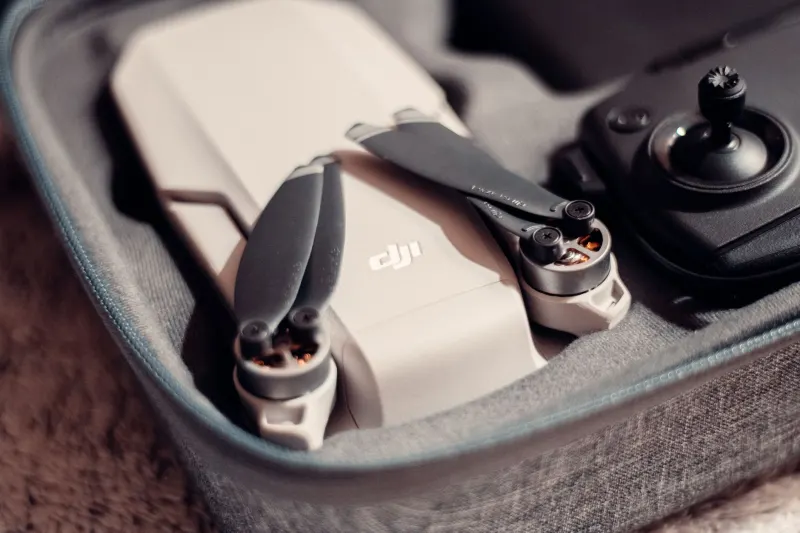
After nearly a decade of trial, error, and cancelled iterations, Ring is finally ready to deliver a home security drone that actually makes sense for consumers. Ring CEO Jamie Siminoff explained that previous efforts were bogged down by overcomplication, packing too many heavy sensors and capabilities into a single device. Following abandoned projects that traced back to an initial idea in 2016 and an unreleased unit in 2021, the company completely redesigned its approach by stripping away onboard intelligence and shifting processing power to the cloud.
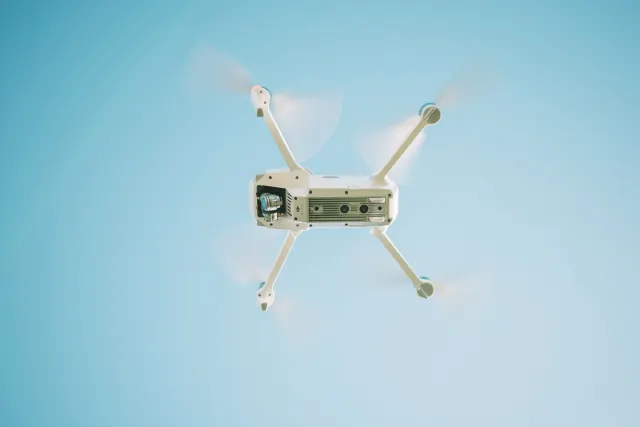
Weighing in at around 160 grams—making it lighter than some modern smartphones—the newly minted Ring Drone Cam relies on a minimalist hardware footprint. The device features just enough native capability to land safely and connect via Wi-Fi to a dedicated smartphone app. By reducing the number of local sensors, engineers significantly lowered power consumption and weight, allowing for a streamlined design that avoids the complex engineering traps that scuttled past attempts.
Key takeaways
- The Ring Drone Cam weighs roughly 160 grams and will launch in the US on January 27 for $249.99.
- Processing is handled by a cloud-based AI Pilot rather than heavy onboard hardware.
- Flight times range between five and eight minutes, with charging taking 40 to 60 minutes.
- Amazon is also releasing the business-focused Ring Rover Cam for $999.99 starting December 16.
Navigation is handled by Ring's new cloud-based AI Pilot, which utilizes silicon-powered agents and a freshly generated digital map of a user's home. Owners can use the drone to walk through their living spaces to build a digital twin of the environment. If a connected sensor detects an open window or a door ajar, users can tap that specific location in the app interface. The drone will automatically lift off from its charging base and fly directly to the point of interest, using its front and base cameras alongside the AI Pilot to maneuver around obstacles.
While the aircraft is intentionally loud—a feature designed to ensure it never sneaks up on anyone and potentially scares off intruders—it features enclosed propeller cages for household safety. The camera ceases filming immediately upon landing, and the charging dock physically covers the lens when the device is docked. Privacy features match Ring's existing video doorbells, incorporating encryption and two-factor authentication. Due to its miniature build, however, flight times are limited to roughly five to eight minutes per charge, with battery replenishment taking between 40 minutes and an hour.
The Ring Drone Cam will be available exclusively in the United States starting January 27, priced at $249.99 in a dark gray finish. Alongside the consumer drone, Ring is also reviving Amazon's discontinued Astro robot concept. Rebranded as the Ring Rover Cam, this larger rolling unit is designed for small-to-medium businesses, featuring a periscope camera that extends to four feet, automated 30-minute patrols, and a specialized light tower. The Ring Rover Cam will ship in the US on December 16 with a price tag of $999.99.




Comments