
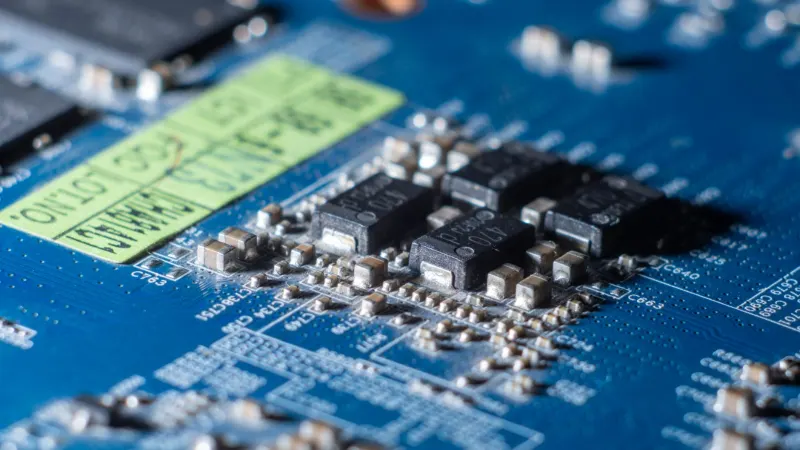
Global DRAM revenue jumped 369% year over year in the third quarter of 2026 to just under $200 billion, according to data from Counterpoint Research. This massive financial growth was primarily fueled by skyrocketing selling prices rather than a large increase in the number of physical memory chips shipped to the market. While overall revenue nearly quadrupled, total bit shipments rose by only about 4%, highlighting a market where supply remains tightly constrained and price inelastic as artificial intelligence workloads dominate demand.
Counterpoint analyst Jeongku Choi noted that artificial intelligence has fundamentally transformed memory from a basic commodity into a scarce and valuable resource, with buyers aggressively scrambling for allocation. Blended DRAM prices reached $1.90 per gigabit during the quarter, with certain advanced components climbing even higher. Counterpoint research director MS Hwang highlighted that DRAM prices once sat at 20 to 30 cents per gigabit, but have now climbed to about $2 per gigabit, while high-bandwidth memory variants like HBM4 are heading toward $4 per gigabit. At the component level, contract prices for a single 16Gb DDR5 chip climbed from $8.70 in October 2025 to $48 by September 2026, marking an increase of over 450%.
Key takeaways
- Global DRAM revenue surged 369% year over year in Q3 2026 to reach nearly $200 billion.
- Bit shipments increased by only about 4%, showing that higher selling prices drove the revenue spike.
- Samsung, SK hynix, and Micron booked record profits while phone and PC shipments dropped roughly 20%.
- Suppliers project that tight memory supply conditions will persist through 2028 and beyond.
The Impact on Consumer Tech and Hardware Makers
The intense competition for limited fab capacity has created severe collateral damage for consumer electronics manufacturers. Global smartphone shipments fell 20% year over year in the third quarter, marking the weakest third quarter since 2012, while retail phone prices climbed roughly 20%. At the same time, IDC tracked personal computer shipments dropping to 62.7 million units, down from 78.5 million a year earlier. TrendForce estimates that the CPU, RAM, and SSD now account for 68% of the total bill of materials in a typical $900 notebook.
Major memory producers reaped record financial rewards from the pricing environment. Samsung reported a record third-quarter operating profit of 107.4 trillion won, or roughly $80 billion, while maintaining a 38% share of DRAM revenue. However, its own mobile and network division suffered an operating loss of about 600 billion won due to the inflated cost of memory. SK hynix reported an operating profit of 83 trillion won, representing a 632% year-over-year jump, with quarterly revenue crossing 100 trillion won for the first time. Micron also reported strong financial results, with its fiscal fourth-quarter revenue rising 379% to $54.23 billion on a gross margin of 86.8%.
Future Outlook and Contract Structures
Memory manufacturers and market analysts expect tight supply conditions to continue for the foreseeable future. SK hynix indicated that memory supply shortages could persist through 2030, and Micron stated that supply and demand will remain much tighter in 2027 and 2028 than in 2026. Team Group CEO Gerry Chen warned on a November earnings call that shortages could reach a point where money alone cannot buy goods. Counterpoint and TrendForce have found almost no one in the supply chain forecasting a meaningful price decline in the near term.
Unlike previous boom-and-bust cycles, current market dynamics are increasingly locked in by new contract structures. Micron has secured 26 multi-year take-or-pay agreements designed to cover over 35% of its revenue through 2030, backed by $32 billion in customer commitments. While historic memory supercycles eventually cooled down when new factory capacity came online—an event Harvard Business School professor Willy Shih expects in late 2027 or 2028—these binding agreements mean that a potential future softening in AI demand may not immediately translate into cheaper RAM for everyday consumers.




Comments