
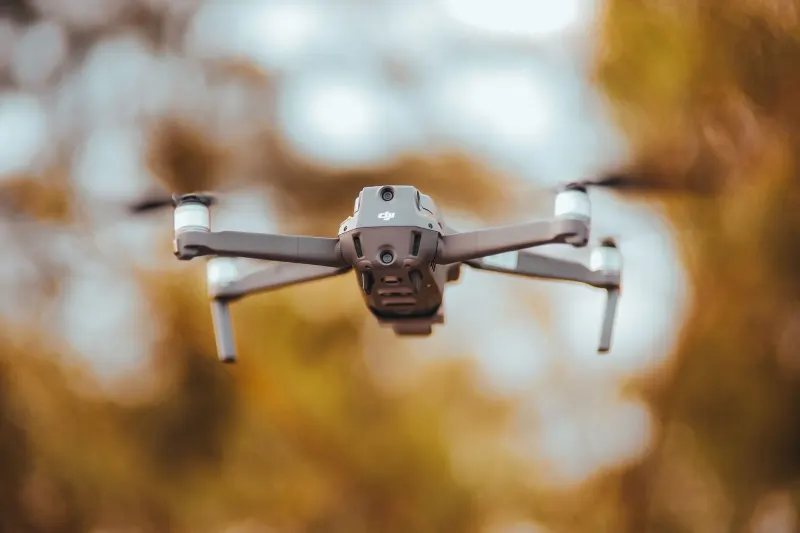
When the Ring security camera drone officially launches in January, users will not be given the option to pilot the device themselves. The Ring Drone Cam relies entirely on an advanced AI Pilot system designed to follow pre-programmed routes and navigate autonomously around household obstacles. There will be no manual control option made available to consumers when the hardware ships. This definitive design choice follows a widely publicized demonstration broadcast on CBS News that highlighted major stability and connectivity issues during manual flight.
During a segment featured on CBS Mornings and subsequently published on Threads, Ring founder Jamie Siminoff allowed technology reporter Jo Ling Kent to manually fly an early version of the drone using a mobile application equipped with integrated controls. The on-camera demonstration quickly went awry when the drone crashed twice while under manual pilot. In the first instance, Ring representatives informed CBS News that the device's collision avoidance technology had malfunctioned, and the company declined to share the video recorded by the drone prior to the crash. CBS News captured the second crash directly on camera, revealing the drone colliding firmly with a wall after failing to respond to manual commands issued by the reporter.
Key takeaways
- The Ring Drone Cam relies entirely on an AI Pilot system for autonomous navigation.
- Manual flight controls were tested during development but will not be available to customers.
- An early prototype crashed twice during a live television demonstration recorded by CBS News.
- Ring stated that autonomous flight to patrol points provides the best customer experience.
Connectivity issues and development choices
Addressing the second crash during the broadcast, Siminoff explained that the failure occurred because the drone lost internet connectivity, which the device also relies on to maintain stable flight paths. Under normal operational parameters, the hardware is programmed to safely stop and land if connection is lost. Siminoff acknowledged on air that the unit failed to execute this safety protocol during the live recording, stating that it did not stop as intended.
Following the broadcast, Ring declined to display the mobile application during subsequent media demonstrations, confirming to journalists that the retail device will work exclusively on pre-programmed flight paths. Although manual flight controls were clearly evaluated and tested at some stage of the product's development cycle, the company ultimately decided against shipping the feature to the general public. Ring spokesperson Sam McGee addressed the design shift in a formal statement, explaining that the company explored a wide array of features throughout development. According to McGee, utilizing the AI Pilot for autonomous flight to specific patrol points ultimately delivers the best customer benefit and overall experience.
What to watch next as the January launch approaches
As the January release window draws closer, prospective buyers must prepare for a completely autonomous indoor security experience. Ring has not responded to direct inquiries regarding whether the decision to completely scrap manual controls was made directly in response to the incidents witnessed during the CBS News demonstration. Without any ability to manually override or steer the hardware via a mobile interface, residential owners will be entirely dependent on the onboard AI software to handle routine security patrols safely and effectively inside their homes.



Comments