
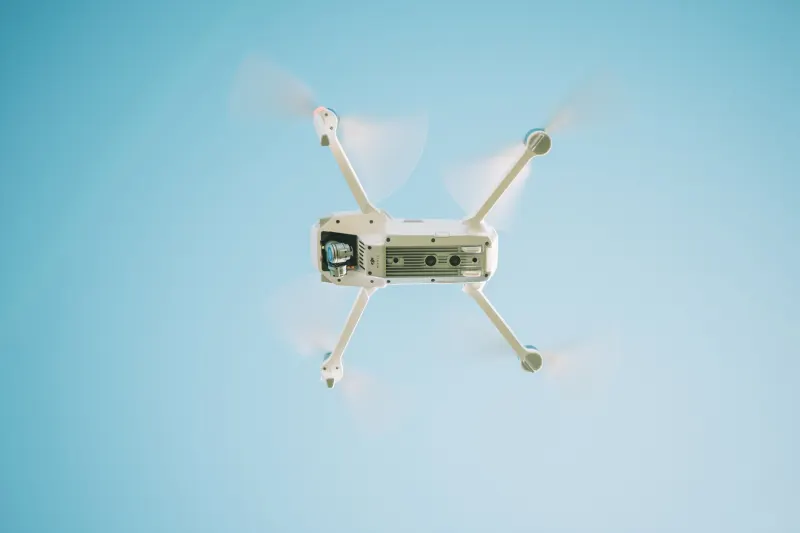
Ring is finally bringing a flying indoor security drone to the market, nearly six years after first announcing its ambitious concept. Ring founder Jamie Siminoff revealed during a New York City launch event that the Ring Drone Cam will officially ship on January 27, 2027, priced at $249.99. Designed to patrol indoor spaces when residents are away, the lightweight device can react to triggers from home sensors, livestream footage directly to the Ring app, and navigate predefined flight paths using cloud-connected artificial intelligence.
Key takeaways
- The Ring Drone Cam launches on January 27, 2027, priced at $249.99 in the US.
- It weighs 165 grams and features a 2K resolution camera with a 148-degree field of view.
- Flight times range from five to eight minutes, requiring about 40 minutes of charging for a five-minute flight.
- Footage is secured using Ring's TAKE encryption system, which rotates keys every five minutes.
Inside the Hardware and AI Navigation
Weighing a mere 165 grams and measuring roughly a quarter of the size of models demonstrated at CES in 2023, the Drone Cam represents a complete redesign from the original Always Home Cam concept announced in 2020. Siminoff explained that engineers spent years trying to pack autonomous flight hardware into a sub-$250 device before deciding about a year ago to strip down onboard sensors and shift processing capabilities entirely to the cloud. The drone relies on a new system called AI Pilot, which combines onboard vision models with sensors and cloud processing to map homes and navigate smoothly.
Because the device has no onboard sensors other than those needed for landing, it depends entirely on a stable internet connection. Without Wi-Fi, the drone's only capability is to return to its dock. The system offers 2K resolution video and a 148-degree field of view, utilizing LED spotlights to illuminate dark areas and assist with night vision. When docked, the physical camera shutter closes entirely to address privacy concerns, and the drone is notably loud while in flight, ensuring occupants are immediately aware when it is operating.
Battery Limitations and Security Protocols
Practical application of the Drone Cam comes with distinct battery constraints. Ring states that the drone can sustain a flight time of five to eight minutes per charge. The recharging ratio requires roughly eight minutes of plug time for every minute spent airborne, meaning a standard five-minute patrol demands approximately 40 minutes on the charging dock. These metrics indicate the device is optimized for targeted, rapid check-ins during specific incidents rather than continuous surveillance.
To address data safety and privacy worries, video captured by the drone is encrypted utilizing Ring's TAKE (Throw Away the Key Encryption) architecture. This protocol rotates encryption keys every five minutes and automatically purges Ring's stored copies after 24 hours. While this limits Amazon's access, it still permits necessary cloud computing operations required for smart alerts and AI video search functionality. The device will require an active Ring Protect plan for video storage and advanced features, and will integrate with Amazon's upcoming Alexa Home Map.





Comments