
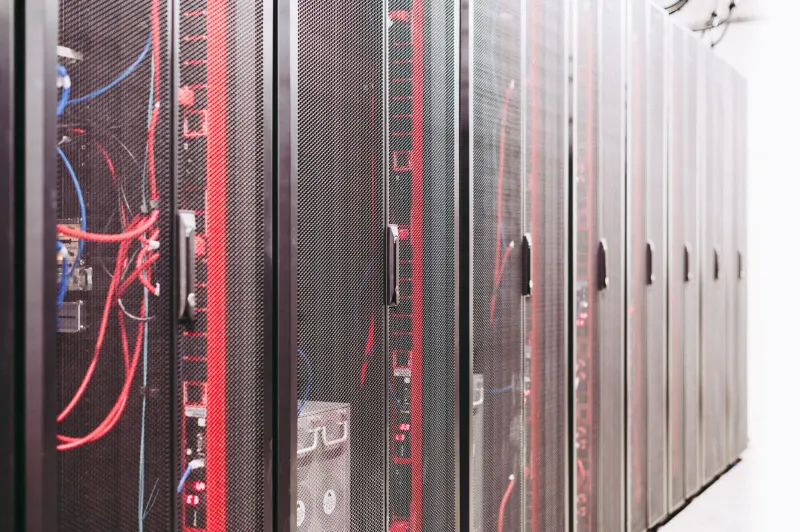
The US Senate has officially approved legislation requiring large data centers to shoulder a much larger share of the expenses associated with expanding electricity infrastructure. This bipartisan proposal specifically seeks to prevent ordinary electricity customers from absorbing the massive infrastructure costs generated by increasingly power-hungry artificial intelligence facilities. However, the measure has also ignited fierce debates, as environmental organizations argue that provisions intended to accelerate energy development could weaken existing federal protections against pollution and environmentally damaging projects.
The Bipartisan American Affordability and Jobs Act of 2026 successfully passed the Senate with 62 votes supporting the proposal and 33 opposing it. Sponsored by Republican Senator Shelley Moore Capito of West Virginia, the legislation now seeks additional consideration from the US House of Representatives. Under its explicit provisions, the Federal Energy Regulatory Commission would establish financial protections covering data centers with electricity requirements exceeding 20 megawatts. These large facilities would consequently become responsible for a substantially larger portion of the infrastructure expenses associated with supplying their intense electricity requirements.
Key takeaways
- The US Senate approved the Bipartisan American Affordability and Jobs Act of 2026 with a 62-33 vote.
- The legislation targets data centers with electricity requirements exceeding 20 megawatts.
- Environmental groups like Earthjustice have raised serious concerns regarding federal environmental assessment exemptions.
- The bill must still pass through the US House of Representatives before reaching the president for final approval.
Regulatory changes and transmission development
Beyond data center cost-sharing, the proposal expands federal regulatory authority over electricity transmission development while introducing broad changes affecting several categories of energy infrastructure projects. Among these changes are provisions designed to speed up approval processes for renewable electricity, geothermal, hydropower, and offshore energy developments across the country. Additionally, the legislation would allow the Federal Energy Regulatory Commission to authorize the construction of certain interstate transmission projects while removing permitting requirements for onshore oil and gas drilling on nonfederal property. It also proposes shorter environmental assessment periods and strict restrictions on the circumstances under which previously issued permits could face cancellation or legal challenges.
Environmental organizations have strongly questioned these provisions, with Earthjustice criticizing exemptions affecting federal environmental assessments, particularly those involving financial assistance and expansions of existing petroleum transportation infrastructure. The organization argued that restrictions on environmental assessments could prevent federal agencies from properly considering alternative projects before construction activities receive final authorization. Such provisions have attracted widespread criticism because infrastructure acceleration could potentially reduce opportunities to thoroughly examine environmental consequences.
Legislative outlook and industry reactions
Maine Senator Angus King, who ultimately supported the legislation, acknowledged that the proposal contained provisions he would have preferred to change. Nevertheless, he argued that rejecting the available compromise would leave lawmakers without an immediately achievable alternative for addressing escalating electricity infrastructure expenses. The Senate previously rejected another proposal addressing data center electricity expenses when Democrats blocked the Ratepayer Protection Act, a measure that sought voluntary commitments requiring computing companies to cover infrastructure improvements needed specifically for their operations.
Reflecting on his decision to back the measure, Senator King emphasized that compromise was necessary to achieve tangible progress. This new legislation must still pass through the House before reaching President Donald Trump for consideration and possible approval, marking a critical turning point for how the United States manages energy demands driven by massive computing and artificial intelligence infrastructure expansion.








Comments