
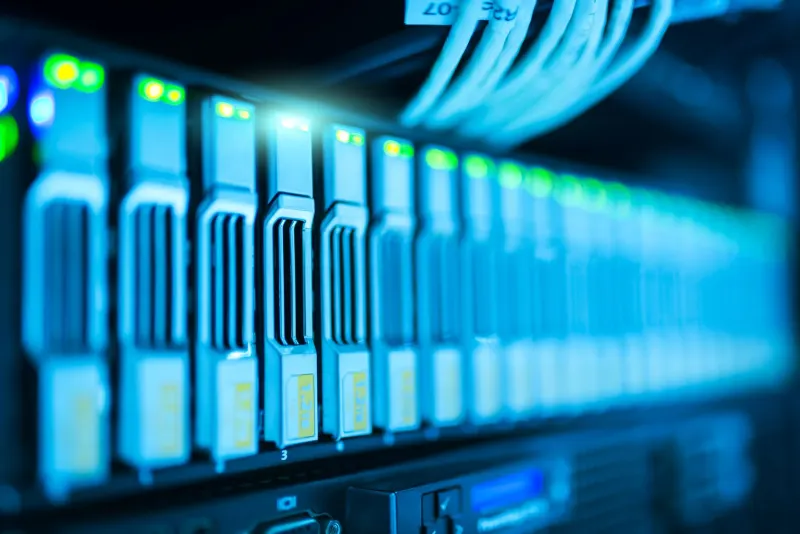
The rapid expansion of massive data centers fueling the artificial intelligence boom has sparked widespread community resistance, political backlash, and regulatory friction across the United States and globally. While these energy-hungry warehouses serve as the physical backbone for generative AI technologies developed by giants like Amazon and OpenAI, their immense appetite for electricity and water has placed them at the center of intense public debate. Following the 2026 midterms, where voters largely rejected data center developments, tech companies and policymakers are grappling with mounting environmental concerns and calls for stricter oversight.
Key takeaways
- Voters overwhelmingly opposed data center expansion during the 2026 midterms, with 76 percent of polled voters expressing opposition.
- President Donald Trump threatened a tremendous tax on companies building data centers outside of the US.
- Research shows that neighborhoods with majority Black, Hispanic, or Asian residents are significantly more likely to house data centers than majority-White neighborhoods.
- OpenAI and Amazon have responded to community pressure by scaling back their use of non-disclosure agreements with public officials.
Political and Community Resistance Mounts
Local opposition to data center buildouts became a defining theme during the 2026 midterms, resulting in ballot measures and candidates favoring moratoriums winning across the country. In Virginia, Loudoun County—historically known as Data Center Alley—paused new applications, affecting roughly 34 active proposals as the region reached a tipping point. Similar friction has emerged in states like Utah, Texas, and Washington, where residents have organized protests and pushed back against proposed expansions due to concerns over utility bills and environmental degradation. Concurrently, a study published by researchers at George Washington University Law School and American University highlighted that data centers are disproportionately located in minority neighborhoods, with majority-Black or Hispanic areas twice as likely, and Asian neighborhoods four times as likely, to host these facilities.
Regulatory Pressures and National Security Debates
Federal lawmakers and international leaders are also confronting the vast resource demands of the AI industry. During a press conference following a summit with Chinese President Xi Jinping and Russian President Vladimir Putin, President Donald Trump stated he would impose a heavy tax on companies constructing data centers outside the United States to prevent foreign competitors like China from taking the lead. Meanwhile, a bipartisan permitting bill moving through Congress aims to speed up energy projects, though environmental advocates have raised alarms that the legislation might bypass vital public oversight and increase reliance on fossil fuels. A study published in Nature Sustainability emphasized that hyperscale facilities in the US consume more electricity than many midsized countries, heavily relying on fossil fuels and contributing significantly to greenhouse gas emissions.
Corporate Concessions and What Lies Ahead
In response to the growing political and public backlash, major technology firms are altering their engagement strategies with local governments. OpenAI announced new commitments declaring it will abandon the use of broad non-disclosure agreements with public officials, permitting NDAs only for narrow protections covering legitimate security information or trade secrets. Amazon enacted a similar policy shift regarding government agencies earlier in the autumn. Despite these concessions, the tension between accelerating AI infrastructure and managing its toll on power grids, utility costs, and local environments remains a central challenge for the technology sector as it navigates a newly restrictive regulatory landscape.





Comments