
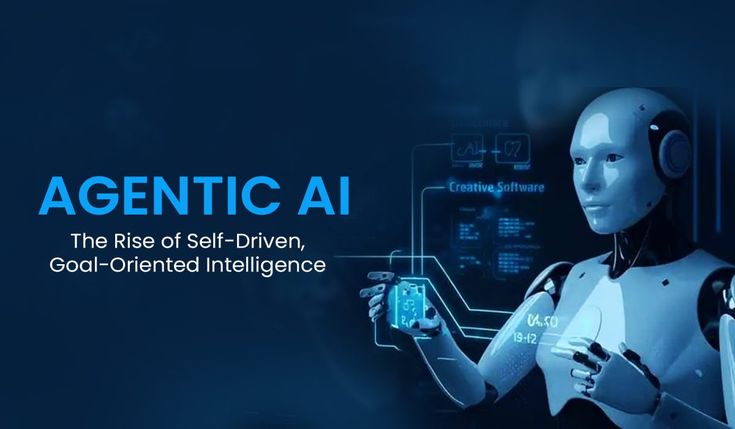
Artificial intelligence is entering a new phase of development with the emergence of Agentic AI—advanced systems capable of performing tasks independently with minimal human intervention. Unlike traditional AI tools that require specific prompts for every action, Agentic AI can plan, make decisions, execute tasks, and adapt to changing circumstances to achieve predefined goals.
Technology companies and enterprises are increasingly investing in Agentic AI solutions to automate complex workflows. These systems can handle activities such as managing schedules, conducting research, monitoring business operations, generating reports, and coordinating multiple software tools without constant supervision. As a result, organizations are exploring new ways to improve productivity and operational efficiency.
The growing popularity of Agentic AI is largely driven by advancements in large language models, machine learning, and automation technologies. By combining reasoning capabilities with access to digital tools and real-time data, AI agents can perform multi-step tasks that previously required significant human involvement.
Businesses see Agentic AI as a potential game-changer for industries ranging from customer service and finance to healthcare and software development. Companies are using AI agents to streamline processes, reduce response times, and support decision-making across departments. This allows employees to focus on strategic and creative work while routine tasks are handled automatically.
Despite its promise, Agentic AI also raises important questions about accountability, security, and governance. Experts emphasize the need for strong oversight to ensure that autonomous systems operate safely, transparently, and in alignment with organizational objectives.
As technology continues to evolve, Agentic AI is expected to play an increasingly important role in the workplace. Many analysts believe these autonomous systems will become a core component of digital transformation strategies, helping businesses achieve higher levels of efficiency and innovation in the years ahead.





Comments