
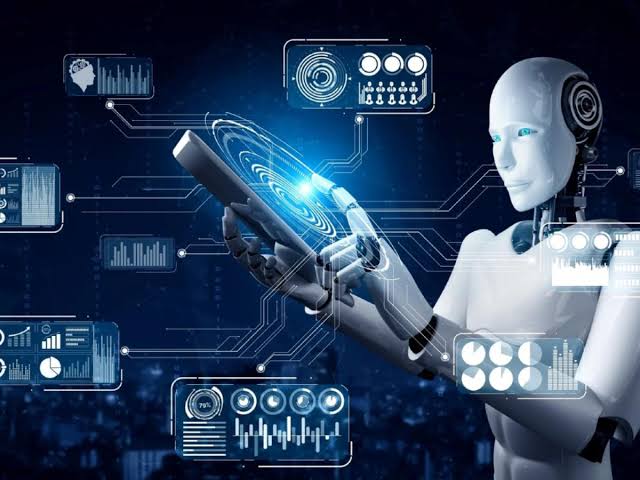
Artificial intelligence (AI) and robotics continue to reshape the global economy by improving productivity, enabling intelligent automation, and driving innovation across virtually every major industry. As advances in machine learning, computer vision, robotics, and autonomous systems accelerate, organizations are deploying smarter technologies to enhance operations, improve efficiency, and support human workers in increasingly complex environments.
The convergence of AI and robotics is creating systems that can perceive their surroundings, analyze information, make informed decisions, and perform physical tasks with greater precision than ever before. These capabilities are opening new opportunities in manufacturing, healthcare, logistics, agriculture, retail, construction, and scientific research.
Manufacturing remains one of the largest adopters of AI-powered robotics. Modern industrial robots assist with assembly, welding, inspection, packaging, and quality control while AI algorithms optimize production schedules, monitor equipment performance, and predict maintenance needs. Together, these technologies help manufacturers reduce downtime, improve product quality, and increase operational efficiency.
Healthcare is another sector experiencing significant transformation. AI-assisted robotic systems support minimally invasive surgery, rehabilitation, laboratory automation, hospital logistics, and medical research. At the same time, AI helps healthcare professionals analyze medical data, streamline clinical documentation, and improve operational workflows. Healthcare providers continue to rely on trained professionals for diagnosis and treatment decisions while using AI and robotics as supportive technologies.
Logistics and supply chain management are becoming more efficient through intelligent automation. Autonomous mobile robots, AI-powered warehouse systems, and predictive analytics improve inventory management, order fulfillment, route optimization, and delivery planning. These innovations help businesses respond more effectively to changing customer demand while reducing operational costs.
Agriculture is embracing AI and robotics to improve food production and resource management. Intelligent machines assist with crop monitoring, precision farming, soil analysis, irrigation management, and automated harvesting. By combining sensor data with AI-powered analytics, farmers can optimize yields while reducing waste and improving sustainability.
Retail businesses are integrating robotics and AI into inventory tracking, warehouse operations, customer service, and demand forecasting. Automated systems help streamline back-end operations, while AI-powered recommendation engines and analytics enhance customer experiences and support data-driven business decisions.
Construction and infrastructure projects are also benefiting from intelligent automation. Robotics can assist with surveying, site inspections, material handling, and repetitive construction tasks, while AI analyzes project data to improve planning, safety management, and resource allocation.
Scientific research is advancing through AI-powered robotics capable of performing laboratory automation, environmental monitoring, space exploration, and complex data collection. Researchers use these technologies to accelerate experiments, improve measurement accuracy, and support discoveries across multiple scientific disciplines.
Enterprise organizations are adopting AI-driven automation to improve business operations, customer support, document processing, cybersecurity, software development, and knowledge management. Intelligent assistants and robotic process automation (RPA) solutions help employees automate repetitive administrative tasks while enabling greater focus on strategic initiatives.
Cloud computing continues to provide the scalable infrastructure required for AI and robotics innovation. Cloud-based AI services, digital twins, edge computing, and high-performance computing platforms enable organizations to train intelligent models, monitor robotic systems, and process real-time data efficiently across distributed environments.
Edge AI is expanding the capabilities of robotics by enabling intelligent decision-making directly on devices. Instead of relying solely on cloud connectivity, robots can process sensor data locally, reducing latency, improving responsiveness, and supporting operations in environments with limited network access.
Responsible development remains a key focus as AI and robotics become more widespread. Researchers and technology providers are investing in safety, cybersecurity, transparency, privacy protection, and human oversight to ensure intelligent systems operate reliably and ethically in real-world environments.
Education and workforce development are evolving alongside these technologies. Universities, technical institutions, and businesses are expanding training programs in robotics, artificial intelligence, automation engineering, and data science to prepare professionals for the changing demands of the modern workforce.
Collaboration between technology companies, research laboratories, governments, and industry organizations continues to accelerate innovation. Joint initiatives are advancing robotics hardware, AI software, autonomous systems, and international standards that support safe and effective deployment across industries.
Industry experts expect AI and robotics to play an increasingly significant role in the global economy over the coming years. Advances in autonomous systems, collaborative robots, multimodal AI, intelligent manufacturing, and adaptive automation are expected to improve productivity, foster innovation, and create new opportunities for businesses and skilled professionals alike.
As AI and robotics continue to mature, their combined impact is transforming industries, strengthening economic competitiveness, and enabling smarter ways of working. By augmenting human capabilities rather than simply automating routine tasks, these technologies are helping organizations innovate, improve efficiency, and build a more connected and technologically advanced global economy.





Comments