
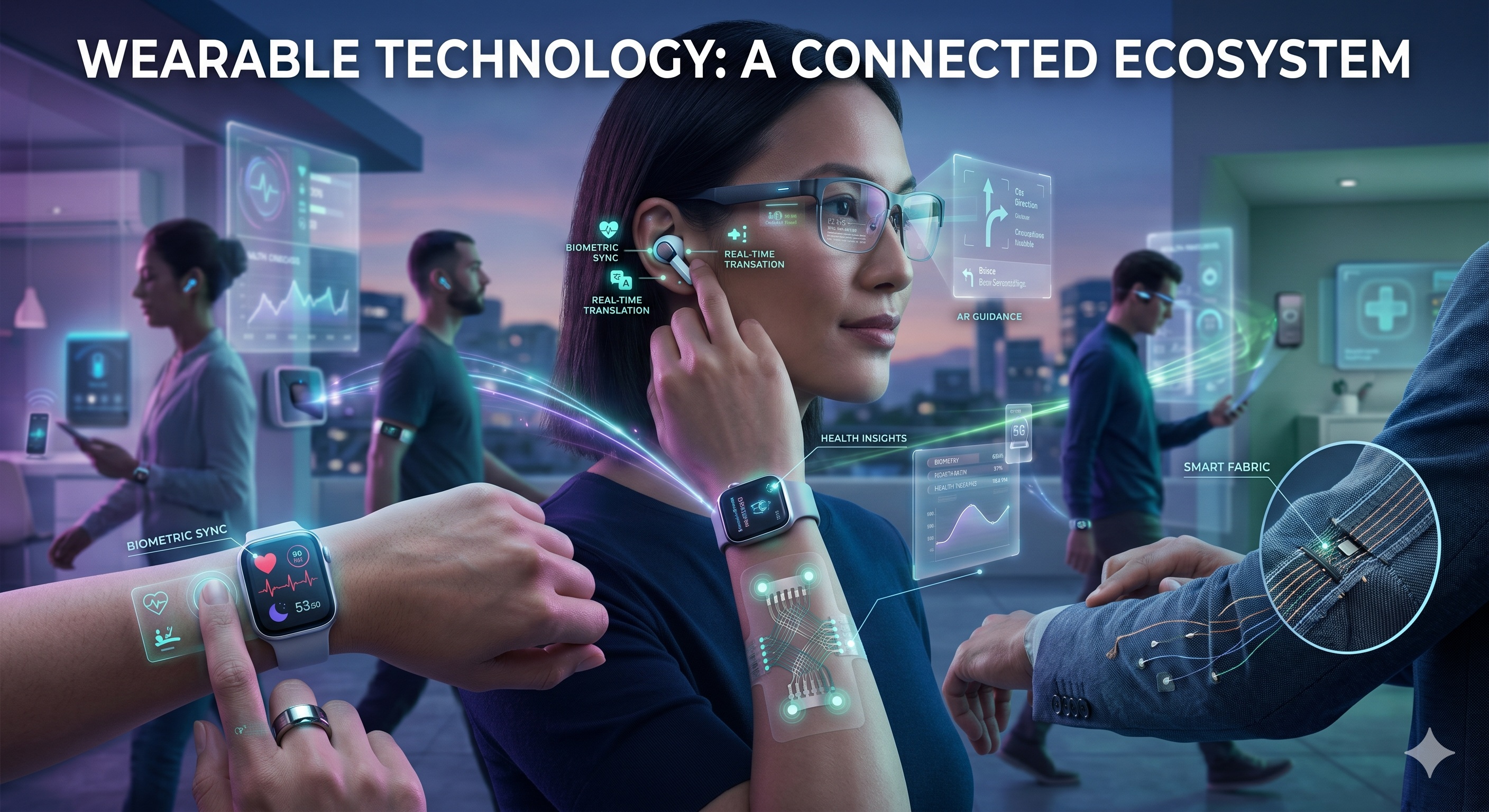
Wearable Technology: More Than Just a Smartwatch
Wearable technology has grown
far beyond the smartwatch. Today, wearables monitor your heart, track your
sleep, translate languages in your ear, and may soon read your brain activity.
Here's a look at where this category is and where it's going.
The Evolution of Wearables
Early fitness trackers counted
steps and estimated calories. Smartwatches added notifications and apps.
Today's wearables are sophisticated health monitoring systems capable of
tracking dozens of biometric data points continuously — and the category is expanding
into new form factors rapidly.
Health and Medical Wearables
Modern smartwatches from Apple,
Samsung, and Garmin can detect irregular heart rhythms, measure blood oxygen
levels, estimate sleep stages, track stress through heart rate variability, and
even detect falls or crashes. Some devices are beginning to measure blood
glucose non-invasively — a potential revolution for diabetes management.
True Wireless Earbuds as Health Devices
Advanced earbuds are becoming
health platforms in their own right. They can measure heart rate through the
ear canal, monitor posture through head movement tracking, provide real-time
translation, and serve as hearing aids. The ear is an excellent location for
biometric sensing.
Smart Glasses and AR Wearables
After several false starts,
smart glasses are finally finding their footing. Devices combining cameras,
speakers, and AI can provide real-time information overlay, hands-free
photography, and AI-powered assistance — without the social awkwardness of earlier
attempts like Google Glass.
The Data Privacy Question
Wearables collect
extraordinarily intimate data — your heart rate, sleep patterns, location, and
physical activity tell a detailed story about your life. Who owns this data,
how it's stored, and how it might be used by insurance companies, employers, or
governments are critical questions that remain largely unresolved.
The Future: Implantables and Smart Fabrics
The next frontier of wearables
may not be worn at all — implantable devices and smart fabrics woven with
electronic sensors are on the horizon. The line between technology and the
human body is becoming increasingly blurred.





Comments