
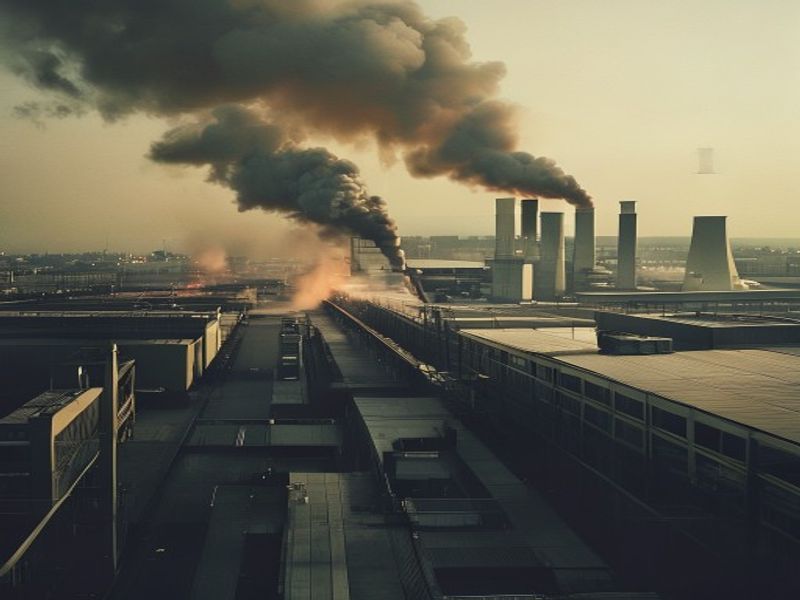
Devastating wildfires sweeping across parts of France are not just threatening natural landscapes and homes; they are now directly imperiling industrial facilities that represent a volatile blend of hazardous materials and sophisticated technological infrastructure. This critical situation poses a dual threat: the immediate danger of chemical contamination and the potential failure of advanced systems designed to manage, monitor, and control these high-risk operations.
Reports from affected regions highlight specific industrial sites caught in the path of the blazes, drawing stark attention to the complex engineering challenges involved. These 'plants' often refer to anything from chemical storage depots and processing facilities to data centers and advanced manufacturing hubs, all of which rely heavily on complex operational technology (OT) and robust IT infrastructure. The intense heat, smoke, and physical damage from wildfires can compromise everything from power grids and cooling systems to critical sensor networks and remote monitoring capabilities. A direct hit could not only cause immediate physical damage but also trigger a cascading failure of automated safety protocols and data integrity, with potentially far-reaching environmental and economic consequences.
Scientists and engineers are increasingly grappling with how to future-proof such critical infrastructure against the amplified risks of climate change-driven extreme weather events. The current crisis in France underscores a significant innovation gap in disaster resilience for industrial assets. Developing more fire-resistant materials for critical components, implementing advanced AI-driven predictive analytics for early wildfire detection and spread modeling around sensitive sites, and hardening redundant power and communication systems are becoming paramount. As these blazes push the limits of traditional disaster response, the imperative for cross-disciplinary research in material science, environmental engineering, and autonomous system management grows, aiming to mitigate the unique dangers posed when nature's fury meets the vulnerabilities of advanced industry.





Comments