
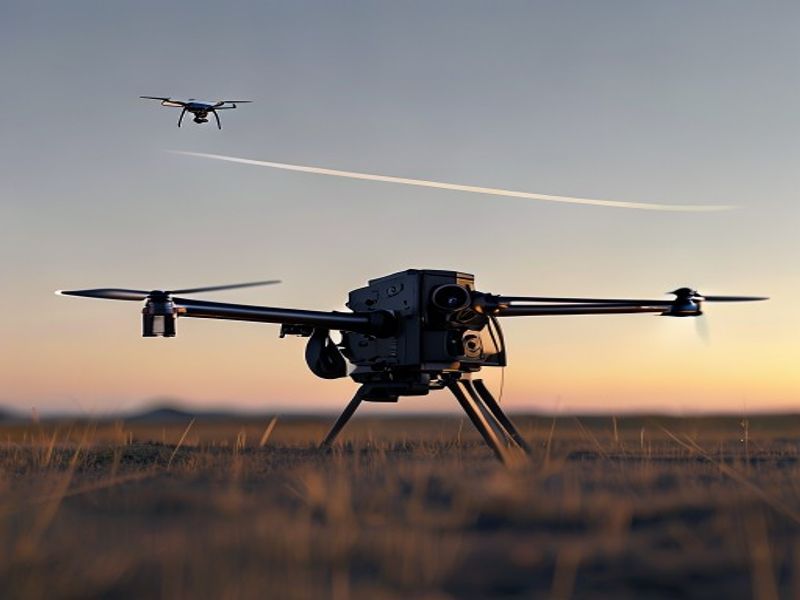
Ukrainian President Volodymyr Zelensky reportedly highlighted his nation's advancements in anti-drone technology during recent discussions with former President Donald Trump, strategically coupling the technological showcase with a renewed plea for critical missile systems from the United States. This engagement underscores Kyiv's multi-faceted approach to securing vital military aid, aiming to demonstrate self-sufficiency and innovation even as it seeks further international support.
The discussions come at a critical juncture for Ukraine, which continues to face a relentless barrage of drone attacks and grapples with the protracted process of securing substantial military assistance from the U.S. Congress. Ukraine has long sought more advanced long-range missile systems, such as ATACMS, to target Russian logistics and command centers effectively. By presenting its indigenous anti-drone innovations, Zelensky's administration appears to be making a case for Ukraine not merely as a recipient of aid, but as a proactive developer of sophisticated defense solutions, potentially appealing to leaders who emphasize burden-sharing among allies.
Modern anti-drone technology has become a cornerstone of contemporary warfare, and Ukraine has been a significant battleground for its development and deployment. These systems often integrate advanced machine learning algorithms for rapid threat detection and classification, sophisticated electronic warfare (EW) capabilities to jam or spoof enemy drones, and in some cases, kinetic interceptors. Showcasing these developments not only projects a narrative of resilience and technological prowess but also offers a tangible demonstration of how U.S. support enables Ukraine to innovate and adapt against evolving threats, rather than solely depending on external provisions. This strategic pitch aims to frame future aid as an investment in a capable partner, rather than a mere donation.
The implications of this diplomatic and technological maneuver could extend beyond immediate military aid. It signals Ukraine's commitment to building a robust domestic defense industry, potentially positioning it as a future leader in certain defense technologies honed through real-world conflict. For U.S. policymakers, the demonstration might serve as a compelling argument for continued support, highlighting that their investments are fostering innovation on the front lines. The outcome of these appeals could significantly influence the trajectory of the conflict, determining the scope of military aid and shaping perceptions of Ukraine's long-term viability as a secure and technologically advanced nation.





Comments