
Why Small Businesses Are the #1 Target for Hackers
It's tempting to think that
cybercriminals only go after large corporations with vast amounts of data. But
the reality is quite different: small businesses are disproportionately
targeted — and often hit the hardest. Here's why.
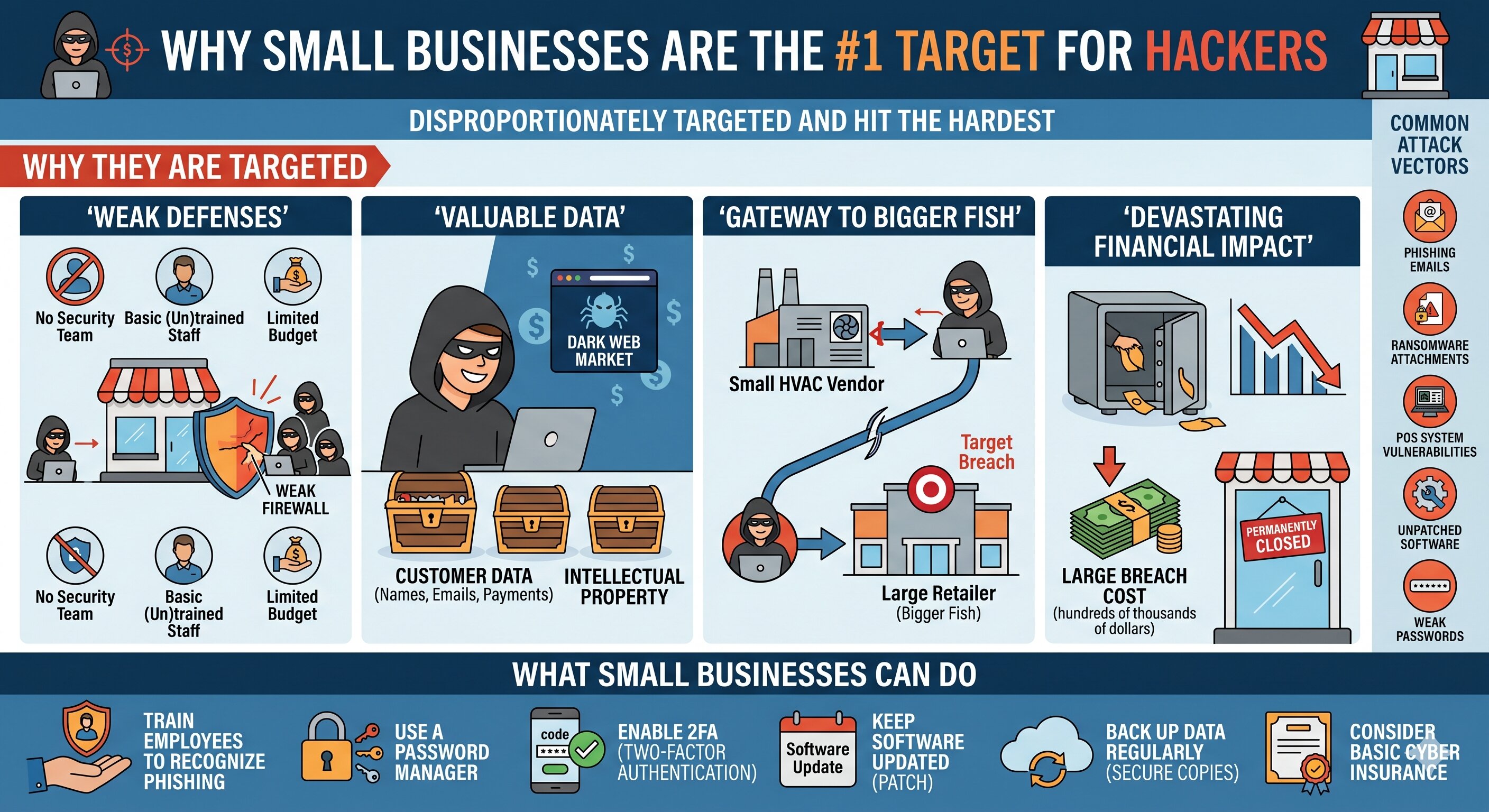
Small Businesses Have Valuable Data
Even a small business holds
valuable information — customer names and emails, payment details, employee
records, and intellectual property. To a hacker, a database of 5,000 customers
is worth real money on the dark web.
They Often Have Weak Defenses
Large enterprises typically
invest heavily in cybersecurity — firewalls, dedicated security teams, employee
training programs. Small businesses often can't afford these measures, making
them much easier targets. Hackers know this and exploit it.
They're a Gateway to Bigger Fish
Small businesses often serve as
vendors or partners to larger companies. Attackers compromise small businesses
to gain access to their more lucrative clients — a strategy called a supply
chain attack. The infamous Target breach started with a small HVAC contractor.
The Financial Impact Is Often Devastating
Unlike large corporations, small
businesses don't have the financial reserves to absorb a cyber attack. The
average cost of a data breach for small businesses can reach hundreds of
thousands of dollars — enough to force many to close permanently.
Common Attack Vectors
Phishing emails targeting
employees. Ransomware attacks that lock business data. Attacks on point-of-sale
systems. Exploitation of outdated or unpatched software. Weak or reused
employee passwords.
What Small Businesses Can Do
The good news: basic
cybersecurity measures go a long way. Train employees to recognize phishing.
Use a password manager. Enable 2FA on all business accounts. Keep software
updated. Back up data regularly. Consider a basic cyber insurance policy.
Cybersecurity doesn't have to be
expensive to be effective.





Comments